Nevin Burmeister first downloaded Kalshi on July 8, just two days after his 18th birthday. In his home state of Indiana, the minimum age for sports betting is 21. But Burmeister could legally wager on sports on Kalshi starting at 18.
He is one of millions of people taking part in the recent craze for prediction markets, which allow users to bet on basically anything—from who will win the newest season of Survivor, to the price of gas this week, to whether the U.S. will take control of Greenland.
Kalshi controls 89% of the U.S. market for these platforms. Its main competitor is Polymarket, but many other firms—including Robinhood and Coinbase—have begun offering prediction market wagers too. In the last two years, the popularity of prediction markets has grown to the point that users traded over $1.2 billion on the Super Bowl, and more than $120 million on the Oscars.
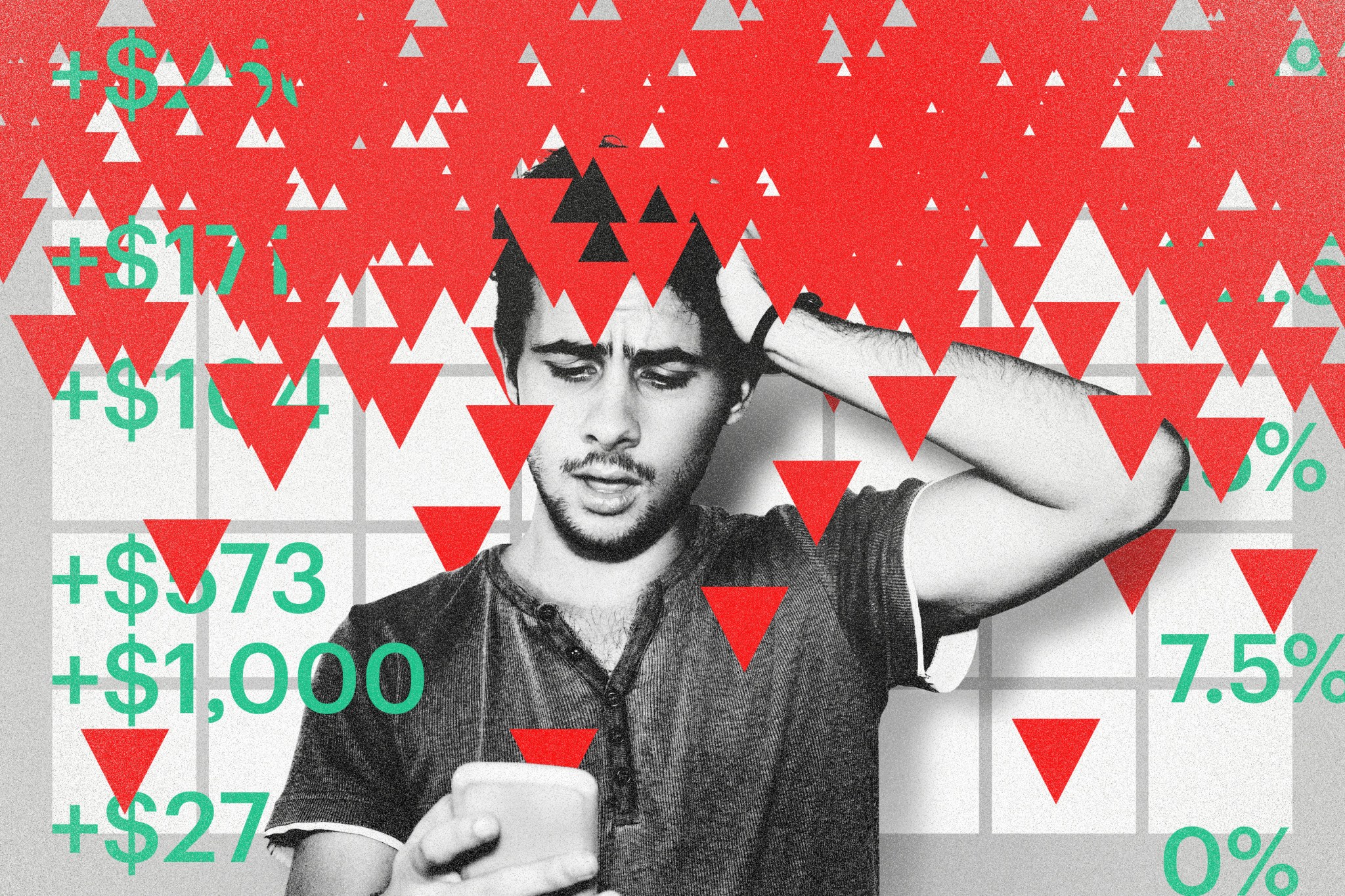
As for Burmeister, his first wager on Kalshi was on the Rotten Tomatoes score of the latest Fantastic Four movie. He soon branched out into sports wagers, mostly on Major League Baseball, losing over $2,000 in six months.
“Kalshi was my entrance into gambling,” he said. “Every single dime I had, I lost on [the app].”
As platforms like Kalshi become more mainstream, a growing number of young people, especially men, are losing money on these apps. Mental health clinicians warn that prediction markets could exacerbate a growing public health crisis of problem gambling in the U.S.
Prediction markets vs. traditional sportsbooks
Prediction markets may seem identical to gambling, but regulators don’t see it that way. In November 2020, the Commodity Futures Trading Commission granted Kalshi approval to offer a limited number of betting contracts and, more recently, the platform won legal challenges that allowed it to expand those offerings to politics and sports. The platform’s wagers are classified as financial instruments known as “event contracts” that are regulated like commodities. In contrast, bets on traditional sportsbooks, like FanDuel and DraftKings, are considered gambling and are regulated on the state level.
The rise of Kalshi and Polymarket, along with a growing number of new prediction market platforms, means that betting has become accessible to a larger swath of Americans. Kalshi is currently legal in 49 states (it is facing a temporary ban in Nevada, and an increasing number of legal challenges.) Sports betting, meanwhile, is legal in 39 states with most of those limiting participation to people over 21. On Kalshi, users can bet starting at 18.
“Prediction markets have expanded the footprint of sports betting,” said Glenn Yamagata, the executive director of the Oregon Council on Problem Gambling.
In October 2024, then 21 year-old Samuel Sharkey first heard about Kalshi through an ad on Instagram. The Chambersburg, Pennsylvania resident, who delivers food through DoorDash while studying programming, at that time had about $20,000 in savings.
Sharkey’s first bets on Kalshi were on the 2024 U.S. presidential election. When those wagers didn’t pan out, he tried to quickly make up for his losses by betting on the weather and on what the price of Bitcoin would be at the end of the hour, only to fall further in the red.
Sharkey, who like Burmeister showed records of his Kalshi transactions to Fortune, would go on to lose about $10,000 over the course of five months.
“It was a very expensive lesson,” he said. “I think about that money I lost every single day.”
For its part, Kalshi responded to questions about dangers posed by its platform by saying the company provides a range of consumer protection features to all traders.
“It’s in our best interest to keep people safe on [the platform],” said a spokesperson for Kalshi. “Our consumer protections are very similar to those of casinos and sportsbooks, including self-exclusion and self-limits.”
Sports betting addiction in the U.S.
The rise of prediction markets comes at a time when addiction to sports betting is increasing. Americans bet $167 billion on sports in 2025, and a quarter of sports bettors worry they can’t control their gambling, according to a recent U.S. News and World Report survey.
Platforms like FanDuel and DraftKings typically only attract sports fans, but Kalshi and Polymarket bring in people who are into pop culture, politics, and economics.
“It’s easier for people to go to prediction markets for one reason and then decide to wager on sports because it’s right there,” Yamagata added. While bets on other categories might bring new people to Kalshi, sports account for about 90% of the wagers on the platform.
Burmeister, the 18 year-old from Indiana, said that what initially drew him to Kalshi was the opportunity to legally bet on sports.
“I have a gambling addiction,” he said. A psychiatrist gave him this diagnosis around the time he started using Kalshi.
Some mental health clinicians who treat addiction have seen an uptick of visits from prediction market users. Lin Sternlicht is a therapist and cofounder of Family Addiction Specialist, a private practice specializing in helping clients overcome compulsive behaviors around sports betting and other online platforms. She argues that though prediction markets are fundamentally no different from gambling, platforms like Kalshi and Polymarket are often perceived more favorably because of their branding around research and analysis.
“There’s a strong stigma tied to sports betting, but prediction markets tend to feel more socially acceptable,” she said. “Parents aren’t nearly as alarmed when they hear their child is using them. They might say, ‘Oh great, at least he’s paying attention to the news.’”
Prediction markets also offer incentives for users to park sizable amounts of money on the platform. Burmeister, for instance, says he decided to deposit all of his savings into Kalshi because the platform offers yield to users. When someone puts in more than $250, they earn 3.25% of annual interest. Burmeister’s $2,000 would grow to $2,065 in a year if he didn’t touch the funds. He said that this incentivized him to keep betting because his money was already out of his bank account and on Kalshi.
‘Power to the People’
Proponents of prediction markets argue that gathering the wisdom of the crowd is providing a public good. They often point to Kalshi and Polymarket users correctly predicting President Donald Trump’s 2024 electoral victory, in contrast to many national polls.
“The [prediction market] industry is giving the power back to the people,” said Jay Malavia, the cofounder of a startup that is creating a trading terminal for prediction market users, in a previous interview with Fortune.
Kalshi notes that traditional sportsbooks place limits on users who make too much money, whereas prediction markets do not. On its platform, traders wager against each other rather than against the house. The upshot, says the company, is that it has no incentive for its users to lose.
“Unlike casinos and sportsbooks—where the house wins when people lose—our model doesn’t incentivize people to lose more,” the spokesperson for Kalshi added. “There’s no banning winners and hooking losers.”
Many major institutions are embracing the growing prediction market industry. Some of the biggest media firms, including Fox News, CNBC, and The Wall Street Journal, all now have partnerships with either Kalshi or Polymarket. The MLB recently announced its partnership with Polymarket. In February, Giannis Antetokounmpo, one of the biggest stars in the NBA, joined Kalshi as a shareholder.
In Burmeister’s case, he stopped using Kalshi in January. He says that he wants to be a lesson for others who are interested in betting through the platform.
“I don’t want people to make the same mistakes I did at 18,” he said. “Kalshi isn’t a prediction market—it’s gambling.”