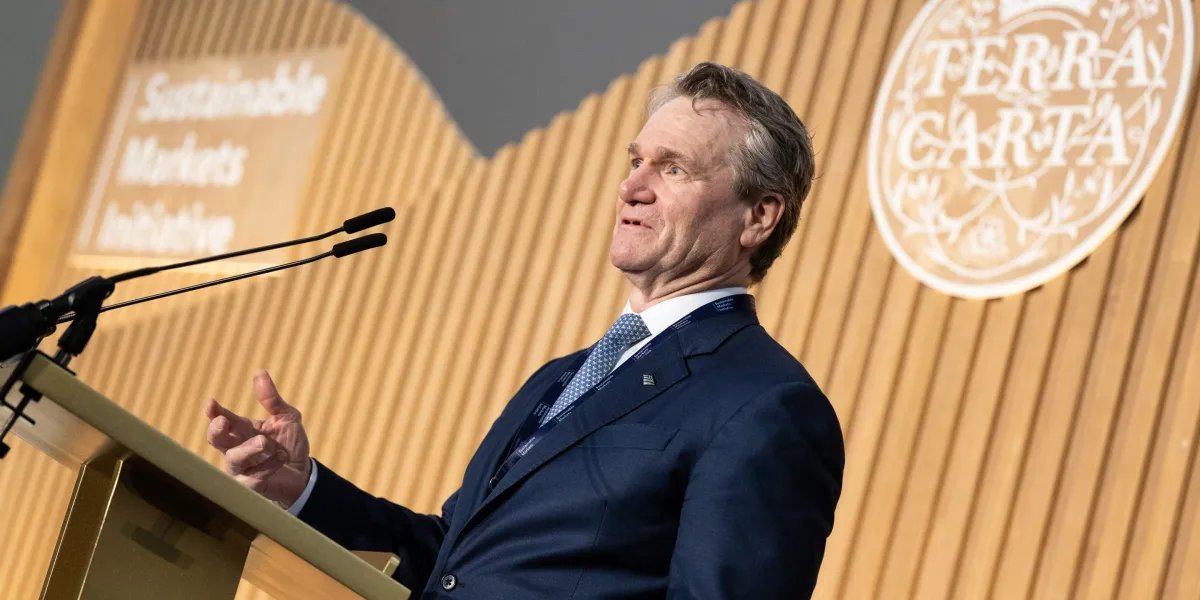
In the 16th century Great Hall of Henry VIII’s home – Hampton Court Palace near London – they talk of the future. Brian Moynihan, the chief executive of Bank of America, Ron O’Hanley, the chief executive of State Street, and Janet Truncale, the chief executive of EY, are here to promote private sector efforts to drive the energy transition and climate sustainability. Donald Trump might want to look away.
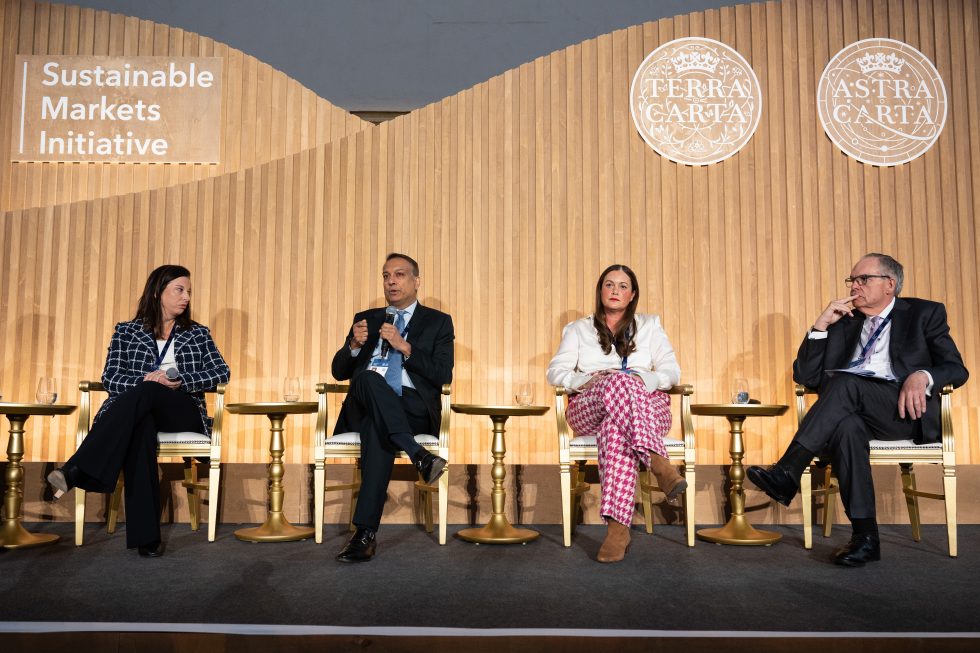
Moynihan, O’Hanley and Truncale came together following an initiative by King Charles III when he was still the Prince of Wales. He set up the Sustainable Markets Initiative (SMI) to explore how businesses and investors could accelerate the energy transition, away from a reliance on fossil fuels and towards renewables and nuclear.
“His majesty set this up in 2020 with a goal of driving the private sector to do more, faster for sustainability, a future that’s sustainable for all,” Moynihan said. “We’re a CEO led organization, a volunteer army coalition of willing people who believe that we’ve got to make this happen the right way in the current context and in the future context.”
The U.S. President has changed the political weather on the energy transition, pulling America out of the Paris climate agreement and calling much of the sustainability agenda a “green scam”. He directly accused Bank of America of “de-banking” U.S. conservative groups, a claim denied by the bank.
Jeff Spicer/PA Media Assignments
BofA is sticking to the path, despite the noise from the White House. It did pull out of the United Nations’ Net Zero Banking Alliance in 2025 along with JP Morgan and Citi but said it still remained committed to to its customers on the energy transition.
“The private sector is critical to this,” Moynihan said. ”As we said from the beginning: ‘If you need to get this done, private sectors have to drive it – they have the money, innovation, the techniques, the know-how.’ The private sector is important and we’re now moving to drive forward.”
Moynihan is moderating across the two-day conference at Hampton Court. The King will arrive tomorrow, providing the royal stamp of approval to continuing progress on sustainability.
“I get asked all the time, is this falling off the agenda?” said Truncale. “And my answer is always that the best companies are focusing on sustainability as core to resilience, value protection, value creation and growth.
“If you need to get this done, private sectors have to drive it – they have the money, innovation, the techniques, the know-how. The private sector is important and we’re now moving to drive forward.”
Brian Moynihan chief executive of Bank of America
“There are two real reasons for that. One is about risk and one is about opportunity.
“From a risk perspective, just look at what’s happening from climate and weather and major catastrophes that are coming because of that. [They are] impacting supply chains, impacting operations, your people, your assets. In 2024, $300 billion in losses [and] that’s going to continue to grow.
“So that’s all about resilience. But then opportunity – the green economy. We continue to see that growth that’s going to be $7 trillion by 2030 and so all of you are seeing that opportunity with entrepreneurs and the like.”
Economic momentum is even greater than a post on Truth Social. The thirst for energy supply chains not linked to the spikes and falls of fossil fuel pricing is driving change. And the recent war in the Gulf has only increased demand for more resilient, in-country renewable and nuclear systems that support the growing demand for electricity.
The U.S. administration’s shift on climate sustainability does not have zero effect, but it is not the only signal. “I think that’s probably where there’s most of the recent confusion in the market, because we haven’t had policy certainty,” said O’Hanley. “Part of it is that some of the early policies were really much more around making commitments, as opposed to really getting at what the fundamental problem is. And I think there’s no place where policy has been more uncertain than in the U.S.
“[But given] the cost of solar and the cost of wind being the lowest margin of any kind of energy – and innovation is driving down these costs – means the fact that we haven’t had policy certainty really doesn’t matter. The place in the United States where there’s the highest amount of renewables is Texas. You think of Texas as being fossil fuel central, and it is in the United States, but it’s also renewable central, and that has everything to do with economics.”