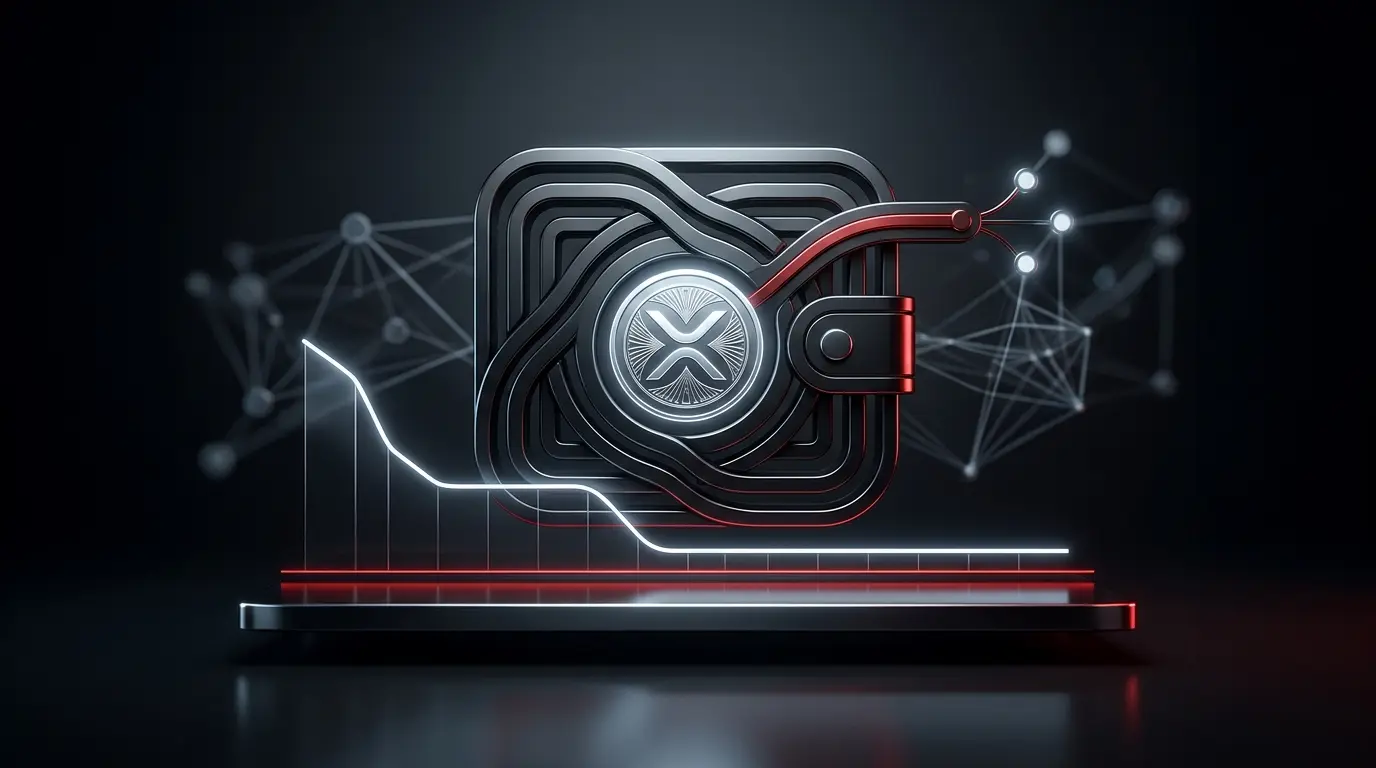
The latest Ripple news isn’t about Ripple at all, at least not directly. The U.S. Securities and Exchange Commission (SEC) issued a temporary, conditional exemption, granting qualifying Tokenized Securities Venues relief from the statutory definition of “exchange”. Why? So they can trade tokenized National Market System (NMS) stocks through permissioned automated market makers (AMM) and liquidity pools.
A companion exemption covers certain liquidity providers supplying tokenized stock to those pools, temporarily relieving them from the “dealer” classification under the Exchange Act.
The order does not name XRP, Ripple, or the XRP Ledger (XRPL). It is a technology-neutral framework built for any qualifying venue, not an approval of a specific network.
This is not simply a crypto-market announcement. It is a regulatory acknowledgment that AMM liquidity pools can function as a legitimate component of a controlled, on-chain securities-trading structure, provided the venue operates within a permissioned environment. That distinction matters for XRPL, which has run a native AMM integrated into its permissioned decentralized-exchange infrastructure since early 2024, well ahead of this order.
🚨 TODAY: The SEC issued an order granting temporary, conditional exemptive relief to Tokenized Securities Venues from the definition of “exchange” in the Exchange Act to trade tokenized NMS stock using innovative permissioned automated market makers and liquidity pools. pic.twitter.com/VDi7Oty2d9
— U.S. Securities and Exchange Commission (@SECGov) September 17, 2026
Market Intelligence: Crypto Analyst Reveals Upcoming Coinbase Listings
Five Years, Strict Rules: What the SEC Exemption Really Allows
Under the order, a Tokenized Securities Venue brings together buyers and sellers of tokenized NMS stock by providing one or more AMM liquidity pools for permissioned participants and by setting the standards for who can access those pools. Liquidity providers who supply proprietary capital to eligible pools also receive conditional relief from dealer status, though the exemption stops short of a general license for all forms of dealing activity.
The conditions attached are substantive rather than cosmetic. Tokenized stocks must give holders the same rights as the underlying traditional shares, including dividends and voting. An issuer whose stock is tokenized by an unaffiliated third party must be given notice and a chance to object, and trading on the venue must halt whenever the underlying stock is halted on its primary listing exchange.
The exemptions are scheduled to run for five years, from September 17, 2026, to September 17, 2031, positioned by the SEC as an interim measure while it weighs further rulemaking.
XRPL’s own AMM capability predates this order by more than two years. The XLS-30 amendment activated on Mainnet on March 22, 2024, embedding AMM functionality directly into the ledger’s existing decentralized exchange (DEX) rather than layering it on as a separate application. Users can create liquidity pools for asset pairs, contribute liquidity, and receive LP tokens representing their pool share. The trades are routed automatically to whichever mechanism, the AMM or the order book, offers the better rate.
Spent the morning reading the SEC order that dropped yesterday. It’s bigger than the headline.
What it is. A five year pilot that lets U.S. listed stocks trade as tokens on public blockchains, through AMM liquidity pools (the same pool design crypto already uses for swaps).
The… pic.twitter.com/6P2X8KwFx4
— 𝐆𝐫𝐚𝐩𝐞 (@RealGrapedrop) September 18, 2026
Sign Up With MergeX And Trade Crypto
Ripple News: Infrastructure Relevance, Not Regulatory Approval
How does this fit into the most recent Ripple news? In a subtle yet vital manner. None of this means the SEC order designates XRPL as a Tokenized Securities Venue, authorizes tokenized stocks on the ledger, or specifically approves XRP. The order does not name XRP, Ripple, or XRPL.
What the order does is sharpen attention on networks that already possess mature AMM and DEX infrastructure, since any future compliant venue would need exactly that kind of tooling.
This is where XRPL stands out. Its AMM isn’t a third-party add-on. It’s built into the ledger itself and has been running on Mainnet since March 2024. It also works alongside the native order book, with trades automatically routed to whichever offers the better price. Few networks can point to more than two years of live, protocol-level AMM activity.
Related coverage includes tokenized fund products and reported growth in real-world asset issuance, while venue compliance, issuer participation, and institutional adoption remain separate and unresolved questions.
Market Intelligence: Crypto Analyst Predicts Best Low-Cap Crypto
Disclaimer: Coinspeaker is committed to providing unbiased and transparent reporting. This article aims to deliver accurate and timely information but should not be taken as financial or investment advice. Since market conditions can change rapidly, we encourage you to verify information on your own and consult with a professional before making any decisions based on this content.

Daniel Frances is a technical writer and Web3 educator specializing in macroeconomics and DeFi mechanics. A crypto native since 2017, Daniel leverages his background in on-chain analytics to author evidence-based reports and deep-dive guides. He holds certifications from The Blockchain Council, and is dedicated to providing “information gain” that cuts through market hype to find real-world blockchain utility.