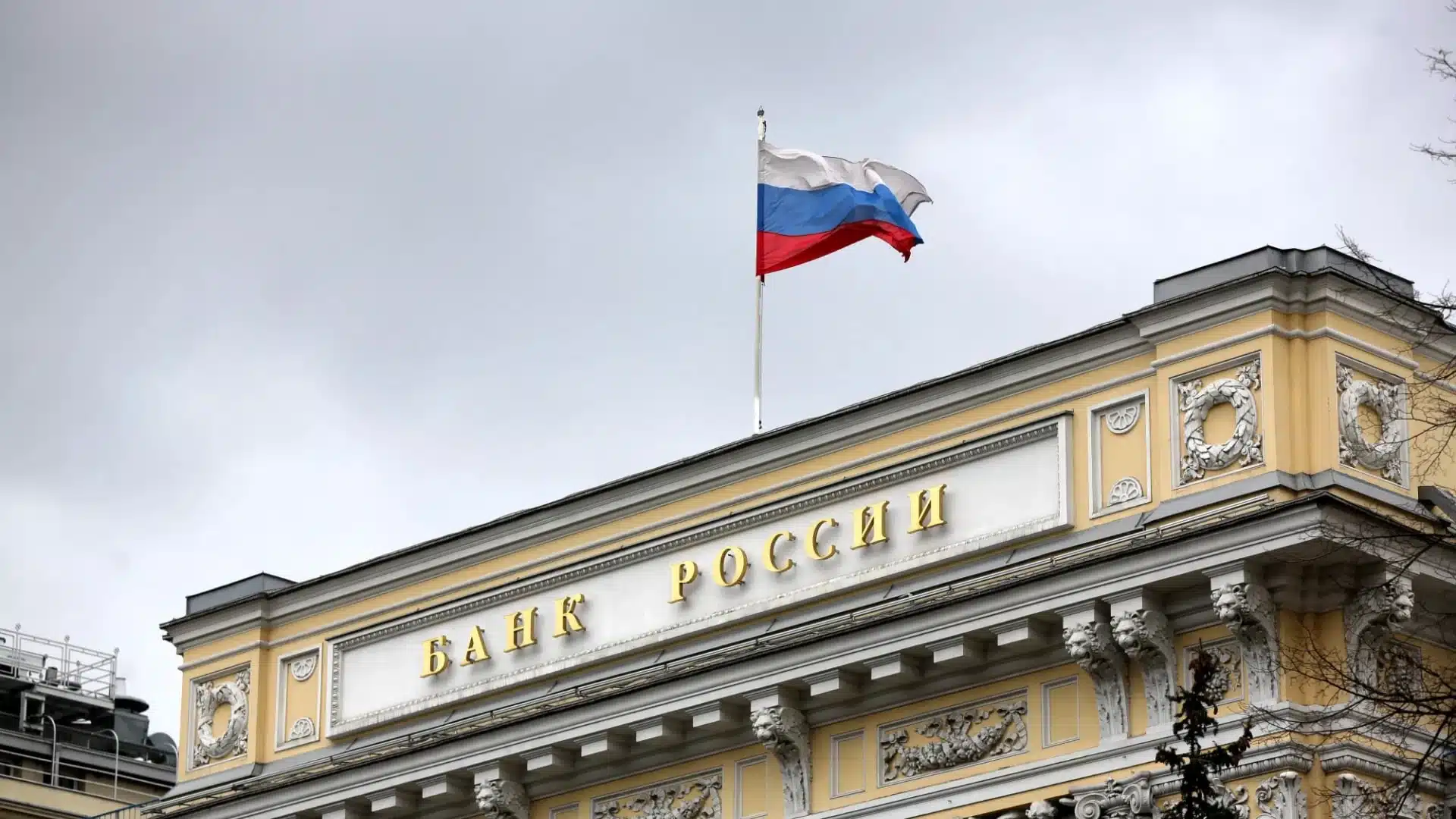
Russia crypto regulation took a concrete step as the Bank of Russia published its first registers of authorized cryptocurrency exchange operators and digital custodians under rules that took effect on Sept. 1. The registers list four exchange operators and five custodians. VTB Bank appears in both categories.
Sberbank is listed as a custodian and plans to launch initial crypto products on Dec. 1, with Bitcoin, Ether, and USDT support through SberBank Online, SberInvestments, and SberBusiness.
BREAKING: 🇷🇺 Russia approves its largest bank, Sberbank, to provide crypto custody services.
Applications opened just 2 days ago.
While the US fails on the CLARITY Act, Russia is building at top speed. pic.twitter.com/b3rPSAlGHV
— Crypto Rover (@cryptorover) October 7, 2026
Put Your Money Where Your Mouth is On Polymarket
Russia Crypto Regulation: From Law to Operating Registers
Russian President Vladimir Putin signed the crypto law in August, creating a framework for exchanges, custodians, brokers and investors. The Bank of Russia supervises the market, and the first registers mark a practical step from legislation to authorized operators.

The framework also segments investor access. According to the Bank of Russia’s explanation of the rules, non-qualified investors may buy most liquid cryptocurrencies up to ₽300,000 per year ($3,515) through one intermediary after passing a test. Qualified investors must also pass a test, but face no amount limit on purchases and sales.
The central bank says market participants have a transition period through July 1, 2027, to obtain licenses and bring operations into compliance. That timetable sits alongside the September launch of the framework: registration has begun, while the broader transition period for market participants remains open.
Market Intelligence: Crypto Analyst Predicts Best New Crypto to Hodl
VTB’s Dual Listing and Sberbank’s Crypto Custody Plans
The exchange-operator register names T-Invest Lab, Zefir, Sistema-Crypto, and VTB Bank. The custody register names Sberbank, Atomyze, Voltari, Cloud Infrastructure, and VTB Bank, giving VTB a place in both the trading and asset-safekeeping categories.

Sberbank said it had applied for digital custodian status and plans to offer its first crypto products from Dec. 1 through its existing platforms. Its planned initial assets are Bitcoin, Ether, and USDT. That list describes Sberbank’s proposed offering; the published register announcement does not establish that those are the only assets permitted across the wider framework.
The distinction matters: inclusion in a custody register and a bank’s stated product plans are not the same as a market-wide authorization of particular tokens or a completed launch. The announcement reports a future rollout, not products already available to customers.
Discover: Ripple News: Will Evernorth’s XRPN Debut on Nasdaq This Oct 12?
Russia Crypto: Formal Market Access, With Domestic Payment Limits Intact
The first registers bring established banks and other named operators into a Bank of Russia-supervised structure. Sberbank and VTB give the initial lists a substantial bank presence, but the registers also include several non-bank firms; the announcement does not identify either bank as the sole or dominant operator.
The analytical question for Russia crypto is no longer whether the country has created regulated channels for crypto activity. It is how much activity those channels can accommodate while investor limits and restrictions on domestic use remain in force. The registrations formalize access to exchange and crypto custody services, but cryptocurrency still cannot be used to pay for ordinary goods and services in Russia.
Market Intelligence: Crypto Analyst Predicts Best Low-Cap Crypto
Disclaimer: Coinspeaker is committed to providing unbiased and transparent reporting. This article aims to deliver accurate and timely information but should not be taken as financial or investment advice. Since market conditions can change rapidly, we encourage you to verify information on your own and consult with a professional before making any decisions based on this content.

Daniel Frances is a technical writer and Web3 educator specializing in macroeconomics and DeFi mechanics. A crypto native since 2017, Daniel leverages his background in on-chain analytics to author evidence-based reports and deep-dive guides. He holds certifications from The Blockchain Council, and is dedicated to providing “information gain” that cuts through market hype to find real-world blockchain utility.