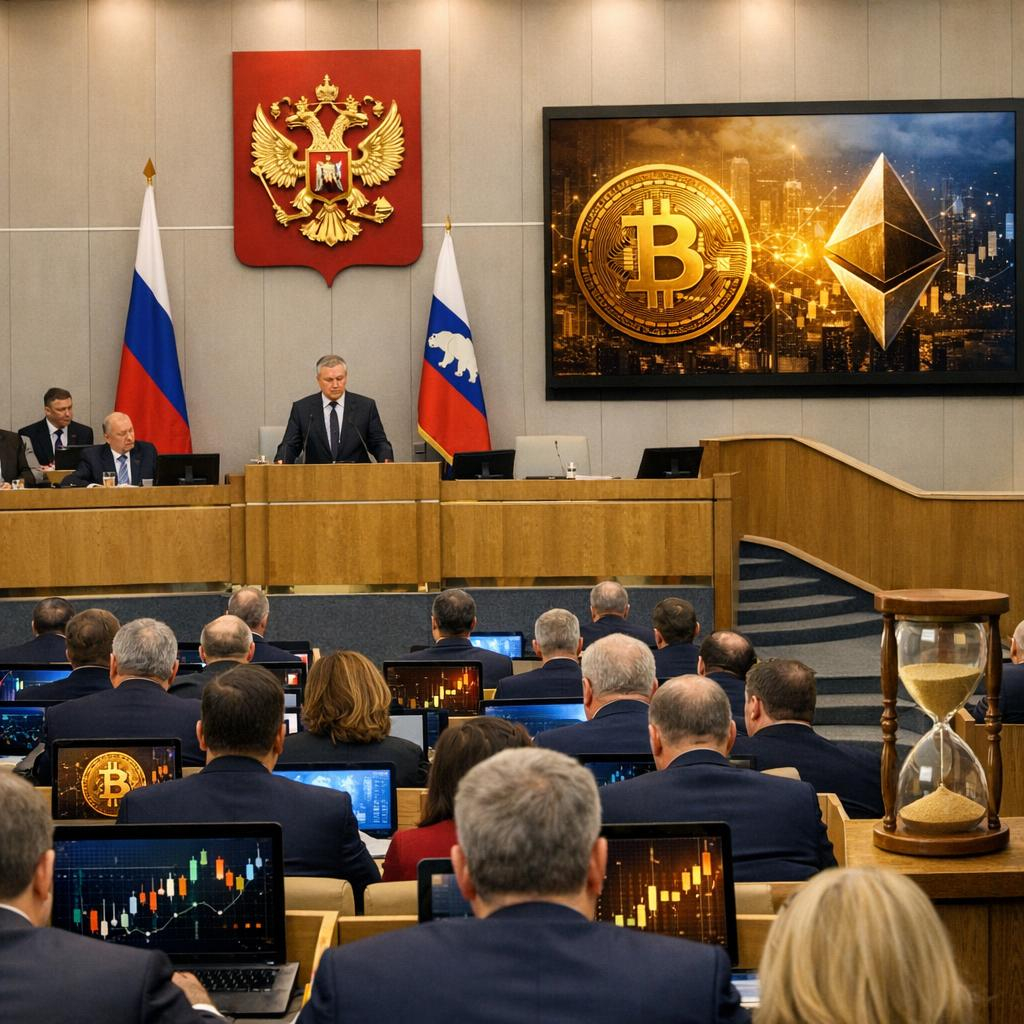

Russia is preparing to roll out its long‑awaited regulatory framework for cryptocurrencies, with lawmakers and regulators moving closer to defining how digital assets will be treated within the country.
According to Anatoly Aksakov, head of the State Duma Committee on the Financial Market, the relevant legislative package is expected to be finalized by the end of June of this year.
Beginning July 1, 2027, the new rules are set to introduce liability for illegal activity by intermediaries in the crypto market, with penalties comparable to those applied for unlawful banking operations.
Russia’s Central Bank Outlines Upcoming Crypto Rules
The groundwork for the reforms has been in development for months. Local media reports disclosed that the Central Bank submitted its proposals for changes to cryptocurrency regulation to the government in December last year.
In its concept paper, the regulator classifies digital currencies and stablecoins as currency values that may be bought and sold, while maintaining a ban on their use as a means of payment within Russia.
Under the proposed system, retail investors with limited experience would be allowed to purchase only the most liquid cryptocurrencies, and only after passing a suitability test.
Bitcoin (BTC) and Ethereum (ETH) would almost certainly be included, while assets such as Solana (SOL) or Toncoin (TON) could also make the list due to their popularity in Russia. All other digital assets would be reserved exclusively for qualified investors.
Even qualified investors, however, would face additional requirements. They would be required to pass mandatory testing to demonstrate an understanding of the risks associated with crypto transactions.
Once approved, they would be allowed to buy digital assets in unlimited amounts, with one major exception: anonymous cryptocurrencies would be prohibited.
The Central Bank has made clear that assets which conceal transaction recipients will not be permitted, as they cannot meet anti‑money laundering standards. Coins such as Monero (XMR), Zcash (ZEC) and Dash (DASH) fall into this category.
First Reading Looms Next Month
Legislative work on the initiative is already underway. Aksakov said the State Duma is moving toward formalizing the proposed changes in law. The initial focus will be on establishing clear rules for the issuance, mining and circulation of cryptocurrencies, as well as reaffirming the ban on their use as a domestic payment method.
He indicated that the bill could reach its first reading as early as next month. The law is also expected to introduce administrative, financial and potentially criminal penalties for illegal activity in the digital asset market.
The regulatory push follows a significant legal development earlier this year. On January 20, 2026, Russia’s Constitutional Court issued a ruling that effectively resolved a long‑standing legal gap affecting thousands of crypto holders.
Featured image from OpenArt, Chart from TradingView.com
Editorial Process for bitcoinist is centered on delivering thoroughly researched, accurate, and unbiased content. We uphold strict sourcing standards, and each page undergoes diligent review by our team of top technology experts and seasoned editors. This process ensures the integrity, relevance, and value of our content for our readers.