Samsung Electronics’ South Korean union will proceed with a strike on Thursday after mediation talks collapsed, with the union blaming delays in management decision-making for the breakdown.
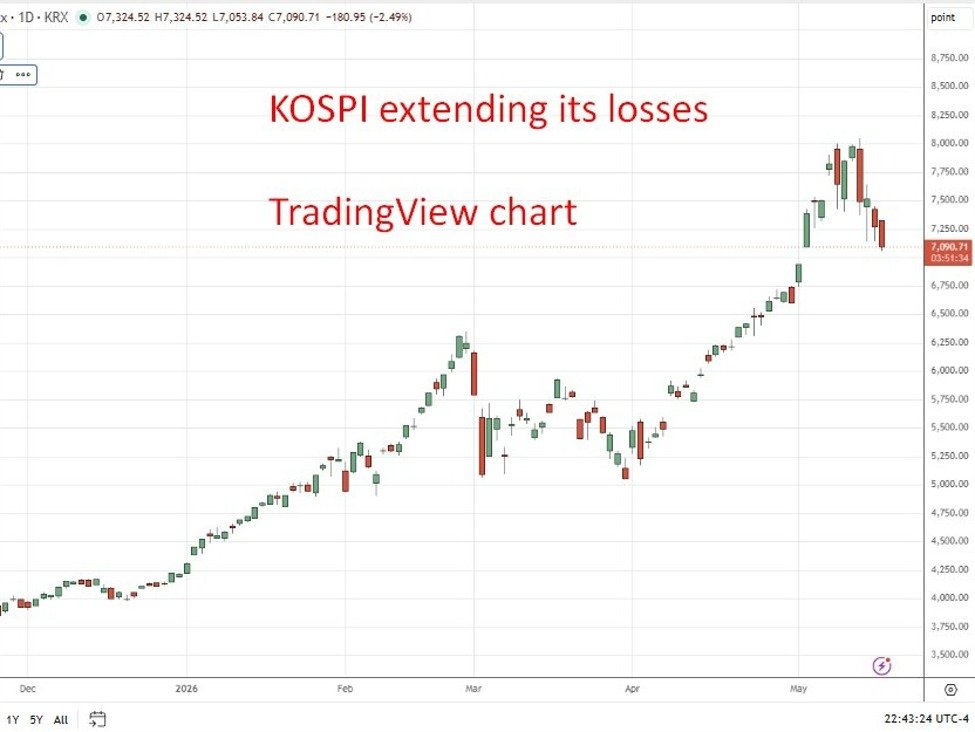
South Korea shares were already under pressure, perhaps reading the inevitable. Note and KOSPI chart down the bottom of this post.
Summary:
The following is drawn from Yonhap news agency reports and union statements
- Samsung Electronics’ South Korean union confirmed it will proceed with a planned strike on Thursday after mediation discussions between union and management were formally terminated
- The union said talks broke down due to delays in management’s decision-making, and issued a statement confirming it had accepted the mediator’s proposal while management had not responded in time
- Both the union and management separately confirmed the termination of talks, with the union stating it will continue to pursue a negotiated settlement even as strike action proceeds
- Samsung is the world’s largest producer of DRAM and NAND flash memory chips, making any disruption to its South Korean operations potentially significant for global semiconductor supply chains
Samsung Electronics is facing strike action at its South Korean operations from Thursday after mediation talks between the company’s management and its union collapsed on Tuesday evening, with the union blaming delays in management decision-making for the breakdown and confirming it had accepted the mediator’s proposal while management had not.
The union said it will proceed with the planned walkout as scheduled but signalled it remains open to a negotiated resolution, stating it will continue to make efforts to reach a deal even as strike action gets under way. The position places the onus firmly on Samsung’s management, which the union said had failed to respond adequately during the mediation window despite the union’s own acceptance of the mediator’s terms.
The dispute is the latest chapter in a protracted labour relations struggle at Samsung’s South Korean semiconductor and electronics operations. The National Samsung Electronics Union, which has grown significantly in membership over recent years, has staged a series of strikes and work stoppages in pursuit of improved pay, better working conditions and greater transparency in bonus calculations. Previous strike actions, including a notable walkout in mid-2024, caused limited immediate disruption to production but demonstrated that the union had both the organisational capacity and the membership support to sustain industrial action. Management and union have been through multiple rounds of negotiations, with talks repeatedly stalling over the pace and scale of pay increases relative to the company’s earnings cycle.
The stakes for global technology markets are considerable. Samsung holds a dominant position in DRAM and NAND flash memory production, supplying components that are critical to smartphones, personal computers, data centre servers and the AI accelerator chips now in high demand from hyperscalers and cloud providers. A prolonged strike affecting key fabrication facilities in Hwaseong, Pyeongtaek or Giheung could tighten memory supply at a moment when the market is already navigating elevated demand for high-bandwidth memory used in AI applications, and when broader supply chains remain under pressure from the Middle East conflict.
The union’s decision to keep the door open to a deal even after calling the strike suggests both sides retain an incentive to resolve the dispute quickly. How Samsung’s management responds in the hours before Thursday’s walkout begins will determine whether this is a brief, tactical escalation or the start of a more sustained disruption.
—
A strike at Samsung Electronics carries direct implications for global semiconductor and memory chip supply at an already sensitive moment for technology supply chains. Samsung is the world’s largest producer of DRAM and NAND flash memory, and any meaningful disruption to output at its South Korean facilities would tighten an already stretched memory market, with potential price knock-on effects across the consumer electronics, data centre and automotive semiconductor sectors. The timing is particularly awkward given elevated global demand for AI-related chips and the supply chain pressures already flowing from the Middle East conflict.
Markets will be watching closely for any indication of which facilities and product lines are affected, and for how long the action is expected to last. The union’s stated intention to continue seeking a deal even during strike action suggests the dispute may be resolved relatively quickly, but the breakdown of mediation after the union accepted the mediator’s proposal shifts the optics firmly onto management.