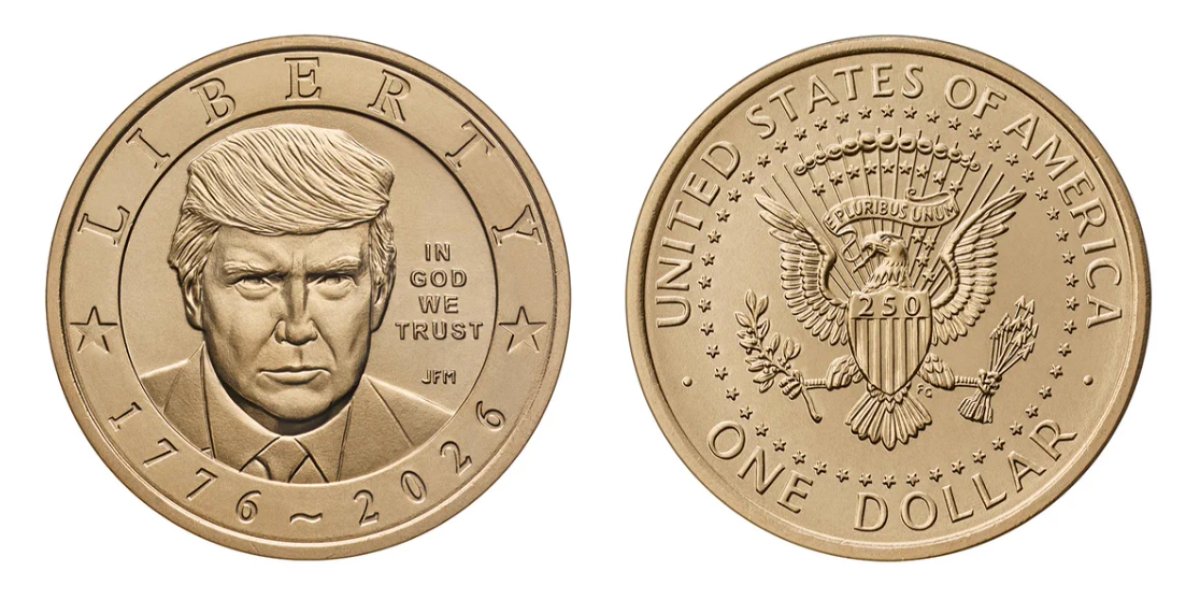
The U.S. Mint is now producing a $1 coin featuring President Donald Trump’s face, tied to celebrations of America’s 250th birthday this year, the Treasury Department said Wednesday.
The coin’s final design was approved earlier this year by the U.S. Commission of Fine Arts—a body whose members were appointed by Trump—though the version unveiled Wednesday differs slightly from what was cleared. Most notably, the coin isn’t solid gold; it carries a gold finish. It’s set for release this fall.
“As America commemorates 250 years of independence, the U.S. Mint will begin striking this new $1 gold coin to honor the enduring legacy of liberty and a lasting symbol of patriotism,” Treasury Secretary Scott Bessent announced on X. “Featuring President Trump, it celebrates the strength of American values, and the promise of a nation dedicated to preserving freedom for all.”
A legal battle
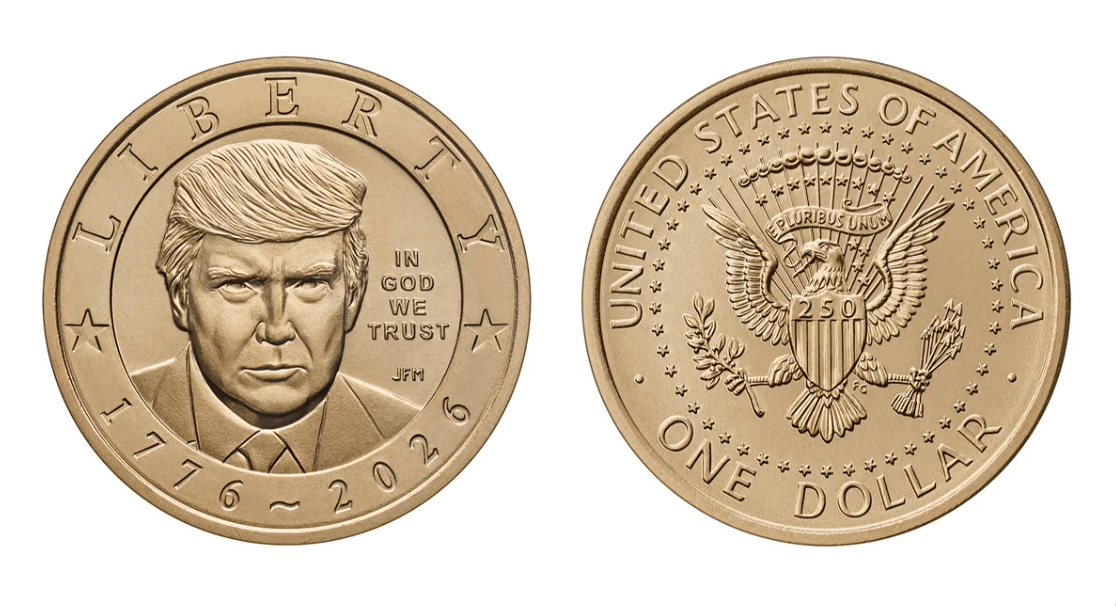
The coin’s front shows Trump in a suit and tie. “LIBERTY” arcs across the top, “1776–2026” across the bottom, and “IN GOD WE TRUST” sits in the center. In a previous design for the 250th commemorative coin Trump was seen fists down while standing over the Resolute Desk.
The coin lands alongside a related, more contested move: putting Trump’s own signature on paper currency. Treasury announced in March that new bills would carry Trump’s signature alongside Bessent’s, replacing the treasurer’s signature that has appeared on U.S. currency for roughly 165 years. The first $100 notes carrying Trump’s signature began rolling out around the Fourth of July.
Federal law bars a living person’s portrait from appearing on U.S. currency. Treasury has argued that the Circulating Collectible Coin Redesign Act of 2020, which was signed during Trump’s first term, gives the administration room to make exceptions for the semiquincentennial.
James Rickher, an Oregon resident acting without a lawyer, filed suit in U.S. District Court in Oregon in late March seeking to block Trump, Bessent and other officials from letting the Bureau of Engraving and Printing issue currency bearing a sitting president’s image. The case turns partly on Title 31 of the U.S. Code, which spells out what the Treasury secretary can and can’t do with coin design: the secretary has latitude over imagery, but is required to include “In God We Trust” and “Liberty” on the front, and “United States of America,” “E Pluribus Unum” and the denomination on the back.
This isn’t the first time a new coin design has earned the attention of the public, especially for a normally quiet government operation such as the U.S. Mint. Earlier this year, dropping the olive branch from the dime’s design.
Congress has taken its own runs at the issue. Rep. Jimmy Gomez introduced legislation that would bar a sitting president’s signature from appearing on currency or securities, though it would need to pass both chambers and be signed into law to actually stop the change. Sens. Elizabeth Warren and Jeff Merkley separately pressed Bessent in an April letter over the rationale for the signature change.
Public opinion has leaned skeptical. An Economist/YouGov poll conducted in April found 59% of adults disapproved of replacing the treasurer’s signature with Trump’s, versus 24% who approved and 18% undecided.