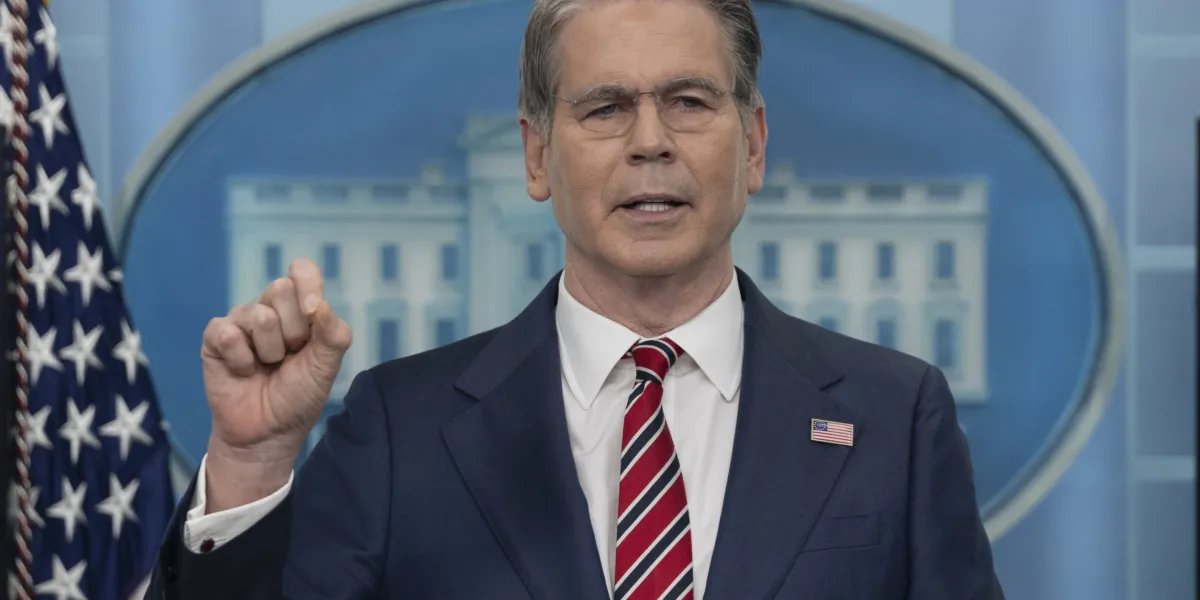
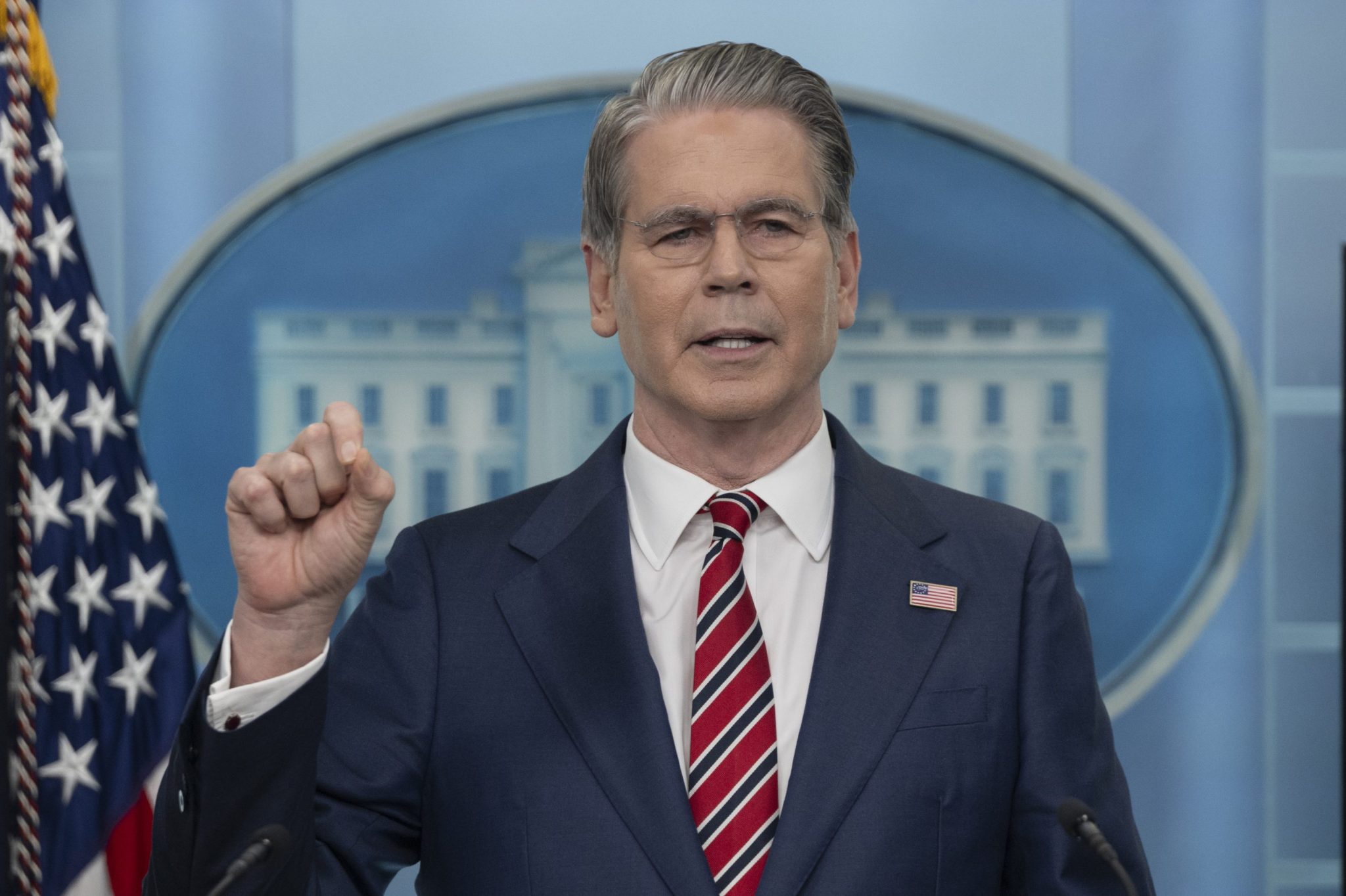
Facing an increasingly aggressive Iran and a slumping bond market, the Trump administration is betting that Treasury Secretary Scott Bessent can use the financial weapons in the government’s arsenal to achieve victory on both fronts.
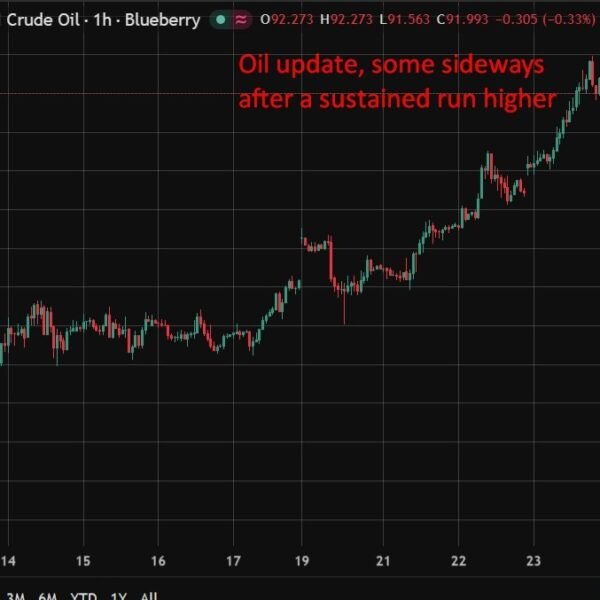
The idea is to kill two birds with one stone: getting Iran to fully reopen the Strait of Hormuz would lower oil prices and take pressure off the bond market as investors lower inflation expectations. Still, Bessent faces a tall order in trying to coerce an Iranian government that’s committed to holding on to the strait.
On Monday, Bessent is expected to detail the “economic D-Day” the U.S. will level against Iran, focusing on countries that do business with the regime.
“And any nation that serves as a financial artery of a withering regime should expect to share in its isolation,” Bessent wrote in a Financial Times op-ed. “To become a sanctuary for terror is to become, in the eyes of the United States, a global pariah.”
Sources told Reuters that the Treasury Department will expand its use of secondary sanctions against entities and countries that engage with Iran, threatening to cut off violators from the dollar-based financial system.
Iran has long used front companies to evade U.S. sanctions, and the new measures are expected to add categories of Iran-related conduct, even in a third country, that would be subject to secondary sanctions, Reuters reported.
The sanctions could put a big target on Chinese companies, which buy Iranian oil and handle Iran-linked financial transactions.
That would complicate President Donald Trump’s planned summit with Chinese President Xi Jinping in Washington in late September as both sides work to avoid any escalation in their bilateral trade tension.
Meanwhile, the United Arab Emirates—which has historically offered Iran vital access to global markets—has already declared an embargo on trade and transactions with the Islamic Republic.
Iran’s economy is under extreme pressure from the U.S. naval blockade, which has slashed oil exports that drive the country’s revenue as well as critical imports.
Top Iranian officials have been sounding the alarm on the economic the damage being inflicted, with parliamentary speaker Mohammad Bagher Ghalibaf pushing back against hardliners who reject negotiations with the U.S. and prefer to remain at war.
“No matter how strong we are militarily, if the people are hungry and we do not have financial circulation, economic growth and domestic production, we will not endure,” he said on Friday. “As someone who has experienced war, we understand the true value of peace.”
Bond market war
As Bessent takes the lead in the U.S. war on Iran, he has also intervened heavily in financial markets to battle the “bond vigilantes” who are pushing up the cost of debt financing.
The term was coined by Wall Street veteran Ed Yardeni in the 1980s, referring to traders who protested huge deficits by selling off bonds to push yields higher.
Today, the deficit is on track to hit $2 trillion this fiscal year despite strong economic growth and low unemployment, and the bond market has finally lost patience as lawmakers show no signs of reining it in.
Higher yields make it more costly to service the $40 trillion U.S. debt, with interest costs at $1 trillion a year, while also raising borrowing costs for consumers.
Last week, Bessent surprised Wall Street with a plan to increase buybacks of long-term bonds, after the 30-year yield hit the highest level in nearly 20 years.
Yields briefly dipped but went back up a day later as the $4 billion size of the buybacks is minuscule compared to the $32 trillion Treasury market.
But Bessent will have much more firepower to battle bond vigilantes. Sources told CNBC that he could use the Treasury Department’s general account to increase the size of the buybacks.
The general account is funded with tax revenue and has been built up to $950 billion under Bessent, compared to $550 billion-$600 billion during the Biden administration, according to the report.
The Treasury Department’s more activist role is raising concerns that it’s engaging in financial repression, or policies that enable a government to keep interest rates artificially low by influencing markets.
In addition to the bond buyback scheme, Bessent’s intervention in currency markets with Japan last month was also done in a way that took pressure off bond yields. That included the U.S. selling euros instead of dollars to prop up the yen and Tokyo’s use of the Foreign and International Monetary Authorities Repo Facility (FIMA).
According to George Saravelos, head of FX research at Deutsche Bank, “we see both the buyback and encouragement to use the FIMA facility for FX reserves as soft-form financial repression policies aimed at containing the long-end of the US yield curve.”