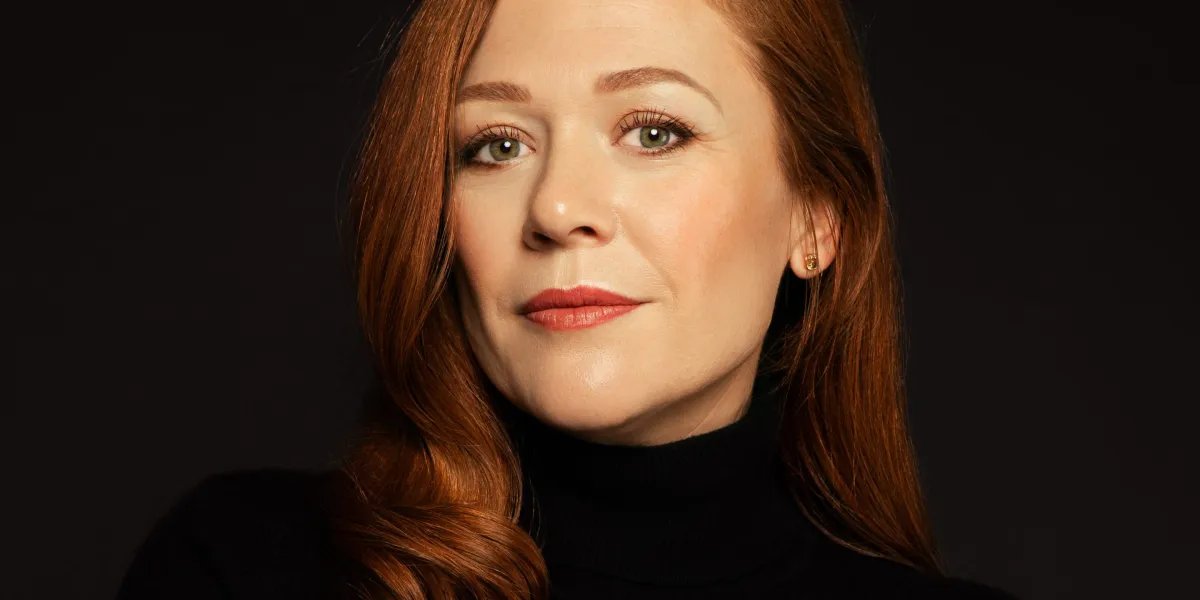
As Women’s History Month comes to a close, here’s a little bit of trivia for you: One of the premier patents in bras hadn’t been touched or improved upon in 88 years. That was until Bree McKeen went after it.
In 1931, inventor Helene Pons was granted a U.S. patent for a brassiere featuring an open-ended wire loop that encircled the bottom and sides of each breast. That uncomfortable, unyielding design had largely been left unchanged for nearly a century—and remains the dominant style in the global bra market, which is expected to reach nearly $60 billion by 2032.
Nobody had filed a patent for an underwire replacement until McKeen, founder of Evelyn & Bobbie, left her Silicon Valley job to try to fix a personal problem. At the end of long work days working at a boutique venture capital firm doing due diligence on consumer health care companies, she would come home with divots on her shoulders and chronic tension headaches after being hunched over her desk for hours on end.
While the world was demanding, the culprit wasn’t her workload. It was her bra.
But McKeen had zero experience in fashion. She studied medical anthropology and earned her MBA from Stanford. The turning point for her, though, came in a physiologist’s office, where McKeen had been working on her posture, along with regular barre training.
“He’s like, your posture looks great,’” McKeen recalled to Fortune. “And I kind of blurt it out: When I stand like this, I get pain from my bra.”
The physiologist explained it was a neuromuscular feedback loop, or the body’s automatic response to pain, like a pebble in a shoe.
“Here I am doing all this work to carry myself with authority and poise, and my bra, I find out, is totally doing the opposite,” McKeen said. “You don’t have to tell your body to curl around the pain. It just does.”
She had zero fashion experience. She filed a patent anyway
That realization kickstarted McKeen on a major career switch, costing her a career in VC—but earning her one of the most quietly disruptive brands in women’s fashion (Evelyn & Bobbie is now the fastest-growing brand at Nordstrom). She moved to Portland, home to Nike, Adidas, and Columbia for inspiration from major brands and proximity to new connections.
She started tinkering with prototypes in her garage and immediately filed for intellectual property rights. That was based on her VC knowledge that a woman’s company would need that to get funded.
McKeen got her first works utility patent (the harder, more defensible kind that covers how something works, not just how it looks) within a year. The brand declined to disclose how much funding it has raised, but now holds 16 international patents protecting its proprietary EB Core technology, which mimics the support and structure of a wire without causing discomfort.

Photo courtesy Evelyn & Bobbie
To put into perspective how critical it was to protect her intellectual property, only 12% of patents in the U.S. were awarded to women, according to the U.S. Patent and Trademark Office as of 2019. McKeen has six of them, protecting the unique 3D-sling technology in her bras.
The brand McKeen built, Evelyn & Bobbie, was named for her maternal grandmother and her aunt, and operates on a simple premise: a bra that fits well and feels good all day.
“I wanted a bra that made me look better in my clothes,” McKeen said—an inspiration reminiscent of how Spanx founder Sara Blakely started her now-$1.2 billion shapewear empire. “Wire-free bras give you that mono boob—not a nice silhouette. They make your clothes look frumpy. I wanted nice lift, separation, a beautiful silhouette. I could not find that bra. How outrageous, really.”
The average U.S. bra size is 34F. Most brands design for something much smaller
With major brands like Victoria’s Secret, Aerie, Third Love, Savage X Fenty, and countless others on the market, Evelyn & Bobbie is undoubtedly in a crowded, competitive space. But as all women know, not all bras are comfortable to wear, especially for extended periods.
“Every woman I talked to had 20 bras in her drawer, but she wore like two of them—the ugly, comfy ones that she felt like she shouldn’t wear,” McKeen said.
What sets Evelyn & Bobbie apart is their approach to sizing. McKeen designs with 270 fit models across seven easy sizes, grading each style individually rather than scaling up from a single sample.
“Most bra companies have like one or two fit models,” she said. “They’ll make a 34B and just scale it up, which is why it doesn’t fit well in larger sizes.

Photo courtesy Evelyn & Bobbie
The average bra size in the U.S., McKeen pointed out, is a 34F, a stat that’s surprising to most people—including initial investors she once had to convince that comfort was even a relevant selling point.
“I had many investor meetings where they were 60-minute meetings, and 50 minutes of it was me trying to convince them that comfort was relevant,” she said. “I mean, Victoria’s Secret kind of figured it out, right? Like it’s just sexy, isn’t that what women want?”
Today, McKeen has a Slack channel dedicated entirely to customer love letters, a relationship with Dr. Nina Naidu, a New York-based plastic surgeon who sends the bras home with every post-operative patient, and a sports bra line in development.
With a luxury product comes a luxury price point: Evelyn & Bobbie bras retail for $98 each. But that price tag could be worth avoiding chronic pain for some women.
“Comfort is the new luxury,” she said. “We spend money on yoga pants that make us look and feel great. I’m going to make the premium bra the bra of the future.”