Snapchat published a report on how Snapchat users prioritize health and wellness, and how they use social media-sourced info to guide their health decisions.
The study, conducted in conjunction with Ipsos US, incorporates responses from a survey of 1,500 daily social media users in the U.S. aged 18 to 45 who indicated an interest in health and wellness.
The data highlighted some concerning trends in the reliance on social media for health content, while also underlining the value of Snapchat as a tool to highlight important health information. Snap is framing the results as a positive for health-related marketers, though it does feel a little questionable.
First, Snap said that “health management has moved beyond the walls of the doctor’s office and into the conversations happening on social platforms.”
Which could be problematic, though Snapchat has framed this as a positive for pharma advertisers.
As per Snap: “Instead of waiting for appointments, they are taking the lead by researching, validating, and managing their health and wellness in real-time.”
Online health research is notoriously unreliable, yet an increasing number of people are conducting their own health research online.
According to the study, 95% of Snapchatters have an active interest in health and wellness. Snapchat users are also 1.2x more likely than non-Snapchatters to purchase health and wellness products.
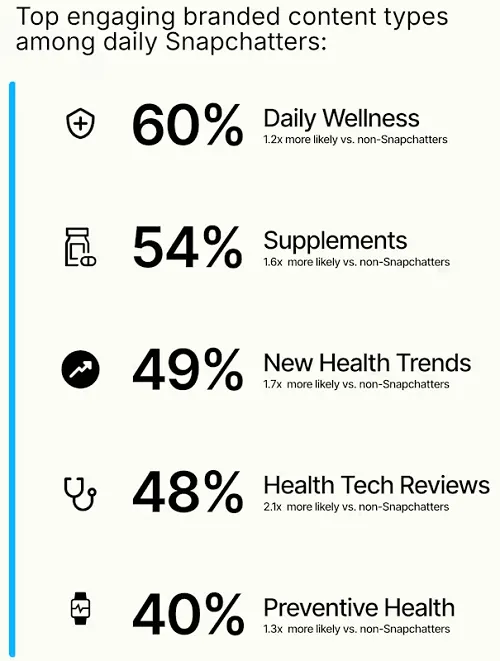
The data also showed that 58% of daily Snapchatters said social channels help them research complex health topics, and 61% use social platforms to evaluate different brands or treatment options against one another.
Reliance on social media for medical information can be harmful, but with medical costs rising, more people are looking online for help.
Whether that’s a marketing opportunity or not is another question.
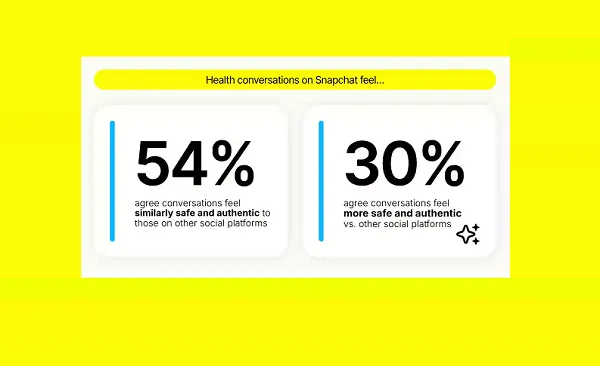
The data also showed that Snapchat is viewed as a uniquely trusted space for health-related discussions, with conversations in the app considered to be more safe and authentic compared to other social platforms.
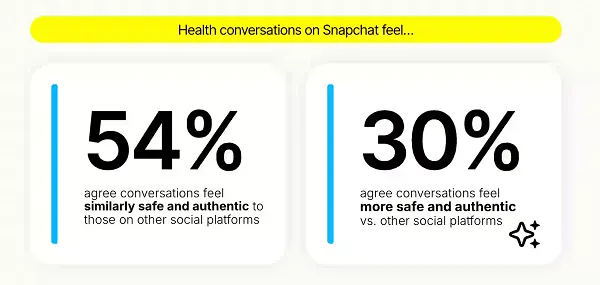
Indeed, the responses also indicate that 71% of daily Snapchatters feel comfortable sharing health-related Snaps with their close friends.
As per Snap: “This safe space creates a halo effect for advertisers, allowing branded content to fuel genuine education and real-world decision making.”
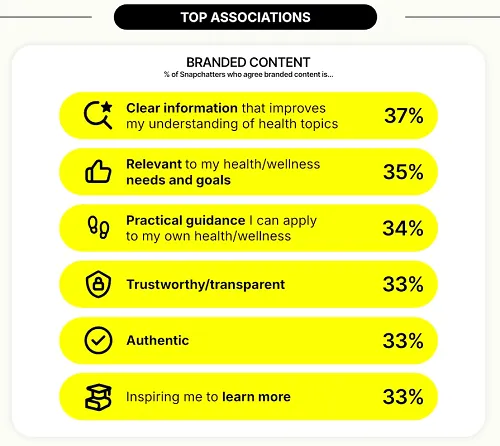
In certain circumstances, this does seem like a valid point. People are searching for health information online, and pharma brands can succeed by tapping into this demand and providing relevant solutions to common medical conditions.
But it also feels like the increased reliance on the internet for medical information is a risky area, which could lead to more problems. As such, maybe it shouldn’t be viewed as a marketing opportunity.
Either way, Snap is presenting it as such by highlighting the value that the platform provides for sharing non-professional health advice.