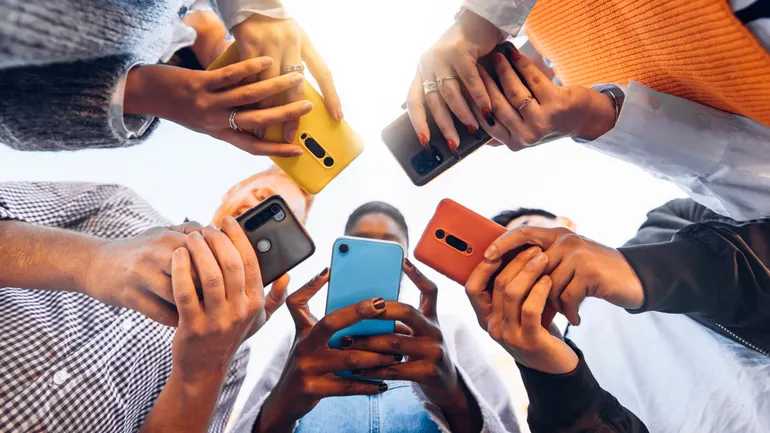
With the eyes of the world’s regulators on Australia, and its implementation of its under-16 social media ban, it’s worth checking in on the latest updates in the region, and how it’s going in keeping youngsters out of the app.
As I’ve reported several times, I’m in Australia, and I have teenage kids, and I can tell you, through my discussions with them and their friends, that none of them have been significantly impacted by the change, with most, if not all, still using social media as they always have.
Yet, the numbers shared by the platforms themselves tell a somewhat different story, with Snapchat reporting that it’s locked or disabled over 415,000 Snapchat accounts in Australia belonging to users “who either declared an age under 16 or who we believe to be under 16 based on our age detection technology.”
Meta recently reported that it’s blocked 544k accounts in Australia in compliance with the same, which, in combination, should mean that a huge chunk of teens are not able to access social media at all in AUS.
But that’s not what’s happening in practice, with many teens switching to another account (I’d be interested to know if there’s been a relative increase in new account creation), evading detection measures, or simply using the apps without logging in.
There are also technical implementation issues, as highlighted by Snap, which are still seeing many slip through these new digital safety nets:
“There are real technical limitations to accurate and dependable age verification. The Australian government’s own trial, published in 2025, found that available age estimation technology was only accurate to within 2-3 years on average. In practice, this means some young people under 16 may be able to bypass protections, potentially leaving them with reduced safeguards, while others over 16 may incorrectly lose access.”
This has always been a key flaw in the Australian approach, that it opted not to go with a single method and system that all platforms would be required to abide by, and instead provided a basic set of guidelines on how the platforms should implement age checking.
Conceptually, this will ensure a more level playing field, with less-equipped platforms still able to abide by the laws through less expensive, less taxing means. But without an established standard, and a set approach for all apps, that will make enforcement difficult, because each platform is still going it alone, and implementing different approaches to age detection.
Some of them will be effective, some won’t, and in the end, there’s going to be no way for the Australian government to legally enforce variable rules when seeking to address implementation.
Snapchat also, once again, notes that the lack of an industry-wide approach on social media services will cause further issues, with the new laws only targeting specific, large social apps.
“Young people won’t stop communicating when they lose access to regulated services. Over 75% of time spent on Snapchat in Australia is messaging with close friends and family. We’re concerned that when young people are cut off from these communication tools, some may turn to alternative messaging services that are not being regulated – services that may be less well-known and offer fewer safety protections than Snapchat provides. While we don’t yet have data to quantify this shift, it’s a risk that deserves serious consideration as policymakers evaluate whether the law is achieving its intended outcomes.”
Which is 100% correct, and counters, to some degree, the Australian Prime Minister’s statements on the under 16 ban when the new regulations were announced.
In declaring the new crackdown on teen social media use, Australian Prime Minister Anthony Albanese urged teens to “start a new sport, learn a new instrument, or read that book” as alternatives to social media use.
That’s idealism, not realistic, measured policy, and the fact is that teens are going to find a way to stay connected online, whether it’s via the major platforms or not.
Digital connection is now central to how teens communicate, and their interactive process more broadly. To suggest that a ban on certain social media platforms will lead to more kids riding bikes and making cubby houses once again is ignorant of this reality, and plays more to the older voting base, who would prefer things to go back to the way they were.
But they won’t.
So while the numbers suggest that the Australian teen social ban is limiting exposure, by banning hundreds of thousands of teens from their accounts, I can tell you, that’s not what’s happening.
It’s also not what’s going to happen, and a better approach would be to double down on digital literacy education, as opposed to hoping to restrict teens from social apps.