Korean stocks hit a record high on tech strength, with a Kosdaq sidecar briefly triggered.
Summary:
-
KOSPI surged 2.46% to a record 5,642, breaking above 5,600 for the first time
-
Tech stocks led gains, with Samsung Electronics up 4.0%
-
Kosdaq programme trading was briefly halted after sidecar activation
-
Foreign investors were net sellers despite the rally
-
Won weakened while benchmark bond yields fell
South Korean shares rallied to a fresh record high on Thursday, with the benchmark KOSPI rising 2.46% to 5,642.37, surpassing the 5,600 mark for the first time. The advance came as markets reopened following a three-day holiday break, with investor sentiment lifted by a strong rebound in US technology stocks overnight.
Heavyweight semiconductor names drove the gains. Samsung Electronics jumped 4.03%, while SK Hynix added 1.48%, reflecting renewed optimism in the global chip cycle. Battery maker LG Energy Solution rose 1.77%, while industrial and auto names also participated in the rally. Hyundai Motor gained 0.40% and Kia climbed 2.32%, while POSCO Holdings advanced nearly 4%. Market breadth was positive, with 583 of 927 traded issues rising.
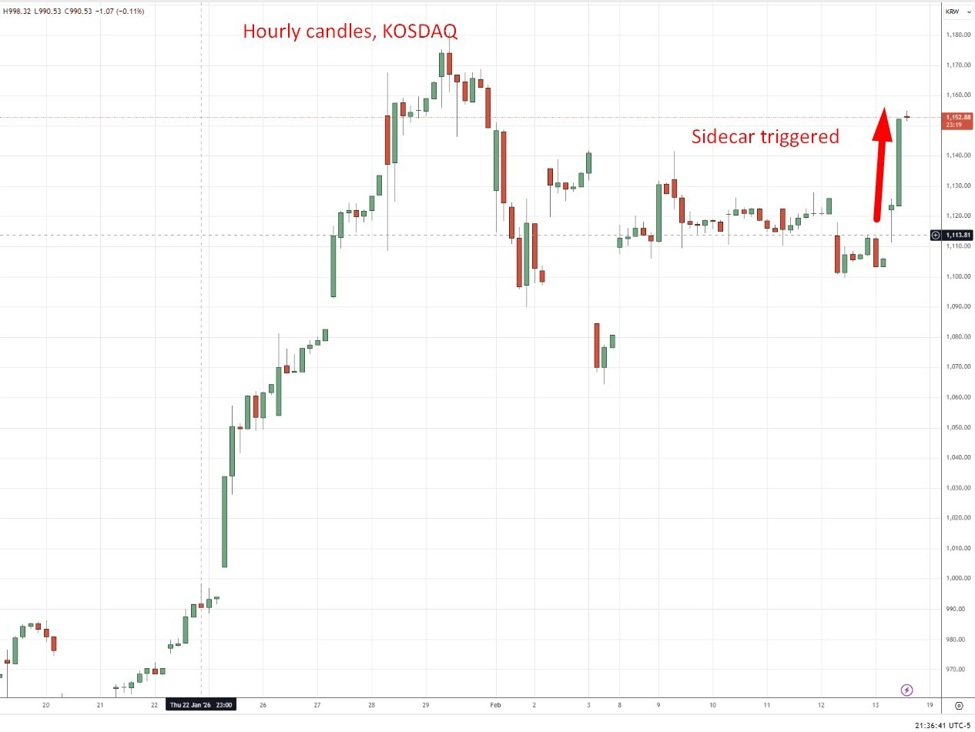
The rally was strong enough to trigger a volatility control mechanism in the junior Kosdaq market. Programme trading was halted for five minutes after the Kosdaq 150 futures contract surged 6%, activating the Korea Exchange’s “sidecar” rule.
Sidebar: What is the Korea sidecar rule?
The sidecar is a temporary volatility control mechanism designed to curb excessive swings in derivatives-linked markets. It is triggered when Kospi 200 or Kosdaq 150 futures move sharply, typically by 5–6%, within a short period. When activated, programme trading (computer-driven arbitrage linked to futures) is suspended for five minutes. The rule does not halt all trading, but it slows algorithmic flows that can amplify momentum, helping stabilise the market during rapid moves.
Despite the equity surge, foreign investors were net sellers, offloading shares worth 485.6 billion won. The Korean won weakened against the US dollar, while bond markets firmed. Three-year treasury futures rose and benchmark yields fell, with the 10-year yield down nearly 4 basis points.
The KOSPI is now up nearly 34% year-to-date, highlighting strong momentum in Korean equities even as currency weakness persists.