The largest initial public offering ever is just days away, and demand for SpaceX stock is expected to extremely high, with Wall Street clamoring to buy Elon Musk’s rocket and satellite company.
But the flip side of all that buying is plenty of selling as investors need to raise cash for stock purchases by liquidating other shares in their portfolios.
To be sure, IPOs are often accompanied by volatility. But Greg Boutle, head of U.S. equity derivative strategy at BNP Paribas, pointed out in a note Friday that what’s different this time is SpaceX-related volatility will be coupled with the largest market cap ever seen in a U.S. IPO.
SpaceX plans to raise at least $75 billion in its IPO by selling over 555 million shares at $135 a piece, valuing the company at more than $1.75 trillion. If underwriters exercise options for additional allotments to meet high demand, proceeds could grow to $85.7 billion.
The IPO is expected to price Thursday evening, with shares trading Friday on the Nasdaq under the ticker SPCX.
“We think many of the standalone SpaceX flows might be digestible. The problem is that many of these flows are potentially same-way and additive,” Boutle explained. “With the SpaceX free float reported to be close to $75bn on IPO, it’s easy to see how $30bn of passive buying, a retail investor chase, and levered ETF and option flows collectively could quickly become challenging for the stock’s liquidity. If all are chasing to buy (or sell) at the same time, the risk of price dislocation becomes much greater.”
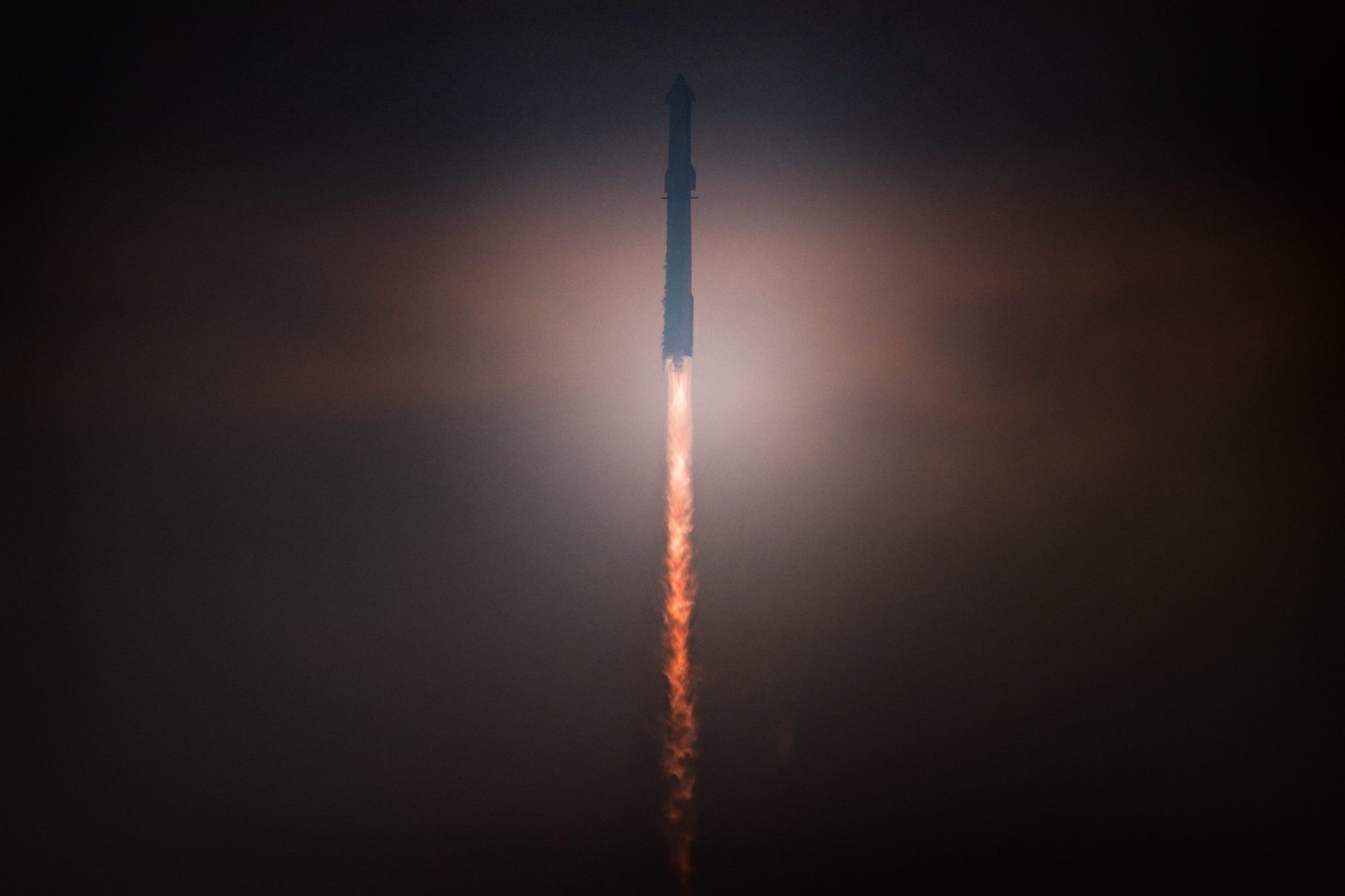
SpaceX has long been one of the most highly valued startups after taking over the space industry since its founding in 2002. It claimed more than 80% of global rocket launches last year and has over 10,000 Starlink satellites in orbit, providing space-based internet connections to businesses and militaries.
While S&P Dow Jones Indices chose not to change its rules to accelerate inclusion of SpaceX in the S&P 500, rules for the Nasdaq 100 were tweaked, triggering purchase demand for passive funds linked to the tech-heavy index.
Such buying will be funded with equivalent selling. But Boutle noted retail investors could be more important for SpaceX and the IPO’s market impact than passive flows. That’s because they have behaved in “a FOMO-style, rally-chasing manner” so far this year.
“This type of herd behavior tends to amplify moves and create fatter tails,” he added. “This would then be amplified by passive investment demand.”
Retail investors could have much of their wealth tied up in other stocks, and the astronomical surge of AI-related companies in recent years makes them ripe as sources of cash.
In fact, Boutle observed that Friday’s market bloodbath, which was led by chip stocks, could be an early indication of the coming price dislocations he flagged.
“Selling flows in recent winners and levered products from retail to invest in SpaceX could be very large,” he predicted.
Boutle estimated that retail and passive investors might sell a combined $50 billion of other stocks to raise funds for buying SpaceX. And if the IPO performs well, that figure could rise. A further cascading effect is possible if levered ETFs and commodity trading advisors join in, as mechanical rebalancing is triggered.
On top of that, the SpaceX IPO is happening near the end of the second quarter, when more than $100 billion of stock sales unrelated to the IPO were already expected, according to Boutle.
“The danger for the market is not the individual flows, but the cumulative effect,” he warned.
As much as the SpaceX IPO could be a bumpy ride for Wall Street, it’s just the beginning. OpenAI and Anthropic also plan to go public this year, and demand for the top AI companies will likely be high as well.
At the same time, other hyperscalers are selling stock in secondary offerings, with Google parent Alphabet issuing $85 billion in shares in the last week.
The abundance of new shares suddenly becoming available has raised concerns about whether there’s enough demand to match all the supply.
The IPOs of the leading AI companies also mean investors who have been holding shares in adjacent companies in the hope of riding the AI boom indirectly no longer need them anymore.
“Investors have spent years buying proxies because they couldn’t buy the assets directly,” Nigel Green, chief investment officer at DeVere Group, told Bloomberg. “If investors can eventually own OpenAI itself, some of the scarcity value attached to that relationship inevitably changes.”