ekapol/iStock via Getty Images
Download this episode on Apple Podcasts, Spotify, or listen below:

Transcript
Rena Sherbill: Hi, everyone. Hope you enjoy today’s episode with Mr. Steven Cress.
I wanted to let you know that this is a combination episode of sorts. It’s an interview I did with him recently for Investing Experts Podcast that we included an excerpt of on our Wall Street Lunch podcast, the day of Micron (MU) earnings, to give followers of Wall Street Breakfast and Steven Cress a chance to hear his thoughts on Micron, both pre and post earnings, or his thoughts on what that might look like.
Steve and I been doing a morning show that we’ve been releasing on YouTube in full and on TikTok and X/Twitter in part. And we have been sharing Steve’s insights from a quant perspective on that day’s stock movers, on that day’s market news, and what’s happening in the markets from Steve and his quant perspective.
So you can follow us on @CressTopStocks on YouTube, X, or TikTok. We hope you will.
And let us know what you want to hear about. Let us know what you want to hear more of. Let let us know what you want to hear less of. I hope you enjoy Steve’s origin story also that we get into today. I for one found it very interesting when I heard it myself from Steve and so I asked him to share it here for all of you.
Hope you enjoy this episode.
Rena Sherbill: Welcome back, everybody, today I am happy to have on Steve Cress, as I’m sure you are all happy to hear from him.
Micron (MU) is about to report. It’s a company that Steve has talked about. It’s been an Alpha Pick for quite some time, as we discuss on YouTube’s very own Wall Street Breakfast with Steve Cress.
Steve, what are you looking at when you’re looking at earnings?
Steve Cress: Well, first thanks for having me today. Appreciate it. And absolutely Micron is amongst one of the largest stocks that investors are focusing on. So Micron will be reporting shortly and we’re most interested in Micron because that is a big name. It is a quant name. We’ve had a strong buy on it for a long time. And the market is expecting good things out of it.
Fortunately, Micron had a really good beat last time on both a normalized and GAAP basis. There were eight beats and zero misses. So for the upcoming quarter on a normalized EPS basis, we’re looking for $31.82. That’s consensus. And consensus gap is $31.94. Literally a thousand percent growth.
In the last 90 days coming into this quarter, 12 analysts revised their estimates up, and two revised it down. For the full year, for the fiscal year, 13 analysts revised their estimates up. And only one revised it down. That’s a C plus grade. So you would think 13 up one down is better than a C plus. It actually shows you what the sector median is. So 86% are analysts are expecting that the sector has good beats.
Where you can see for Micron, it’s 92%. So that number is higher by about 7.84%. So that to me is pretty positive. Overall, that’s only beause there are other companies where you have 20 analysts that have revised their estimates up and zero have revised it down.
But 13 to 1 is still really good in my book. Annual EPS estimates for August 2026 and August 2027, as well as revenue. And you could just take a look at the quarters too and look how many times they’ve beaten. They’ve beaten every time since the third quarter of 2023. So their business is just doing fantastic.
You can see how much of every time the beat gets a little bit better. And recently it’s just been blown out of the water. I mean third quarter a year ago they came in at 32 cents. Then you could see if you look at the second quarter from a year ago, it came in at $1.56. The beat was by 14 cents.
So looking at the second quarter of this year, it went from a dollar fifty-six to twelve dollars and twenty cents. So this is just extreme in terms of how fast their EPS it’s growing.
So what would I expect today? We have the quant with a strong buy. You can see all the key investment characteristics that we look at, valuation growth, profitability and momentum, all A pluses.
The only one that’s a little bit lower is the analyst revisions. But as I said, that’s 13 up, one down. I’ll take that any day. The stock still looks really great from a fundamental perspective. I will say it is still significantly off its 52-week high.
So currently trading at $1,069. We could see that back in June, the stock was trading at around it looks like it’s closer to about twelve hundred dollars. So that 52 week range is very wide at a low 165 and a high of 1255.
So it’s still closer to the high side, but still significantly off its June highs. And for all intents and purposes, they’re gonna have another quarter of record revenue and record earnings.
Rena Sherbill: So last time you were on, you were talking about you were making the case for buying the dip, notably with Credo (CRDO), but some other stocks as well. And a comment was left on that episode.
Steven, I am a faithful subscriber. However, I wish the strong buy recommendations would take the entry price into consideration. Buying on a dip is great advice but recommending a purchase when a stock is at an all-time high can create unnecessary risk, especially for new investors. The recent market changes have highlighted some of the risks of buying at the top. I understand that Steven may not believe in timing the market, but buying low and selling high could greatly benefit your followers.
There was an answer to that I just want to read.
People have this kind of argument all the time. I get it, but this is the mental barrier an investor has to get over with. Buying at all time highs is so hard, but yes, you’re just as equally missing on the train as e as actually getting the dip. So trying to wait for a pullback just satisfies your mind, not giving you a mathematical advantage.
I thought you might like it. I thought you might like it. Any any two cents you would add to that?
Steve Cress: Wow, what a good response. That’s much better than I could have said it. Really good, really good response. I mean nobody frankly knows when a high is gonna be with any stock, especially when that’s doing particularly well.
You clearly could have said in the year two thousand or nineteen ninety-nine that you know Amazon (AMZN) was at a high or Facebook was at a high. So or you could have said NVIDIA (NVDA) was at a high. So it’s really almost impossible to tell when a stock will be at a high.
However, if we recommend selling when the stock is at a high, it’s not being sold because the stock is at a 52-week high. It’s being sold because the valuation framework has changed or the growth framework or the profitability. So the factor grades that we show, what you can see, it’s A plus for micron for all of them, except revisions, which is a C plus.
That is the basis of which our decision is made on. When we look at these key investment characteristics, and we have those grades, it’s all on a sector relative basis. So when you look at valuation, you know that it is cheap compared to the rest of the sector. If you look at growth, you know the growth is far stronger than the sector.
So if we have a sell by example, it could be because that valuation grade is an F, or the growth grade is a D, or the profitability grade is a D, or the revisions grade is a D. And that’s what we factor into our strong buy, buy, hold, sell, and strong sell decisions. and it’s not on the basis that the stock is at a fifty two week high.
Rena Sherbill: Care to weigh in on what you imagine the market to look like, how the sector may move in conjunction with Micron. Again, nobody has a crystal ball, even you, but based on your rich history in the markets.
Steve Cress: What we’re looking at right now is we can see crude oil is up a little bit. And if we’re really just looking one day out, Micron (MU) reports today, they could have record revenue and record earnings, and it’s quite possible the stock can still come down.
Case in point when NVIDIA (NVDA) reported they had record revenue, record earnings, beat expectations, and the stock still came down that day.
So we’re clearly in a market where sentiment gets a heavier weight than fundamentals and if sentiment is negative or anxiety is high, even on a day because of perhaps geopolitical events or movements in interest rates, the 10-year treasury or the 30-year treasury or economic data points that can come out.
All of it could impact and there’ll probably be economic data points tomorrow that could impact the market.
But right now we’re looking at gold a little bit higher.And if we look at treasuries, we could see the 10-year treasury is a little bit higher too. So the market may not feel comfortable with that going into tomorrow.
It will look to Micron Technology to see what earnings are like.
My guess is with the 10-year treasury up a little bit now, and with Brent up 2% now, the market is actually up slightly on the day.
But what I’d like to do is actually show you the market data. And if we jump into sectors. So I’ve moved from the earnings calendar to sectors, and I’m just going to look at today and sort of by today’s performance. You can actually see technology is the best performing sector with communication services right behind it.
Then the underperformers are consumer staples and healthcare, which traditionally are really safe haven sectors.
So the safe haven sectors aren’t trading well today. A little bit more focused on the risk-on sectors. With having said that, within the risk-on sectors, it could be a little bit granular.
So, what I’m to do is look at themes and subsectors. And I’m going to go down to technology so I could see how technology is playing out today. So, overall, technology is the best performing sector. And within it, we see cybersecurity and semiconductors are outperforming within technology. The underperformers are blockchain, smartphones, and social media. Now that’s just on the day.So I’d say the market is fairly positive right now on the semiconductors. So perhaps if we do have a good number and we don’t have an economic data point tomorrow that scares everybody, we could be in good shape if Micron beats today.
And going into the closing hours with less than a half hour to go, we can see Micron’s up slightly. I think most people are expecting a beat. So it’s gonna have to be a pretty good beat, I think, in order to move the needle.
Rena Sherbill: I alluded to your rich history in the markets, and I consider myself very fortunate to get to speak with you fairly often. And I recently heard a story from Steve that I thought was a perfect fit for a podcast episode, and he has never shared it before.
I find it very interesting to get a sense of who you were before the quant system, before you came to Seeking Alpha, before you started your next chapter of your career. If you wouldn’t mind, Steve, sharing your I would consider your origin story, considering where you’re sitting today.
Steve Cress: Absolutely. So spent the bulk of my career at Morgan Stanley. I was there for 13 years. for a good portion of that time I ran a prop dating prop trading desk in quantitative strategies. however, before that, I actually used to be in institutional sales. And it’s pretty rare that you have somebody move over from institutional sales into trading. and the way that developed was really at the back of the TMT bubble.
And the explosion in that bubble. So you’ll notice if I a couple of my recent articles are also focusing on the current AI infrastructure build out and many larger companies that are now providing financing, it is reminiscent of the TMT bubble. I would definitely recommend looking at those articles, but I don’t want to get off the point of the story too much.
When I was in institutional sales, I had some of the firm’s largest accounts. And on the backside of the bubble bursting, the accounts were not happy with Morgan Stanley. we had placed a lot of tech deals with these institutions, most of which had blown up.
Morgan Staley at the time was a lead banker in a lot of technology deals. And when the going was good and many of these companies were their stock prices were going crazy, especially on the back of real no revenue or earnings. It was sort of that the era that we were in.
But when that bubble burst, the accounts barely wanted to talk to me and I had about a dozen accounts. As I said, they were some of the largest ones on the institutional side.
And I decided to switch up the way I work on a daily basis.
Conventionally or traditionally, what you would do is you would have a research meeting in the morning research analysts would come out with upgrades or downgrades or updates, and you would communicate those stories to your clients. And the clients just really became less and less receptive.
So I tried to get my business to focus specifically on the clients’ needs. And I started developing screens. And within the screens, I would try to create a focus for each of my clients in terms of what their particular fund, theme was. So if a client had value, I had value screens. If a client had a growth fund, I would create growth screens. If they had a GARP, I would create a GARP screen.
And within those screens, we would sort by those metrics and we could rank the companies. And part of that screen, I created something which was fairly innovative at the time. They had the ability to click on the name of the stock and it would actually bring up a Morgan Stanley research report.
Now we’re talking about like the year 2000, 2001, 2002. So creating that technology at the time was actually kind of a unique feature. So started sending that out to my clients and they really liked it. did a lot of their work for them with these screens. Then it also gave them the ability to get that independent research from Morgan Stanley when they saw a stock come up on the screen that screened well.
Now that doesn’t mean that Morgan Stanley necessarily would have had a buy or a strong buy on it.
We ranked it on a data-driven basis. So it became very popular. not necessarily popular with the people that I reported to there. some of my manager my managers like were questioning what I was doing. And they’re like, remember, the focus of your job is basically pumping up Morgan Stanley’s research and placing deals, which virtually was impossible at that time because the clients were so upset.
Many of the deals that we had placed with them had gone down by 30, 40, 50 percent.
When I was running these screens for them, the clients actually liked it. and they became more popular. And as I was doing it, I kind of came up with my own screens.
And one of the first screens I developed, I wanted to uncover companies that had done well in recent years that did not explode and decline by 20, 30, or 40, or 50 percent, and identified metrics that worked at that time. And at that period’s really one of my first models.
Was using dividend per share growth and ROE growth combined. And I was able to uncover that there were industrial stocks and metal mining stocks that were doing incredibly well when the entire market for the most part was going to hell in a handbasket. And I created these script screens and the clients really paid attention to it. And with a derivative desk, which was not related to my desk at all, I was in a straightforward equity research desk.
I worked with the derivative desk to create swaps. So I could recommend a basket of stocks to a client that could be 20 or 30 stocks, but with a swap, they were able to buy just one security, similar to what you do with an ETF.
And my managers were not happy as I was taking a fair amount of my time. But eventually I was actually able to place two of the swaps. And the swaps performed incredibly well. And they actually generated a good commission for Morgan Stanley.
So then my managers too and switched from like, what are you doing? to like, what are you doing? with interest. And after doing that for a couple months, the head of trading caught on to what I was doing.
Word was getting around that the performance of these baskets were really strong. And that’s when I made the switch from being an institutional sales to prop trading and running a desk that was based on quantitative strategies.
So it was really an effort born out of the turmoil of the TMTR, and that’s how my quant career started.
Rena Sherbill: What’s the timeline between that and getting CressCap purchased by Seeking Alpha?
Steve Cress: The prop desk effort started roughly around two thousand three, running the screens right around two thousand three. And then we had the financial crisis occur in two thousand seven. And the following year, there was a law that came out, which was known as the time as the Volcker Law or the Volcker rule, which prohibited investment banks from risking a client.
capital or enough of the bank’s own capital that it could put the commercial side of the business at risk. So basically it ended the era of prop trading for the large tier one firms. So that ended.
And from there I moved to Northern Trust eventually, where I was the head of international the asset management division for business development. And that really went fairly well. And that was during you know a peak period for the financial crisis as well.
I got a lot of asset management experience. And from that, I started my own hedge fund that I ran for a couple of years. And simultaneously, when I was running my own hedge fund, I had launched a fintech company, which was CressCap Investment Research. And that is the business that became really interesting.
Largely what we created, I mean, nobody really referred to it as AI at the time, but we took the systematic models that I had developed for my hedge fund and largely what I ran at Morgan Stanley as well. It was a systematic process for these quantitative strategies. So it became very autonomous.
I combined that with natural language processing. So every company that you could look at, you could literally type in the name of the company or ticker symbol, and it would generate an autonomous investment research on the spot using data from that day. when I did this in like 2016, 2017, believe it or not, people had a hard time getting their head around that a computer could generate an investment research report.
I know today in this day and age of AI, where we get stock recommendations all the time from AI, and there’s many, many sites and platforms that use systematic data-driven processes. Back then, and it wasn’t even that long ago, institutional investors and individual investors were so accustomed to having research reports written by an individual.
So it was really sort of a leading edge movement at the time. And Seeking Alpha saw what I was doing and they liked it. and by way of background, David Jackson and I, and David is the founder of Seeking Alpha, we actually used to work with each other at the same time at Morgan Stanley. So we reconnected at Seeking Alpha, they had a platform of news and crowdsourced research, which is qualitative investment research. I had the quantitative aspect to it.
So it added a really nice complement to be able to have the qualitative analysis from the contributors at Seeking Alpha and then have the quant analysis, which updated every single day and the quant provides fresh members and really what the quant does, which like if you went to many other systematic sites or just even vendors like Bloomberg or Reuters, what we do at Seeking Alpha is we actually interpret the data for people.
Instead of just giving them the absolute data and ranking on absolute data and that interpretation are through the factor grades. Those factor grades give you an instant characterization of how a company looks on value, growth, or profitability compared to the sector.
I have to tell you, if you’re looking just at a lot of data all day long, or in the quant world we refer to it as Z scores, at the end of the day, it’s so much easier to take a look at that academic letter grade and get that instant characterization of that company’s metric compared to the sector. It just saves you a lot of time and it’s much easier to absorb. So that was part of the process that I had created with CressCap Investment Research, and it really dovetailed very nicely to Seeking Alpha.
So we came together in the beginning of 2019 and the rest is history.
We developed the quant grades, we developed grades for ETFs, we developed dividend grades. You can measure the dividend safety and dividend growth of a company relative to its sector. And these dividend safety grades are great because you really can’t get them on any other site.
And if you are dependent on income generation from stocks, you really want to know that dividend is safe. So when you click on it, you could see the underlying metrics that make up that dividend safety grade.
And I’m really pleased to say that if you own a stock that has that dividend safety grade of B minus to an A plus, historically going back to twenty ten, you would have avoided a dividend cut ninety-eight percent of the time.
So I’m really proud of that data point and the metrics that we put together for that.
Rena Sherbill: I love an origin story. I think it informs the strategy that we’ve been listening to and using in many cases. Steve, any final words of encouragement or thoughtfulness for our investing community?
Steve Cress: I would add on the back of that how well Quant has done and particularly what we do, which is looking at those five core investment characteristics, where I refer to really as a GARP approach.
And you could see over the last five years, this is taking all our quant strong buys. So on any given day, this could be like 350 to 400 quant strong buys. And we rebalance the portfolio of those strong buys every day. And you could see over the last five years that the Seeking Alpha Quant strong buys are up 166% compared to Wall Street up about 17%, and the SP 500 up 49%.
And that’s the last five years of the simulated trades. the simulated trades started really around 2019. Our back tests go back to 2010. And if you took that number and here we go, you could see for that period from 2010 to date, the quant strong buys are up 5,000% compared to Wall Street straw buys up 124%.
And the S&P 500 up 585%. So it really comes down to this process that we utilize. When you look at stocks like Micron that have a quant strong buy that are based on these five core investment characteristics, we believe in diversification. So that’s why we’re looking at value, growth, profitability, and momentum revisions.
Many quant systems might just look at momentum, many will just look at growth, but we really like the diversification of our process and the track record has shown that it’s worked out quite well. So I’m definitely a big proponent.
And my final words, if you pull up Micron and you take a look at any of the research reports, you can follow me. Or if you’re interested specifically in the products that we created on the back of our quant system, such as Alpha Picksor the Pro Quant Portfolio or the Quant Growth and Income, they are all derivatives of our quant system and they are all have very strong performance as well.
Rena Sherbill: Here is an excerpt of our new morning show from Friday, October 9:
Good morning, everyone. It is Friday, October 9th. We are back with Steve Cress. Stock index futures have advanced after a tech sell-off on AI revenue concerns. We also had some news out of Starlink and some telecom stock sell-off news as well.
Steve, what would you share with our audience about today’s market?
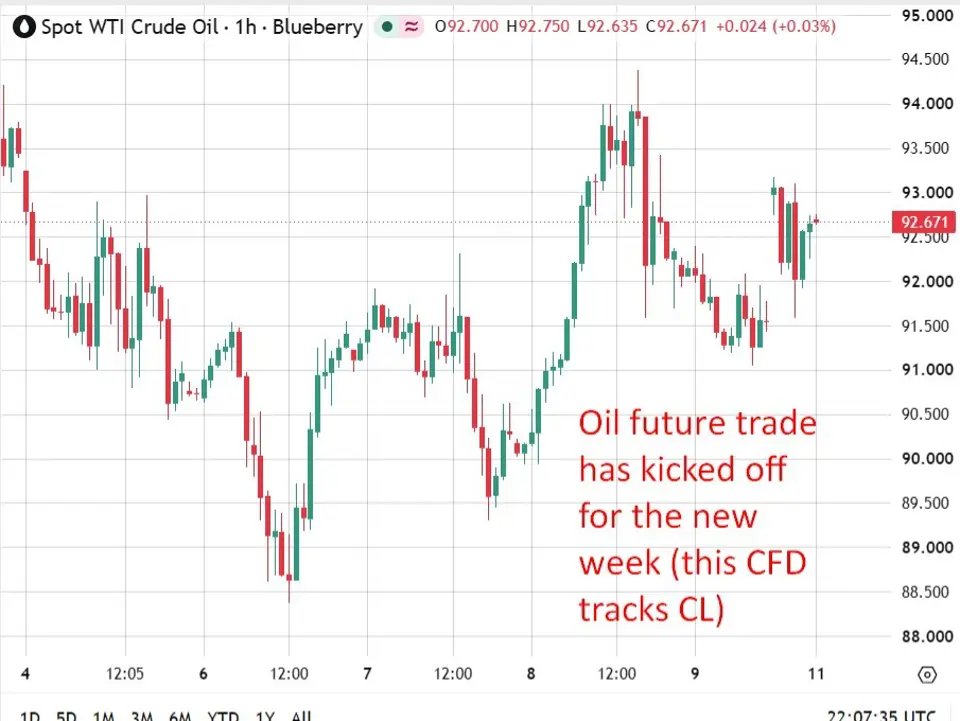
Steve Cress: Well, I’d say today’s start is a little bit more positive than yesterday. if you recall, yesterday going into the open, there were fears about increased escalations with Iran, and we had oil move up fairly significantly. today a moderate pullback in oil. It’s not even a one percent pullback when we look at crude oil here. Currently priced around ninety.
But the market is reacting positive to that. So we find the NASDAQ is up almost three-quarters of a percent, S&P 500 up point three percent and the Dow is fairly flat.
For the most part, I think a lot of the technology stocks that sold off yesterday that are AI related are bouncing back this morning, right before the open.
I think the most interesting news obviously is what we’re seeing out there with SpaceX (SPCX) acquiring spectrum and the reaction from the current providers for telecom services. So how would you like to get into that?
Rena Sherbill: It is something that is very interesting and I think indicative of the ways that the world is changing. But also it’s not so clear the actual fallout or the actual consequences. And I think that there are interesting notes to highlight, as I’m sure Steve will do in a second, but just wanted to highlight the actual deal for those that may not know or that may not have listened to today’s Wall Street Breakfast podcast.
SpaceX’s (SPCX) $8 billion deal to buy a nationwide low-band spectrum portfolio sparked a sudden sell-off in major telecom stocks. Grain Management said in a statement that SpaceX will acquire 100% of Grain’s nationwide spectrum portfolio.
And consequently, telecom shares dipped in pre-mark pre-market action. T-Mobile (TMUS), Verizon (VZ), AT&T (T) were all down. Steve, what else would you add to that story?
Steve Cress: SpaceX is trading up in the pre-market about three percent. Yesterday was down about four percent. So recapturing a fair amount of that loss on the news.
If we were to look at T Mobile, you can see this is really taking on the nose this morning, and the pre-market is down 8.3%. So this announcement really has many investors on edge that are in the incumbent mobile companies.
The threat being that Starlink can provide spectrum that’s easily accessible and it is compatible with many phones, that people will switch to that service. So that is sort of the overall, first generic fear.
I’m not sure that anxiety is actually justified, so we might find there could be buying opportunities here. T Mobile pre-market now down nine percent. I’m gonna go over to Verizon. Verizon down six point thirty, currently a hold rating there. And ATT telephone ticker simple T is down about nine percent as well.
So ATT and T-Mobile taking it very hard on this news. So I think what’s interesting is when you want to assess this situation and you have a fear or anxiety, I think the best thing is just to put that fear or that question or anxiety right into Seeking Alpha and see how we comment on it. So if you are in Seeking Alpha on the dashboard, you’ll see that there’s a search engine. You can put a question into it. So I simply put it in here.
Does SpaceX have plans to build mobile phones that can operate off of Starlink and their new spectrum? So that’s the basic fear and anxiety that people have, and why the incumbents are coming off so sharply.
And Seeking Alpha’s response, short answer is no handset building plan is defined in the available coverage. SpaceX appears to be pursuing a Starlink mobile network that connects to existing compatible smartphones rather than manufacturing a dedicated starphone link.
So a lot of the speculation is not even correct. It does offer, obviously, by buying the spectrum a way to connect existing phones, but only through compatible 4G smartphones and regular SIM cards. So many individuals actually are onto 5G at this point and are looking towards the future beyond 5G.
There’s another important aspect to look at and you might instinctively say, okay, with this information coming out, how will T Mobile and Verizon and AT&T compete?
So I simply just put in the question, how will T Mobile compete? And it says competitive bottom line, T Mobile’s defense against SpaceX, Starlight Mobile is based on a network substitution economics. T Mobile argues that satellite to phone connectivity is primarily an edge service, whilst terrestrial 5G network remains a superior option for routine mobile usage indoor coverage.
This is really important. I’m not sure if you’ve tried to use a phone with Starlink before indoors. It doesn’t work. Even if you’re on an airplane inside the airplane, it does not work.
So that is definitely a big barrier that Tesla would have to overcome with Starlink in order to get service indoors. So I think the stocks that we’re looking at today, they’re having a knee-jerk reaction and that anxiety is definitely scaring off a lot of investors.
But again, we might actually find this to be more of a buying opportunity until SpaceX can actually build out a network. It might just be for emergency phone usage, which is great, but it is not gonna provide the same services as a 5G phone.
And I think that’s what T Mobile and Verizon management are telling people right now. Hopefully that answers questions on fears and why these stocks are coming down so much today.
Rena Sherbill: I think it does, and I think it also reinforces the very salient point to not base your investment or even your trading decisions on headlines, but you know take the time to dig a bit deeper because not all is as promised on quick soundbite headlines.
Steve Cress: I think it’s interesting if we take a look at T Mobile, which currently has a quant buy. If we look at the analyst revisions grade, we can see it’s improved to A minus from just six months ago where it was a D plus. So when I click on revisions, I can see that in the last ninety days, eighteen analysts have actually revised their estimates and three have revised it down.
So for the fiscal year, add-ons are pretty positive, and they believe their estimates have been too low.
Upcoming quarter, I think, is a little bit more mixed. There was seven up, nine down for the October 22nd reporting period. So that’s a little bit more mixed, and perhaps why the stock has been a bit weak.
But for the full year, add-onts are actually fairly positive. Stock coming off about 10% today. It is a quant buy, so this could be viewed as a discount.
Rena Sherbill: Our second piece of news is that Meta Platforms (META) has banned advertisements from TikTok parent company ByteDance (BDNCE) across its platforms in the US and six other countries, so said a company spokesperson to Reuters on Thursday. What do you have to say about Meta?
Steve Cress: I think they’re saying we’re not gonna let advertisers, competitors advertise on our platform, which I can certainly understand.
I would be very reluctant as a CEO of a company of that size to just let our competitors advertise on the platform. They definitely want advertising, but not from the competitors, especially the competitors have a faster, better, cheaper product.
So I can certainly understand the decision. I think investors may agree with it. although the market is up largely, it’s up about point three percent.
And this is in a market that is up today, now up half a percent. Let’s see where the S&P (SP500) is trading, it is trading exactly in line with the S&P 500 on the open, up about zero point four percent.
So Meta trading in line, I don’t think investors are reacting to the news one way or the other.
Rena Sherbill: Another report on Apple (AAPL). It was reported today that Apple has told some of its suppliers to cut production of components for its newly launched iPhone 18 Pro and iPhone 18 Pro Max. Apple, another tech behemoth.
Steve Cress: Well, yes, and I’d say if this news is having an impact, it’s a negative impact. The stock is currently down about two and a half percent on the open.
We have a quant hold on Apple. The shares have traded fairly well year to date. You can see it’s up twenty two percent. So it has beat the S&P five hundred. However, I will say the reason for that quant hold is we view the stock as very expensive with limited growth.
So if we click in the valuation grade, I want to look at those underlying metrics. So we can see the fair amount of red for PE on a gaap basis. It’s trading at 38 times versus the sector at 22 times. So the PE is at a 68% premium to the sector. So that indicates that’s a pretty rich valuation for people to pay. Importantly, if we take a look at the peg, the peg is 1.2 versus the sector at 0.65.
PEG is when you actually combine PE and growth together. And on this valuation metric, it is an 83% premium to the market, which is still extraordinarily expensive. So hence that overall F grade, it’s just a very expensive stock. But let me see, you know, if the growth makes it worth it. I’m clicking on growth. I’m looking at forward revenue growth that’s 10% versus the sector at 12%.
So it’s actually growing, a lot slower than the sector. 15% lower than the sector on its top line. If I look at the bottom line for EPS, it has a C grade, so that says it’s nothing special.
And certainly the growth rate is sixteen point three seven percent by using Wall Street Consensus compared to the sector at eighteen point nine one percent. So growth the bottom line is about thirteen percent lower than the sector.
So I’d say this looks pretty unfavorable just to perhaps take a look at what the adults are saying. Analysts are a little bit more positive, not all of them though. We’ve had twenty-four analysts take their earnings estimates up.
That sounds like a lot, but we’ve also had 10 revise their earnings estimate down. More importantly, for the upcoming quarter, November 2nd, only seven analysts have revised their earnings estimates up.
And a whopping 14 analysts have revised their estimates down for the quarter. So that means that there are 14 analysts that believe their estimates were too high, so they lowered it.
I’d say this stock certainly deserves its hold recommendation here. and it’s down two point four percent on top of the news today. last five days it’s down about a percent, but you can see today obviously it looks like it’s dropping quite significantly. So I would say hold the shares. I would not be in an accumulation phase for Apple.
Rena Sherbill: Not an especially positive hold. I also saw a news story this morning that reportedly Apple (AAPL) is set to unveil touch screen, a touch screen MacBook and an updated iPad mini later this month. Its first ever touch screen MacBook.
And Apple fans know that that wasn’t always the plan, but it is now. So interesting to see Apple always finds its footing somehow. But we’ll see where it goes from here.
Steve Cress: I’m sure the loyal followers are gonna look forward to that MacBook touch screen. Hopefully it can help their sales out at some point.