
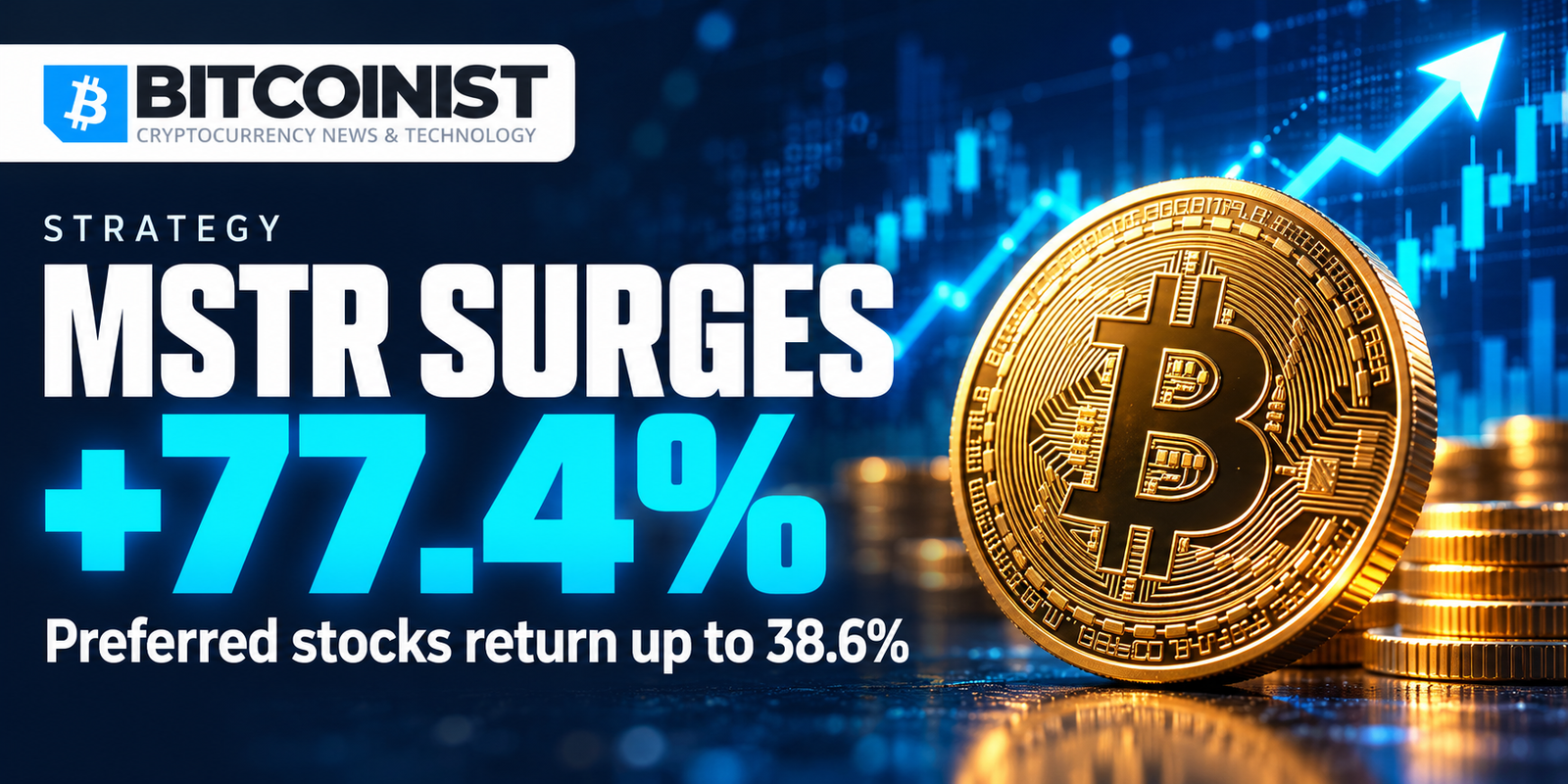

Strategy’s common shares returned 77.4% between June 26 and October 23, 2026, outperforming four of the company’s preferred securities, according to a performance chart shared by executive chairman Michael Saylor. The comparison comes as Strategy continues repurchasing preferred shares and prepares for a shareholder vote on a proposal to change the frequency of dividend payments.
TL;DR
- MSTR leads the comparison: Strategy’s common stock returned 77.4% over the measured period.
- Preferred securities also gained: STRC returned 38.6%, STRD 35%, STRK 32.6%, and STRF 22.9%, including dividends without reinvestment.
- Capital management continues: Strategy repurchased $385.5 million in STRC shares over two weeks and is seeking approval for daily dividend payments.
MSTR Outpaces Strategy’s Preferred Securities
Saylor highlighted the five securities’ performance on October 24. The comparison covers June 26 through October 23 at 4 p.m. Eastern time, with dividends counted on their ex-dividend dates but not reinvested.
STRC, known as Stretch, recorded the strongest preferred-stock return at 38.6%. STRD, or Stride, gained 35%, while STRK, or Strike, returned 32.6%. STRF, or Strife, gained 22.9%.
The results show how different securities issued by the same company can produce different returns over the same period. Common shares provide exposure to the company’s equity value, while preferred securities have distinct dividend terms and payment priorities.
Historical performance does not guarantee future results, and the comparison should not be interpreted as a forecast.
STRC Repurchases Reach $385.5 Million
Strategy’s capital-management framework includes reserve policies, dividend management and securities repurchases. The company has identified STRC as a priority for preferred-stock buybacks when management believes purchases would benefit its capital structure.
During October 5–11, Strategy spent approximately $192.4 million repurchasing STRC shares. It spent another $193.1 million on repurchases during October 12–18, bringing the two-week total to $385.5 million.
The company also expanded its preferred-stock repurchase authorization to $3 billion, with approximately $1.16 billion remaining available, according to the source report.
Buybacks reduce the number of outstanding securities, potentially lowering future dividend obligations associated with those shares. Their overall effect depends on the purchase price, financing arrangements and other capital-allocation decisions.
Readers can follow related developments through Bitcoinist’s Bitcoin coverage and its cryptocurrency market reporting.
Shareholders Face a Decision on Daily Dividends
Strategy is seeking shareholder approval to make dividend payments on its four preferred securities more frequent. Under the proposal, every calendar day would become a record date, with payments generally following on the next business day.
The proposed changes would preserve the regular dividend rates and total obligations, subject to the applicable terms, shareholder approval and dividend declarations.
Common shareholders are scheduled to vote on October 28, 2026. If approved and implemented, STRC’s first daily record date would be November 1, followed by payment on November 2. The corresponding dates for STRF, STRK and STRD would be January 1 and January 4, 2027.
Why the Capital Structure Matters
Strategy’s approach combines its Bitcoin treasury strategy with multiple securities designed to appeal to different investor preferences. Common stock and preferred shares carry different risks, payment structures and exposure to market movements.
The company’s official website provides corporate information and investor materials. Investors should review the relevant security terms and filings rather than relying exclusively on historical performance charts.
The upcoming vote and subsequent capital-allocation decisions will help determine how Strategy manages its preferred securities, dividend obligations and broader financing strategy.
Editorial Process for bitcoinist is centered on delivering thoroughly researched, accurate, and unbiased content. We uphold strict sourcing standards, and each page undergoes diligent review by our team of top technology experts and seasoned editors. This process ensures the integrity, relevance, and value of our content for our readers.