
Democratic socialism is gaining favorability in the U.S., with 62% of Americans aged 18–29 now holding a favorable view of socialism. Conservatives find it hard to understand why anyone would vote for a system that has a consistent record of making everyone poor. Candidates and politicians from Zohran Mamdani to Alexandria Ocasio-Cortez, Rashida Tlaib, Bernie Sanders, Chris Rabb, Aber Kawas, Jonathan Larkin, and Omar Fateh all run on a platform of free stuff for everybody without ever explaining where the money will come from.
Despite socialism and communism promising to make everyone equal, history demonstrates that they make everyone equally poor, a lot of people die, and everyone loses their basic freedoms. Political scientist R.J. Rummel calculated that the Soviet regime killed nearly 61 million of its own people between 1917 and 1987. In China, historian Frank Dikötter’s archival research puts the Great Leap Forward famine death toll at at least 45 million, after the state seized control of grain production and falsified harvest reports. Vietnam and Laos sent countless citizens to reeducation camps for the crime of having previously been a landlord or a professor, and in Cambodia, the Khmer Rouge killed everyone who knew how to read.
Liberals defend the system and live in denial, saying that any reports we have about North Korean work camps or widespread surveillance, torture, imprisonment, and starvation are just Western propaganda. But they never stop to ask why North Korea doesn’t allow anyone into the country to prove how well everyone is living.
The other counterargument is that socialism is different from communism and therefore socialism is better. They are right on one aspect. Socialism is a very powerful system, so much so that it was able to take Venezuela, once the world’s second-largest oil producer and, per capita, the world’s fourth-wealthiest nation, and reduce it to absolute poverty, starvation, and emigration.
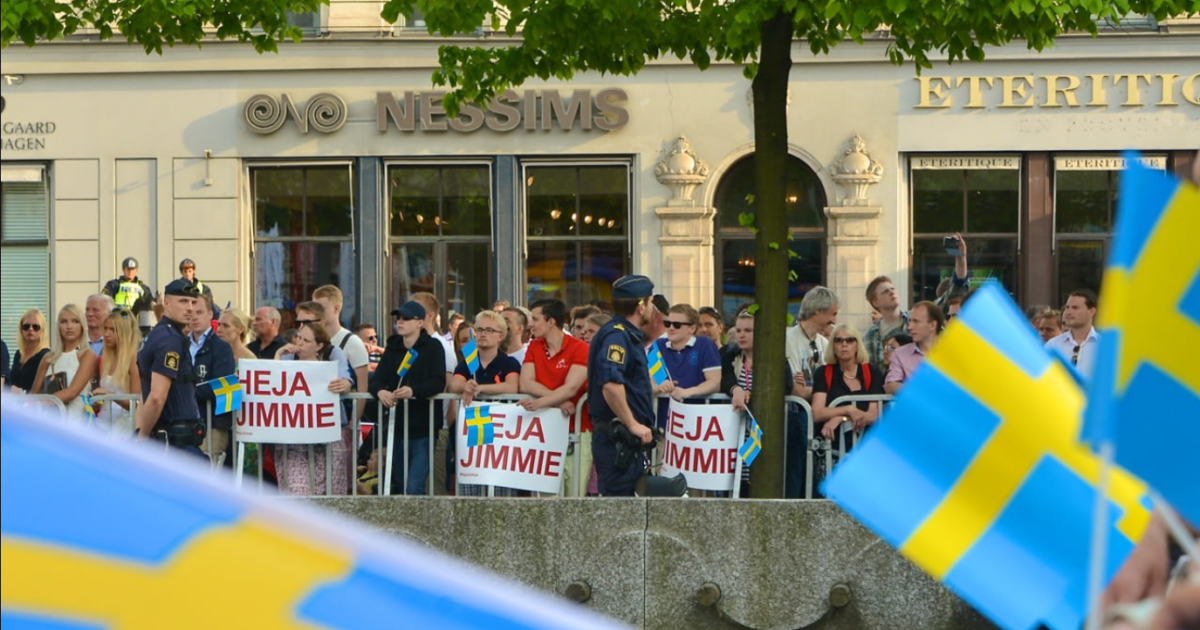
The final fallback counterargument when a conservative says socialism doesn’t work and has never worked is Sweden. The Scandinavian country once had one of the highest standards of living and one of the strongest social welfare systems of any free nation. However, in order to survive, even Sweden has had to scale back its cradle-to-grave smorgasbord of free government services and programs and begin making citizens pay for things.
Once, the promise was cradle-to-grave: universal healthcare, free education, generous unemployment benefits, all funded by a tax system that asked almost everything in return. In 1976, children’s author Astrid Lindgren discovered her marginal tax rate had hit 102%. She wrote an op-ed on how preposterous it was to pay more than she earned in taxes, and the public outrage that followed helped end 44 years of uninterrupted Social Democratic rule, setting the stage for a reckoning that took another 15 years to arrive.
In 1991, Carl Bildt became Sweden’s first conservative prime minister in 61 years, following a banking crisis and Sweden’s most severe recession since the Great Depression. His government cut spending, privatized state monopolies, and began dismantling the system piece by piece. The top income tax rate, nearly 90% in the 1980s, has fallen to around 50% today. Wealth and inheritance taxes, once sources of state revenue, were eliminated outright in the mid-2000s.
The services that were supposed to be free didn’t stay free either. In 1992, all adult dental treatment, including bridgework and prosthetics, was subsidized 25-75% by the government, with public and private providers charging the same fixed fees. By 1999, the state deregulated dental pricing entirely, letting private dentists set their own fees, while subsidies were narrowed to cover only “basic” care.
Retirement followed the pattern too. As late as 1991, Swedes 66 and older got 84.1% of their pension income directly from the state. Sweden’s parliament agreed to reform the system in 1994 and passed the legislation in 1998, partially privatizing it: a share of every worker’s contribution now goes into individual investment accounts exposed to market performance, replacing what had been a guaranteed state payout. Eligibility for older unemployed workers to draw disability benefits early was also tightened, abolished in 1991 and eliminated completely by 1997.
Even the universal child benefit has lost real value: it still pays a flat 1,250 kronor (about $118) a month as of 2026, the same nominal amount since it was last raised in 2018, while inflation has eroded what that buys. And in 2025, Sweden’s government went further, cutting income support specifically for large families: a 75% reduction per child from the fourth child on for cohabiting parents, 40% for single parents.
Sweden’s population has changed dramatically since the social system began winding down. The country’s foreign-born population grew from 784,283 in 1990 to 2,272,158 in 2024, a 190% increase, and foreign-born residents now make up about 20% of Sweden‘s population. Including Swedish-born children of two foreign-born parents, 26.8% of the population has what Statistics Sweden classifies as a foreign background.
That shift has strained the welfare system built for a smaller, more homogeneous population. A government-commissioned EU report found 35% of recipients of social assistance were immigrants, with nearly 14% specifically refugees, both groups sharply overrepresented relative to their population share.
On paper, foreign-born participation in the labor force even exceeds that of Swedish-born citizens, 78.5% versus 74.2% in 2024. But that figure is driven by labor migrants and collapses once broken down by origin and sex. Somali women’s employment sat at just 13%, compared to 27% for Somali men, and Afghan and Iraqi women started at employment levels up to 80 percentage points lower than native Swedish women. Even after 12 years in the country, refugee women from Iran, Iraq, Afghanistan, Syria, and Somalia remained 10 to 30 percentage points behind native Swedes in employment.
Research found that only about half of low-educated immigrant women participate in the labor market at all. 28.3% of the foreign-born population overall was at risk of poverty in 2023, the highest rate in the Nordic region.
Along with migrant poverty comes crime. Firearm homicide rates fell sharply in Norway, Denmark, and Finland since the 1990s, while Sweden’s rose 43%, giving it a gun-death rate of roughly 4 per million, more than double the European average of 1.6.
A 21-year Lund study of 4,032 people convicted of rape between 2000 and 2020 found that just 36.9% of those convicted were Swedish-born to two Swedish-born parents, while 50.6% were born outside Sweden, nearly three times their 18% share of the matched control population. Those who arrived at age 15 or older had six times the odds of a rape conviction compared to native-born Swedes, even after adjusting for income, welfare status, substance use, and psychiatric history.
Sweden’s prison population statistics present a false picture of who is actually committing crimes. Of the 11,812 people who began a prison sentence in 2024, 24% held no Swedish citizenship. However, Swedish law bars Kriminalvården (prison authority) from recording inmates’ immigrant background, only citizenship, so the true figure for foreign-born or foreign-background prisoners, as opposed to non-citizens, is not officially published.
The result of three and a half decades of increased migration and cuts to the social system is that Swedish public social spending has fallen to 24% of GDP, close to U.S. levels and well below France’s or Italy’s 30%-plus. As of 2026, Sweden’s top marginal income tax rate is 52% for incomes over $62,000. So, people are giving up half their salary for fewer services for Swedish nationals, while migrants are committing crimes and living off benefits. And Sweden is generally held up as the most successful socialist country in history.
Ad block users: Some site features may not work correctly while an ad blocker is enabled, because they break scripts and content this website depends on. If you can’t see comments below, for example, please disable your ad blocker.