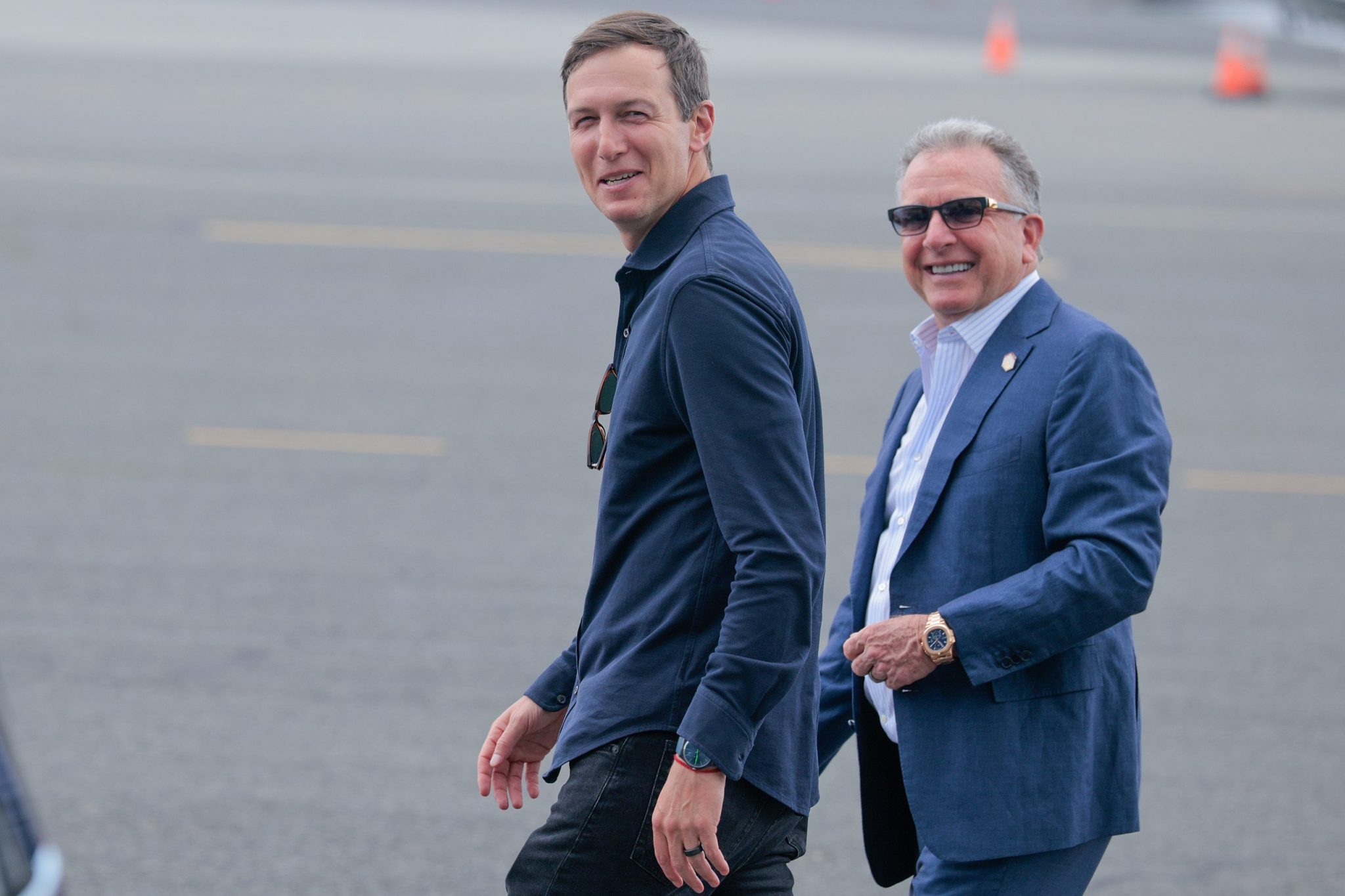
Sometime on Tuesday, two New York real estate developers will walk into a hotel in Islamabad to try to end a war they helped start.
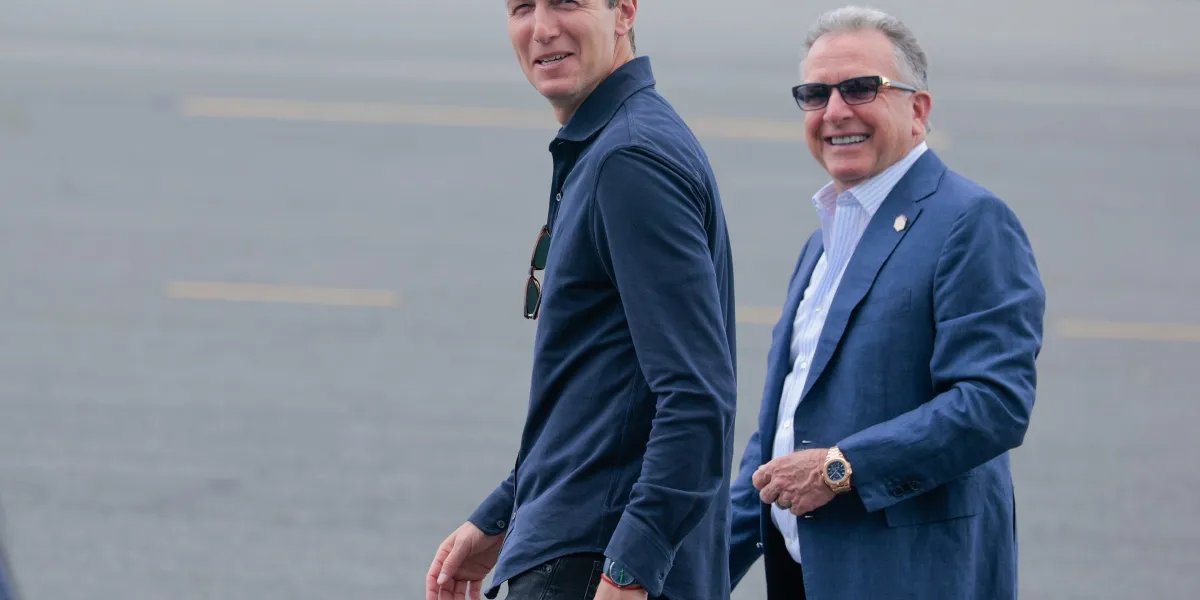
Trump administration special envoys Jared Kushner and Steve Witkoff—President Donald Trump’s son-in-law and close friend, respectively—are arriving with Vice President JD Vance for a second round of talks with an Iranian delegation that insists it is not coming to the table. Less than 48 hours remain before the ceasefire they brokered two weeks ago runs out, and Trump has said there will be no extension this time.
Fortune spoke with three of the most experienced American negotiators alive—former Ambassador Dennis Ross, former State Department advisor Aaron David Miller, and Harvard Law’s Robert Mnookin—about whether the three men can actually do this. They are, collectively, not very confident.
Miller, who served six secretaries of state over more than two decades at the State Department and helped shape American positions at Oslo and Camp David, described the administration’s process as “tethered to a galaxy far, far away, not to the realities back here on planet Earth.”
“If they were succeeding in these negotiations, my view would be much more charitable,” he hedged.
The three experts described a situation in which two undoubtedly smart dealmakers may still be in over their heads on a deal unlike any they have handled before. Iran sees Witkoff and Kushner as unserious and too close to Israel, Miller said.
Instead, Tehran has repeatedly asked that Vance lead the talks, a request rooted in reporting that the vice president opposed the decision to go to war in the first place. Vance, Miller said, is “the adult in the room.”
“But even that reflects, to me, a dysfunctional system,” he added.
Not much is known about the team’s negotiating style, or even what offers are on the table. But the stakes are clear. A fifth of the world’s seaborne oil is still being held hostage in the Strait of Hormuz while the world suffers from an energy crunch. Iran retains roughly 440 kilograms of uranium enriched to 60%, near weapons-grade, plus another 184 kilograms at 20%, buried somewhere after the American and Israeli strikes that began Operation Epic Fury on Feb. 28. Together, Ross said, that’s enough material for roughly 15 nuclear bombs.
If no deal is reached, Trump has threatened everything from bombing Iranian power plants and bridges to wiping out Iranian “civilization” itself.
What a win would actually look like
Ross, who served as the U.S. point man on Iran under both Clinton and Obama, told Fortune that a genuine strategic win requires two things: the highly enriched uranium has to leave Iran, and an enrichment halt has to hold for at least a decade.
“Let’s say 12 years; with the enriched material shipped out and no enrichment, you can really say they don’t have a nuclear weapons option,” he said.
Vance reportedly offered a 20-year moratorium during the April 11 round—though Trump was reportedly unhappy with it—and Iran countered with five.
A 12-year halt paired with a full ship-out, Ross said, is the compromise that could credibly be called a victory, though he is dubious Iran will ever agree to it. The more likely outcome is partial downblending, which dilutes the stockpile without removing it from Iranian soil.
“They’re retaining it,” Ross said. “They still have that potential option.”
Anything short of that, he said, is not a win, even if the administration tries to sell it as one.
The cleanest thing Witkoff and Kushner can plausibly bring home is a reopened Strait of Hormuz. Trump already declared the waterway “COMPLETELY OPEN AND READY FOR BUSINESS” on Friday.
That didn’t last long: Iran fired on French and British vessels Saturday, then the U.S. disabled an Iranian cargo ship Sunday, sending the price of oil back up.
“It was open before the war,” Ross said. “You just got it back to status quo ante.”
But now Iran has learned that shutting down global shipping did not require a formal closure: All it had to do was hit one ship and let shipping insurers do the rest by hiking premiums. That discovery is permanent.
Even if Witkoff and Kushner negotiate some kind of international transit regime, including one in which Iran is nominally part of administering the waterway with Oman, it will not hold more than a few months before Tehran begins “to play games” to get more control over which ships pass through, according to Ross.
The method
What makes all of this harder to read is that almost nobody outside the room actually knows how Witkoff and Kushner negotiate.
“What’s really remarkable is how little detail we have about what they’ve done in their prior negotiations,” said Mnookin, the Harvard Law negotiation theorist and author of Bargaining With the Devil.
He said Witkoff’s and Kushner’s real estate backgrounds are not, on their own, a disqualifier, because successful developers tend to be competent problem-solvers. But the Iran negotiation, he said, requires something real estate doesn’t by itself provide.
“Negotiation skills are very important, but having a mastery of the details, or having access to the necessary deal details, is also indispensable. In a negotiation this complex, you need both.”
The Trump administration’s Iran team does not include a nuclear technical expert in the negotiating delegation. And according to Iranian sources cited by U.K. outlet Amwaj, Foreign Minister Abbas Araghchi had to explain the difference between an enrichment facility and a reactor to Witkoff on multiple occasions during talks.
Ross, who overlapped briefly with Kushner during the first Trump term, was more generous than Miller about the two men.
“I think Kushner was pretty good at identifying fundamental issues pretty quickly,” he said and praised the instinct of not being in a rush.
But he offered a warning. “When you have an agreement at a high level of generality, there’s a lot of potential for those honest misunderstandings,” Ross said. “Or sometimes, dishonest misunderstandings.”