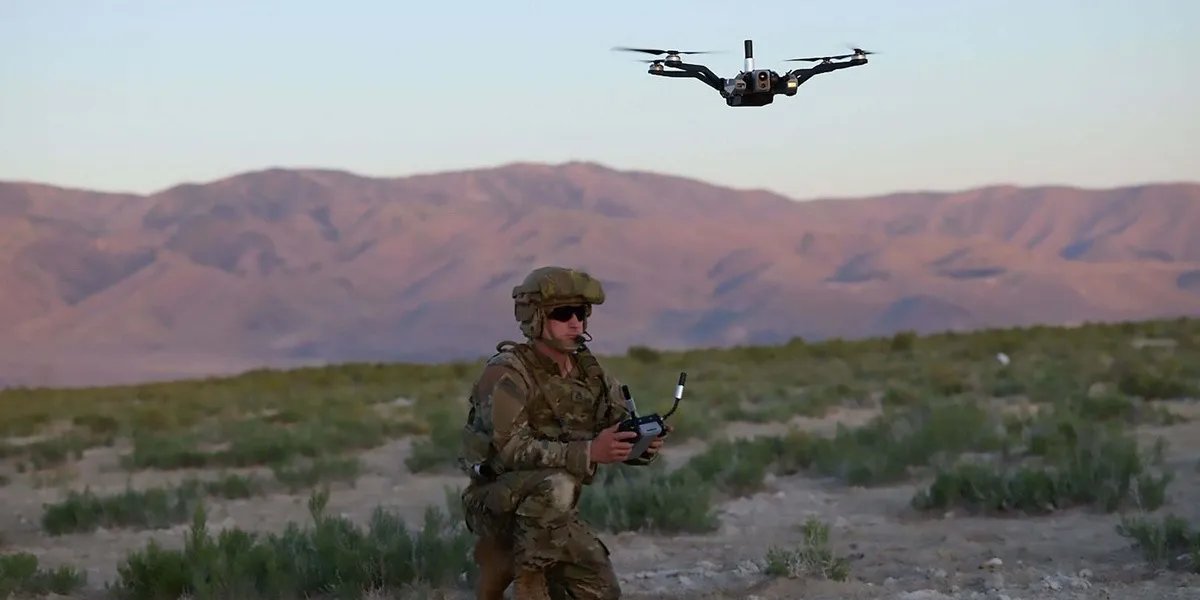
Drones are transforming warfare, and the Army is taking a page out of e-commerce to keep up, creating an online store to get the latest technology into the hands of warfighters faster.
On Tuesday, the service unveiled its Unmanned Aircraft Systems Marketplace that was developed with Amazon Web Services and the Army Enterprise Cloud Management Agency.
The digital one-stop shop will allow Army units, government partners and allied nations to procure vetted UAS systems, according to the Army, adding that its new storefront will also have features that allow users to compare drones, provide feedback, and easily place orders.
“By lowering barriers to entry and partnering with a wider range of industrial innovators, we are building a more resilient and responsive defense industrial base, which is essential for equipping our force and deterring our adversaries,” Army acquisition chief Brent Ingraham said in a statement.
The Pentagon’s weapons procurement process is notoriously slow and costly. For decades, successive administrations have struggled to reform the system, which is now dominated by just a handful of giant defense contractors.
Meanwhile, layers of bureaucracy at the Defense Department must consider new war-fighting requirements, candidates to satisfy them, and identify how to allocate money. Congress also has the final say in funding, often favoring weapons and budgets that benefit certain districts.
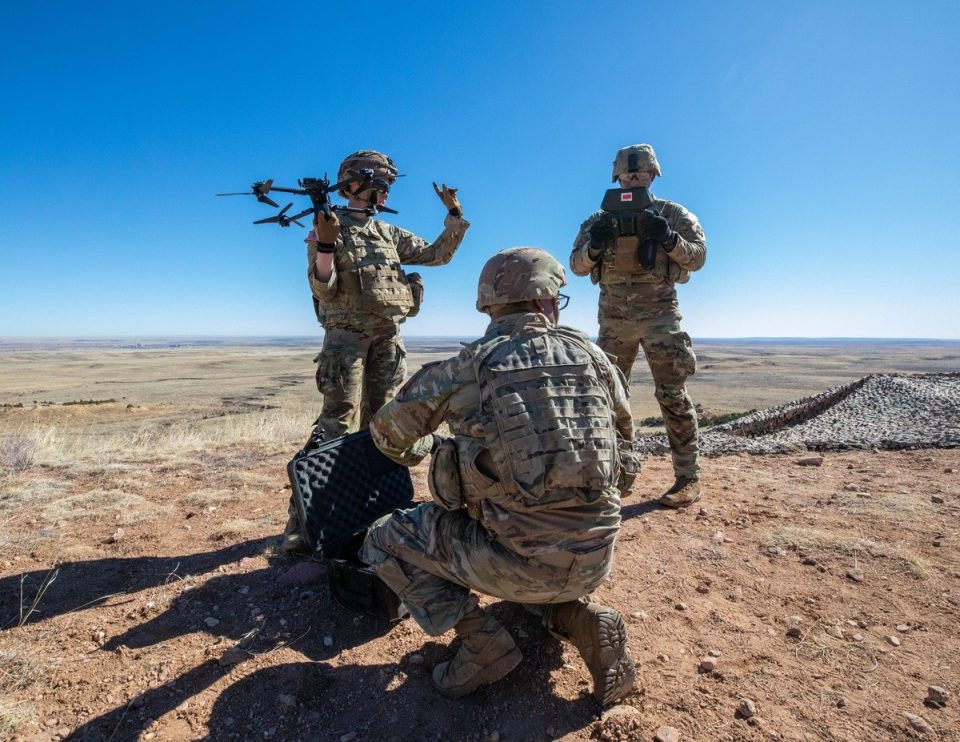
U.S. Army photo by Spc. Doniel Kennedy
But the nature of warfare is changing dramatically as demonstrated by Iran and Ukraine, where large salvos of cheap drones have overwhelmed traditional defenses.
To counter Iran’s barrage, missiles that cost millions of dollars each are shooting down drones that cost tens of thousands of dollars. And while the success rate of the Patriot and THAAD air-defense batteries tops 90%, enough projectiles get through to cause major damage.
And in the four-year-old Ukraine war, unmanned weapons are now responsible for the vast majority of battlefield casualties as small first-person-view drones hunt down individual troops or vehicles. A vibrant defense industry has also evolved in Ukraine to mass produce inexpensive drones that can take down Russia-launched Iranian Shaheds.
Once such drone, the P1-Sun, costs a little more than $1,000 and can fly above 5,000 meters (16,400 feet) as 3-D printers crank them out in Ukrainian factories.
“The future of warfare is Ukraine producing 7 million drones per year right now,” former CIA director and retired Gen. David Petraeus said earlier this month. “This past year, they produced 3.5 million. That enabled them basically to use 9 to 10,000 drones per day.”
For its part, the Army pointed to its new drone marketplace as a major departure from traditional acquisition practices that will help transform weapons procurement.
It argued that the competitiveness and transparency of the online store will spur innovation, broaden the industrial base, and provide a wider range of drone capabilities.
“By fostering competition and innovation, we are ensuring that Soldiers have access to the most advanced technologies to meet their mission requirements,” Col. Danielle Medaglia, the Army’s Project Manager for UAS, said in the announcement. “This strategy is about delivering capability at scale and at speed.”