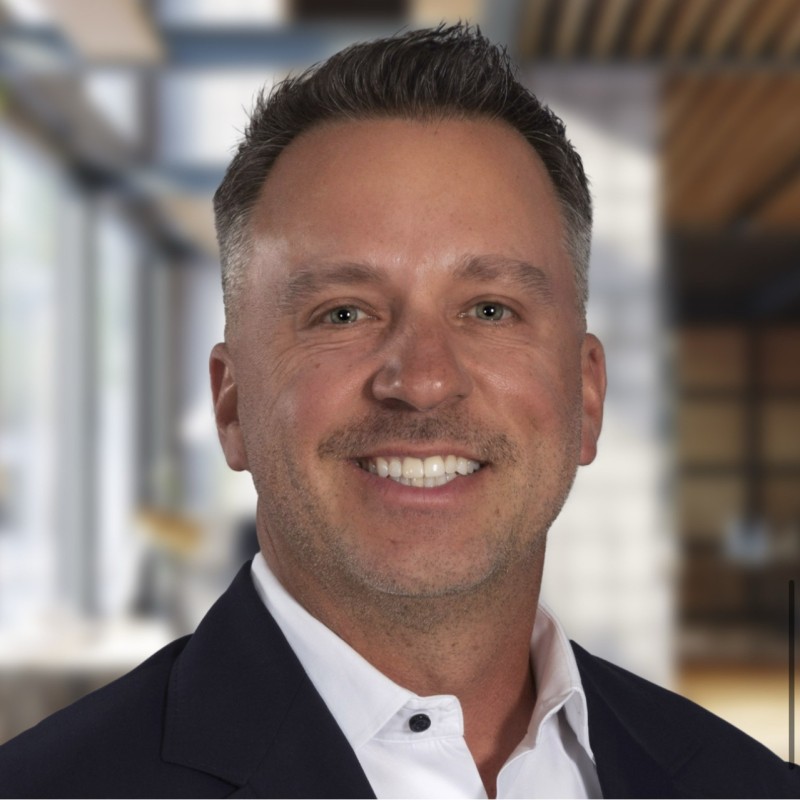
In a $500 billion industry still dominated by clipboards and subcontractors, the most aggressive AI deployment isn’t happening in software or finance. It’s happening inside a central Pennsylvania company that helps you remodel your bathroom from your couch — and its founder is the first to admit the technology still thinks his EBITDA is measured in millimeters.
He’s still growing at 15% to 20% per year, and your remote remodeling habit has helped him build a quiet billion-dollar business. That, and it got him a seat on the board of his favorite Pennsylvania potato chip.
The engineer who turned bathrooms into an AI lab
B.J. Werzyn graduated from Penn State in 1999 aiming for a career in aerospace engineering, until upper-level calculus convinced him he wasn’t “genetically encoded” for a lifetime of abstract math. Instead, he took that engineering mindset — mapping systems, diagnosing problems, optimizing constraints — into an unglamorous corner of the real economy: home remodeling.
In 2006, after a stint helping his family’s window and door business expand into Florida during the housing boom, Werzyn moved back to Pennsylvania, walked into a Staples, and bought a phone, a desk, and a computer. That was the start of West Shore Home, a company built from day one around a simple promise: tear apart a bathroom, rebuild it in two or three days, and leave the homeowner with “fast, easy, convenient” service instead of the horror stories the industry is known for. Over time, he mapped and systematized every step — measurements, permitting, inventory, scheduling, install — and then began replacing the paper parts with software.
Twenty years later, West Shore Home has more than 3,200 employees, including roughly 1,200 installers and 650 design consultants scattered across dozens of markets. It has completed over 334,000 installs. It generated $933 million in gross revenue in 2025, according to financial records reviewed by Fortune, and is now running at roughly a $1.15 billion gross-revenue pace — close enough for Werzyn to talk about “billion-dollar scale,” but not quite enough for a full booked billion-dollar year. The company has also brought in private equity: Leonard Green & Partners bought a 20% stake in 2020, with Werzyn retaining the remaining 80%.
In other words, this is not a software company with a handful of pilots in the physical world. It is a trades-heavy, PE-backed business that quietly decided to become an AI-native operator.
Hawkeye and Felix: computer vision in every bathroom
The centerpiece of West Shore’s AI stack is Hawkeye, a proprietary application built after Werzyn acquired a software development firm that had been creating custom digital tools for big-box players like Home Depot and Andersen Windows. Using an iPad equipped with LIDAR and computer vision, a design consultant can walk into a bathroom and, in under a minute, produce a complete 3D scan of the space.
That scan isn’t just a picture. Hawkeye converts the room into structured data: precise measurements, obstacles that need to be moved, existing fixtures and mechanicals, and other conditions that could affect installation. Those data feed directly into West Shore’s internal configure-price-quote system, a tool they call Felix. The measurements auto-populate the quote, eliminating the transcription errors and ruler mistakes that have plagued the industry for decades. Hawkeye also flags potential issues for the company’s Project Review team, contributing, according to internal figures, to a measurable increase in first-pass yield — more jobs that go from sale to scheduling without being put on hold for missing information.
By West Shore’s own count, all of its design consultants are trained on Hawkeye, and in 2026 about 70% of in-home sales appointments generated a Hawkeye scan. The figure is even higher for bathroom-specific appointments, where roughly three-quarters of visits involved the technology. Only a tiny fraction of customers — around 1,600 out of 136,000 sales appointments — declined the scan. For everyone else, a bathroom remodel now starts with a computer vision capture and a cascade of AI-assisted decisions in the background.
Supporting that infrastructure is a sizable tech organization for a construction-adjacent business: 115 employees work on West Shore’s proprietary systems, including 23 who focus exclusively on AI. They sit within an operation that otherwise looks very traditional — installers on the payroll, design consultants driving from house to house, call-center staff handling inbound inquiries.
It’s the way AI touches almost every part of the process that makes the company different.
Claude thinks EBITDA is measured in millimeters
Werzyn is unabashedly enthusiastic about what AI has done for his business. The company’s tech team has been “pretty deep” with models like Claude for everything from internal forecasting and five-year growth modeling to building real-time scheduling engines that check inventory at branch warehouses, look up crew availability, and query permitting databases at the moment a customer toggles product options on an iPad.
Yet when he talks about the technology, he doesn’t sound like someone who believes it’s infallible. “Yeah, I mean, you see little hallucinations all the time,” Werzyn said, adding, “I was having a conversation this weekend with Claude, and it was a pretty in-depth conversation around putting out forecasting and modeling for our five-year model and growth rates.” He and Claude were “deep into this conversation,” exchanging relevant feedback and throwing around adjusted EBITDA figures, “and then it says, ‘Oh, and then in fiscal year 2028, you’re going to have 260 millimeters of EBITDA.”
“It clearly knows those are dollars,” Werzyn said, still surprised that the model could understand the context and still revert to the wrong unit.
That anecdote isn’t the only glitch he’s seen. On the customer side, West Shore has developed conversational, agent-based SMS tools to follow up on leads — the kind of text-based outreach that can turn cold inquiries into booked appointments with much higher response rates than phone calls. The system performs well in tests and already generates about 10% of all appointments issued. But Werzyn’s chief AI officer has had to contend with his caution about deploying it more broadly.
His argument is simple: if even 10%–15% of customers interacting with a fully autonomous SMS agent have an experience that feels off — an appointment scheduled incorrectly, a quote that doesn’t line up, a stray hallucination in an otherwise smooth process — that’s too high a rate for a business built on trust, especially in a category where projects cost tens of thousands of dollars. The upside of scaling faster is not worth the reputational risk. So the company has chosen to keep humans in the loop at every stage, moving capabilities “left” in the process only as they prove themselves.
In practice, that means AI is running the numbers, populating forms, surfacing options, and even suggesting installation dates. But a human still visits the home, still checks the scan, still confirms the quote, and still hits “schedule.” AI is everywhere, but it doesn’t get to close the loop alone.
Scaling revenue without doubling headcount
The tension between dependence and distrust is not just philosophical. It shows up in how Werzyn thinks about jobs.
West Shore employs more than 3,200 people, including 1,209 installers, 657 design consultants, and hundreds of corporate and call-center staff. Over the past three years, the company has added roughly 600 net new jobs. Those workers operate in what economists increasingly describe as a K-shaped environment: asset owners have benefited from rising markets and pandemic-era gains, while middle-income households continue to feel squeezed by higher interest rates and elevated prices.
The housing market is still frozen by most metrics. Thirty-year mortgage rates hover well above the levels homeowners locked in during the boom; existing home sales are sluggish; and the usual remodeling cycle tied to moving — new owners buying a house and immediately upgrading bathrooms and kitchens — has stalled. Werzyn sees that dynamic in his own pipeline.
Asset-rich consumers who are staying put are investing in improvements. Middle-income and lower-income households are more cautious. But instead of a collapse, he’s seeing a shift: homeowners who aren’t moving are remodeling anyway, and they’re less likely than in previous cycles to attempt the work themselves. Weekends at the hardware store are giving way to what Werzyn calls “do-it-for-me” services — companies that show up, tear apart the room, rebuild it, and leave the house intact by Monday.
In that environment, he sees AI as a way to scale output without a one-to-one increase in payroll. If the company is running at a little over $1.1 billion in gross revenue now, he believes it can plausibly double to $2 billion with something like 6,000 employees, instead of the 7,000 it would have needed in a less automated operation. The installers, plumbers, and technicians doing the last-mile work are not replaced; the overhead required to support them is streamlined.
“Nobody’s going to replace the last mile of a home remodeling project,” he said. Robots may eventually arrive, but in his view that horizon is far away. For now, AI handles the tasks that are repetitive, data-heavy, and prone to human error — measurements, quoting, scheduling, inventory checks — while humans handle the creative, physical, and relational parts of the job.
For Werzyn, that equilibrium now extends outside the bathroom. In 2024, he joined the board of Utz Brands, giving him a front-row seat to another old-line business wrestling with new technology and shifting consumer habits. It’s a fun perk, he said, noting that with its varied pretzel and chip options, Pennsylvania is “the snack food capital of the world.”
Werzyn added that he’s proud to have been born and raised in Pennsylvania, to have attended Penn State, and to have started his own business, giving back to his community. Sitting on the board for a snack-food company that he grew up eating is a “pretty cool story,” he agreed. He noted that West Shore hasn’t just donated to the renovation of Beaver Stadium and acquired field naming rights, but also that the college has become a major pipeline for computer science and AI talent. “We probably have a Penn State intern in almost every department of the company.”