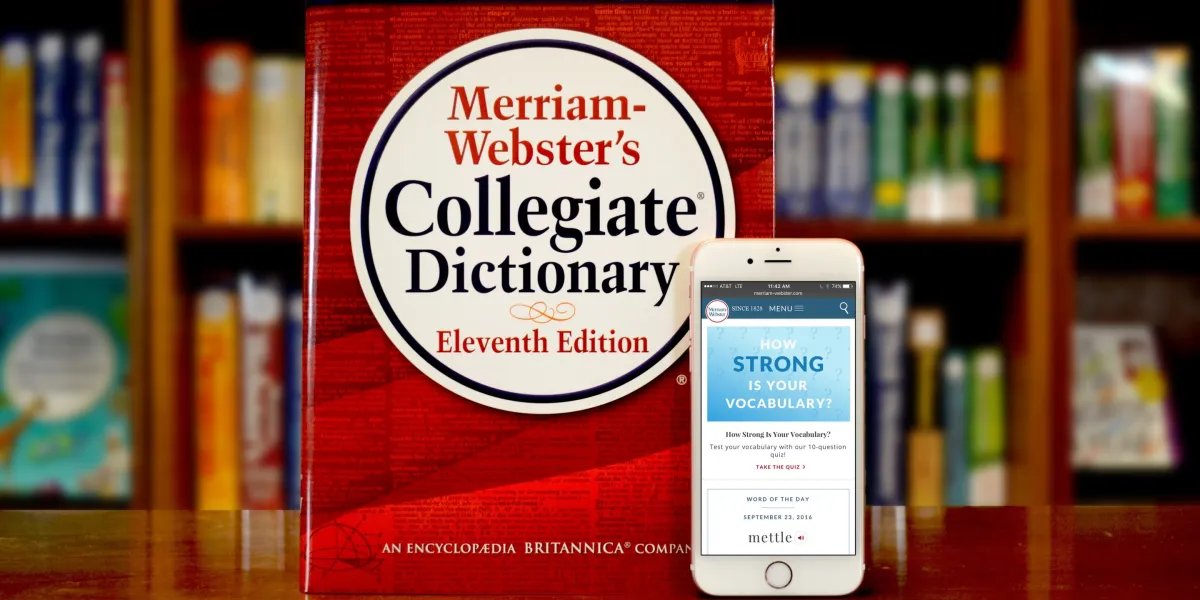

Britannica and Merriam-Webster have filed a lawsuit against OpenAI, alleging that the AI giant has built its $730 billion company on the back of their researched content.
In a filing submitted to the Southern District of New York, the companies accuse OpenAI of cannibalizing the traffic and ad revenue that publishers depend on to survive. “ChatGPT starves web publishers, like [the] Plaintiffs, of revenue,” the complaint reads. Where a traditional search engine sends users to a publisher’s website, Britannica and Merriam-Webster allege ChatGPT instead absorbs the content and delivers a polished answer. It also alleges the AI company fed its LLM with researched and fact-checked work of the companies’ hundreds of human writers and editors.
The case is the latest in a series accusing AI firms of data theft, raising questions about what counts as public knowledge and what information online should be off-limits for AI use. A group of anonymous individuals sued OpenAI in 2023, alleging that the AI giant stole “vast amounts” of personal information to train its AI models. And in 2024, two writers sued the company, representing writers whose copyrighted work they allege had been “pilfered by” OpenAI and partner Microsoft. But these lawsuits aren’t solely confined to the ChatGPT maker. Anthropic, Perplexity, and nearly every other major AI company have all faced lawsuits alleging some form of copyright infringement.
The lawsuit argues that OpenAI’s use of their content could produce a positive feedback loop in which declining advertising and subscription revenue leads to lower-quality content, which in turn further reduces revenue.
“Less content of poorer quality will further result in reduced revenue, and thus less spending on content creation,” the complaint alleges, “spawning even less content of even poorer quality and even less revenue, and so on in a downward spiral for content creators like Plaintiffs.”
The lawsuit comes after the plaintiffs reached out to OpenAI in November 2024 to discuss a potential licensing agreement, that OpenAI rebuffed, according to the complaint. The plaintiffs seek to hold OpenAI accountable for the substantial harm and “illicit profits” it is generating from allegedly infringing on their copyrighted material. The lawsuit alleges OpenAI is also in violation of the Lanham Act (which covers trademark registration) when ChatGPT makes up content or hallucinates content and falsely attributing information to the plaintiffs. They’re asking the court for a permanent injunction to stop OpenAI from continuing to use their material.
“ChatGPT helps enhance human creativity, advance scientific discovery and medical research, and enable hundreds of millions of people to improve their daily lives,” a spokesperson for OpenAI said in a statement to Fortune. They added that their AI models “empower innovation and are trained on publicly available data and grounded in fair use.”
The alleged plagiarism of “plagiarize” and the Hamilton-Burr duel
But Merriam-Webster and Encyclopedia Britannica allege ChatGPT plagiarizes the information their human researchers, writers, and editors produce. In an apt example, the complaint describes a prompt asking “How does Merriam-Webster define plagiarize?” to which the model reportedly responded with a definition identical to the one found in the Merriam-Webster dictionary. The complaint adds that the dictionary has been registered with the U.S. Copyright Office.
That alleged plagiarism extends beyond copying dictionary definitions. The complaint outlines questions about specific historical events, for example, to show how the AI mimics the publishers’ unique selection and curation of content. When a user asked ChatGPT for “10 Things You Need to Know About the Hamilton-Burr Duel, According to Hamilton’s Burr,” ChatGPT reportedly reproduced an identical specific selection and ordering of quotes found in a copyrighted Britannica article, including the exact snippets curated by Britannica’s editors. The model also noted that Britannica had fact-checked the article.
The plaintiffs ultimately argue that these practices threaten to seriously undermine their longstanding business models. “OpenAI imperils the very market for the high-quality content that it copies and reproduces.”