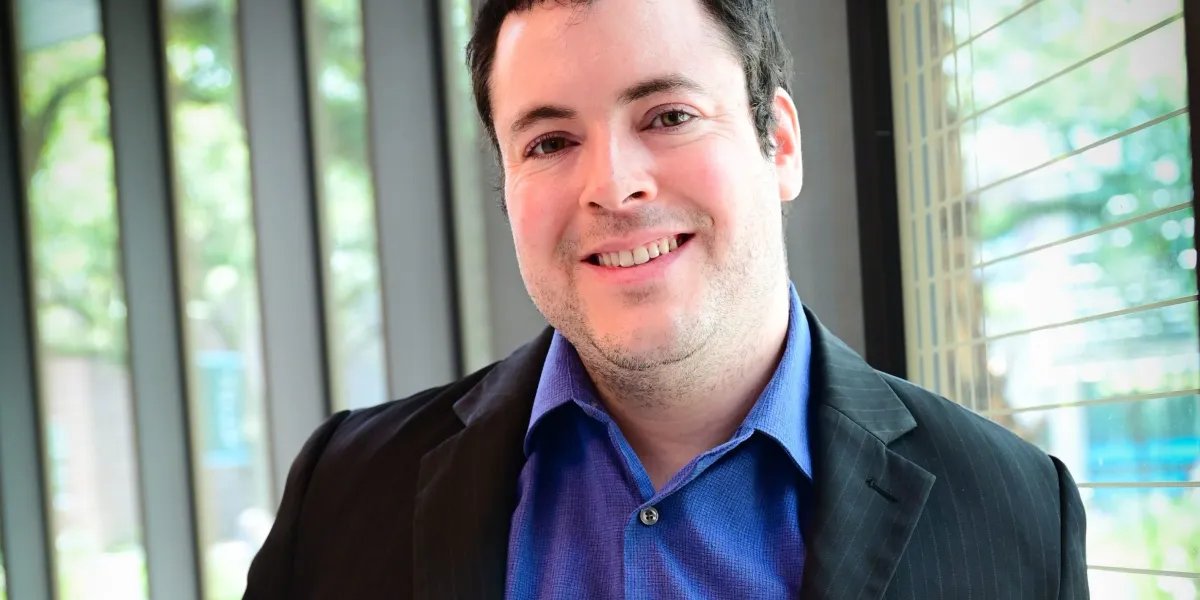
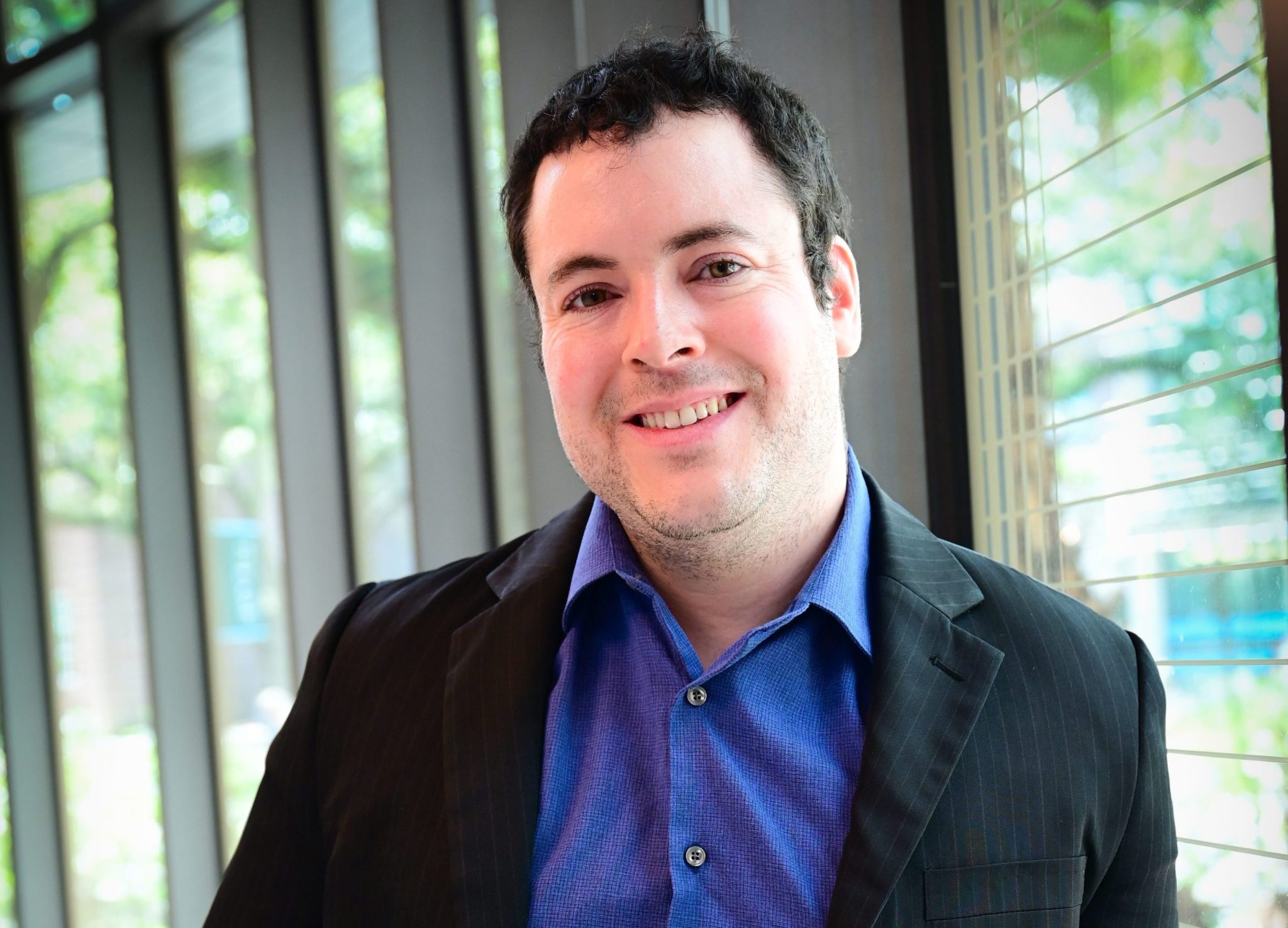
Or perhaps those fruit flies are crowding a fermenting sourdough starter, or swarming a banana that’s about to become an unwanted mush pile. But, for biomedical scientist Caíque Costa, fruit flies aren’t meant to be swatted—when studied, they’re where cancer breakthroughs may begin.
“When people think of a scientist, they don’t think about a fruit fly,” Costa said. “The same ones bothering your Sunday barbecue, or the bananas right in your kitchen.”
Two things can be true—that household nuisance is simultaneously a powerful model for studying cancer.
As I’ve covered the intersection of AI and scientific research—including a magazine feature on Demis Hassabis’s Isomorphic Labs—I’ve heard a lot about the efficiencies AI can bring to the scientific process. But I’ve also wondered about what AI can’t fix, because so much friction in science is grueling, physical, and terribly mundane. (The lab equipment sector alone is also worth up to $45 billion.) That’s why I was interested in Costa’s company FlyFast, which he started in 2024 and filed a non-provisional patent for this year. It’s very early days for the small business, which derives from Costa’s work studying cancer genetics through fruit flies.
“They have a lot of genetic resemblance to humans,” explains Costa, who did his undergrad at Brazil’s Bahiana School of Medicine and Public Health and got his Ph.D. from Tulane in 2025. Humans and fruit flies share about 60% of genes, but when it comes to human disease-associated genes, those numbers are even higher—closer to 85% overlap. “Flies are a very fast model for retaining results and making breakthrough discoveries,” Costa told Fortune. “They’re also cheap to maintain and relatively simple to work with.”
Flies are mostly straightforward to work with, Costa points out, save for one thing: Feeding them is almost farcically labor intensive.
Here’s how it goes: Scientists keep thousands of flies in hundreds of vials. About once a month, the food goes bad—and the flies have to be transferred to fresh vials by hand. This isn’t as easy as it may sound: Flies are known to, well, fly away. So, one at a time, the scientist will go vial‑by‑vial, tapping each vial of flies to make them dizzy, or using carbon dioxide to put them to sleep. They then flip the temporarily incapacitated flies into a new vial.
Across the roughly 4,000 fruit fly labs worldwide, that adds up to hundreds of hours a year of highly trained researchers—people studying cancer, Parkinson’s, and Alzheimer’s—manually shuffling flies. (Hours can vary by lab size, but Costa estimates his lab was spending more than 800 hours a year fly-flipping.)
To Costa, this seemed frankly insane. So he started building in 2023, with a prototype of lollipop sticks, straws, cardboard, and clips. Eventually, he designed a device that can move 10 vials at once—tapping or releasing carbon dioxide in parallel, connecting old vials to new ones, and letting the researcher flip everything in one swift motion.
“Science basically has two purposes,” Costa said. “One is to understand nature, and the other is to make people’s lives easier, right? This, to me, is exploring both sides.”
Costa is a reminder that sometimes the answer isn’t a better LLM. It’s just paying attention to something everyone else swats away. And the next time fruit flies are swarming your banana bunch, remember: They’re also responsible for treatments for cancer, Alzheimer’s, Parkinson’s, diabetes, and ALS, and six Nobel Prizes.
“Lots of the genes that we know cause cancer were actually first discovered in flies,” Costa said. “The scientific community understands their importance, but I think people could better understand their importance.”
See you Monday,
Allie Garfinkle
X: @agarfinks
Email: alexandra.garfinkle@fortune.com
Submit a deal for the Term Sheet newsletter here.
Joey Abrams curated the deals section of today’s newsletter. Subscribe here.
VENTURE CAPITAL
– Aidoc, a Tel Aviv, Israel-based clinical AI platform, raised $150 million in Series E funding. Growth Equity at Goldman Sachs Alternatives led the round and was joined by General Catalyst, SoftBank Investment Advisors, and NVentures.
– Netomi, a San Mateo, Calif.-based agentic AI platform for customer experience, raised $110 million in Series C funding. Accenture Ventures led the round and was joined by Adobe Ventures, WndrCo, SLW, NAVER Ventures, Metis Strategy, and Fin Capital.
– JuliaHub, a Cambridge, Mass.-based AI-powered simulation, modeling, and computing platform, raised $65 million in Series B funding. Dorilton Capital led the round and was joined by General Catalyst, AE Ventures, and Bob Muglia.
– pmtbox, a Orem, Utah-based enterprise commerce platform, raised $15 million in seed funding. Tandem Ventures led the round and was joined by Element Ventures, Cynosure Investment Partners, and Aaron Skonnard.
– Chord, a New York City-based AI platform for commerce operations, raised $7 million in funding. Equal Ventures led the round and was joined by M13, Chingona Ventures, and CEAS Investments.
– Shiprazor, a Cape Town, South Africa-based e-commerce merchant technology and smart logistics platform, raised $2.7 million from Norrsken22.
PRIVATE EQUITY
– Reverence Capital Partners closed a $2 billion recapitalization of Osaic, a Scottsdale, Ariz.-based wealth management solutions provider. Financial terms were not disclosed.
EXITS
– Clearlake Capital Group acquired Qualus, a Lake Mary, Fla.-based power solutions company, from New Mountain Capital. Financial terms were not disclosed.
– Martin Marietta agreed to acquire New Frontier Materials, a Maryland Heights, Mo.-based aggregates and asphalt company. Financial terms were not disclosed.
FUNDS + FUNDS OF FUNDS
– 137 Ventures, a San Francisco-based venture capital firm, raised $700 million across two funds focused on technology companies.
– Crescent Cove Advisors, a San Francisco-based investment firm, raised $446 million for its fourth fund focused on technology companies.
– Earlybird VC, a Berlin, Germany-based venture capital firm, raised €360 million ($422.4 million) for its eighth fund focused on early-stage tech companies.
– Ridgeline Capital Management, a Memphis-, Washington, D.C.-, and Los Angeles-based venture capital firm, raised $180 million for its second fund focused on AI, advanced computing, hardware, and automation companies in the manufacturing, logistics, energy, and defense sectors.
PEOPLE
– Greybull Stewardship, a Jackson, Wyo.-based private equity firm, appointed Kevin Mohr as CFO Operating Partner.