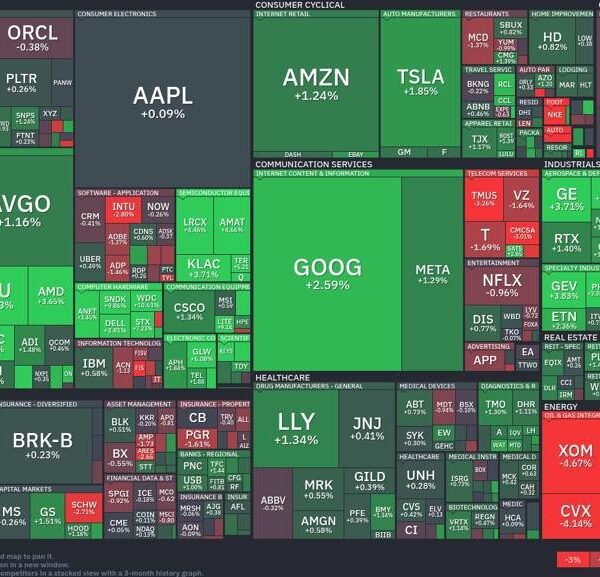

Will advanced generative artificial intelligence (AI) tools destroy established software companies? While these new capabilities are impressive, history suggests the doom-and-gloom commentators have it wrong. New technologies rarely wipe out whole industries. Instead, they change them for the better.
Market cap debates make good headlines, but they miss the larger picture. The biggest risk in the age of AI is not the technology itself. It’s leaders who go with the crowd and confuse consensus with truth.
I have spent decades in the technology world watching smart people make this mistake.
More than once, experts predicted that trade shows like CES would vanish, replaced by online marketplaces. On paper, it made sense. Why travel when you can click? Then COVID hit. After months of isolation, CEOs rushed back to in-person events. They wanted what digital tools could not offer: real relationships, chance meetings, new innovation-producing partnerships, inspiration, and the ability to see and touch innovation in real time. The consensus view forgot something basic about human beings.
I’ve seen the opposite, too. Whole industries stampeded in one direction. Many believed 3D television, the metaverse, and recordable CDs were sure bets. Companies poured in billions to support a shared “wisdom” that was confident and widespread. It was also wrong.
I have made my own mistakes. I was too bullish on the Microsoft “Bob” interface, 3D printing, and some early education software. At the same time, I backed ideas many dismissed — including movie rentals and online video distribution, internet commerce standards, HDTV, and over-the-counter hearing aids. The point is not that some leaders are always right — no one is. The difference is that successful leaders are willing to question the crowd and chart their own path.
That instinct matters more than ever given the transformative capabilities of AI.
Today we are drowning in predictions because change is happening so quickly. AI will erase jobs. AI will create jobs. AI will drive huge gains in productivity. AI will change everything overnight. Some claims will prove right. Many will not.
Much depends not just on the capabilities of technology itself, but the decisions made by leaders in both business and government. I’m encouraged to see the Trump Administration go all-in on AI, releasing both an Executive Order late last year and a follow-on national framework.
As chair and CEO of the Consumer Technology Association, I believe that this roadmap recognizes that global competition is heating up and the U.S. risks falling behind if innovators must navigate 50 different state rules, our workforce is not ready, or we cannot meet the energy needs of our AI future. If Congress acts to turn this guidance into law, it would unchain AI innovators from a deluge of conflicting state regulations and give them clear, consistent guardrailsto support a vibrant AI ecosystem.
Legislation matters, but so does good judgment. The danger is not in picking the “wrong” forecast. It is assuming the loudest story must be true.
Reality is not that neat.
Effective leaders do not outsource judgment to groupthink. They test what they hear against what they see. They look at incentives, real behavior, and outcomes. They move before it is comfortable.
Often, the warning signs are obvious but ignored because they break with the prevailing narrative.
In the late 1990s, top regulators asked me about the shift to digital television. They worried the transition would hurt broadcast TV viewers. I countered that they should focus on a much bigger issue being ignored: banks pushing mortgages on people who could not afford them. That did not fit the hopeful narrative of endless growth, and that story ended with billions of dollars in federal bailouts.
These stories are not about perfect forecasts. They are about spotting when the standard view has drifted away from facts on the ground. AI is that kind of moment.
Right now, every company faces choices. How should they use AI? How do they manage risk? How do they train and deploy workers? How do they stay competitive? The easy move is to copy what others are doing. Buy what they buy, say what they say, and hope it works out. That is not how you lead.
The winners in the AI era will not be the firms that embrace every tool or reject them all. They will be the ones that think clearly about how AI fits their own mission — and have the courage to act before the answer is obvious.
There is a famous idea that large groups can be good at guessing simple things, like — like the weight of a bull. But running a company, shaping a market, or steering through a new technology wave is not a county fair contest or a prediction market. It is judgment under uncertainty.
In those moments, following the crowd is often the greatest risk. To win big, you must separate from the crowd.
The opinions expressed in Fortune.com commentary pieces are solely the views of their authors and do not necessarily reflect the opinions and beliefs of Fortune.