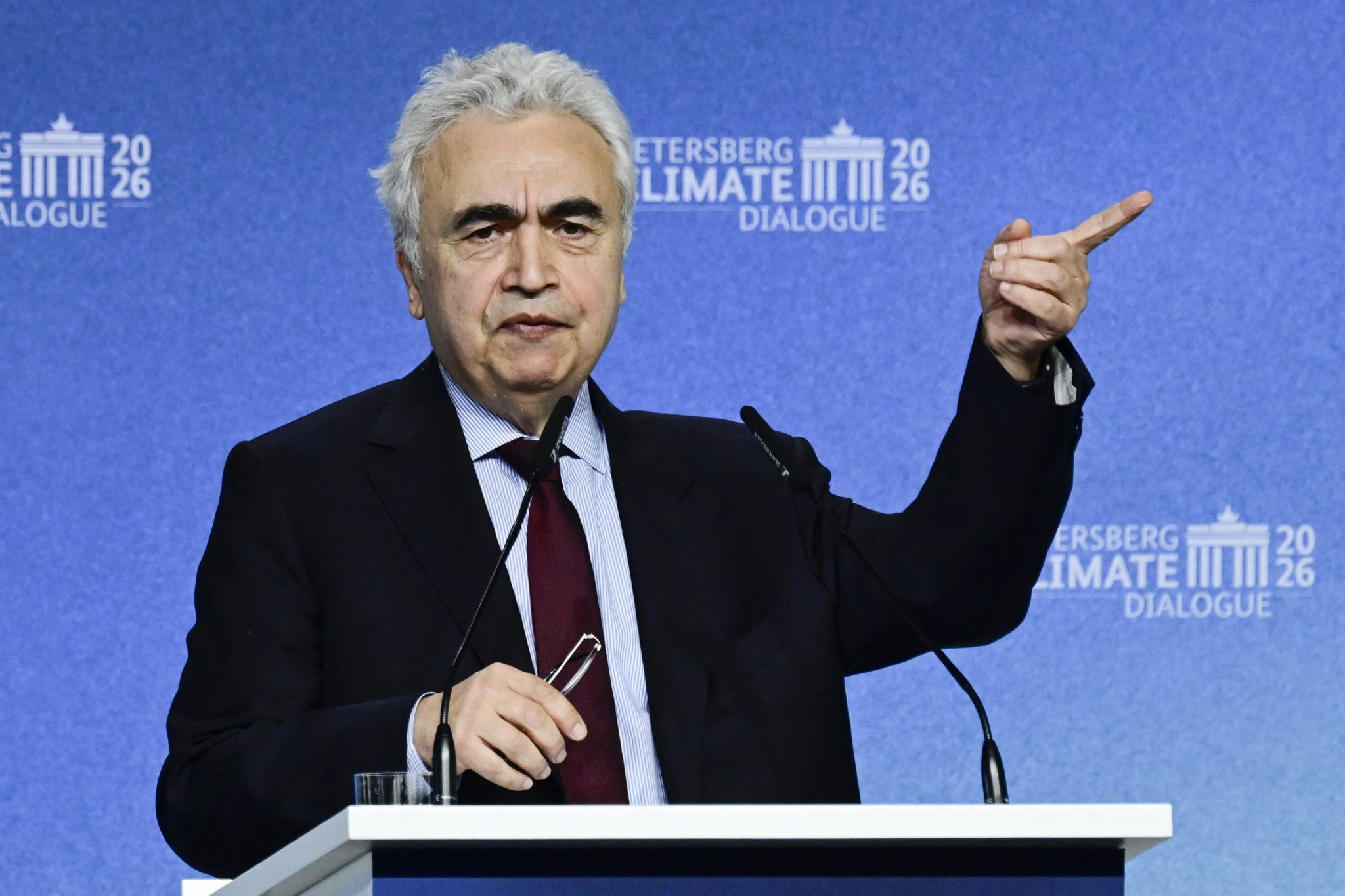
Even as the U.S. and Iran hold a fragile ceasefire, the global energy crisis shows no sign of easing.
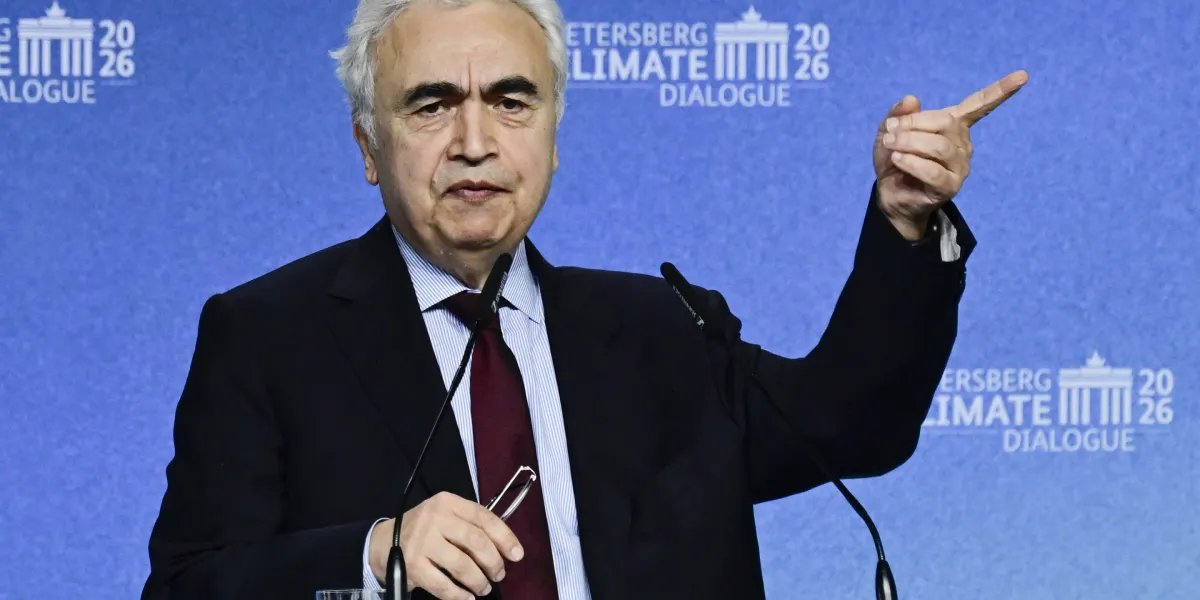
In an interview with CNBC Thursday, Fatih Birol, the executive director of the International Energy Agency, called the ongoing energy crisis an unprecedented inflection point for the global economy.
“We are facing the biggest energy security threat in history,” he said.
The energy shock reverberating from the war in Iran has hamstrung the global economy. That’s obvious to anyone at the pump, as gas prices hover around $4 a gallon, according to AAA, and it’s growing apparent to those planning summer vacation. Lufthansa just slashed 20,000 flights, and others like United Airlines are raising flight prices by up to 20% as jet fuel shortages place heightened pressure on airlines.
While a fragile ceasefire holds, which President Donald Trump extended indefinitely on Tuesday, the double blockade in the Strait of Hormuz, where neither Iran nor the U.S. is allowing ships to pass through the strait, has kept oil prices elevated. Iran fired on three ships in the Strait of Hormuz on Wednesday. Moreover, the Pentagon told Congress clearing mines Iran laid in the strait could take up to six months to clear, further jeopardizing transit through the critical chokepoint. It is unclear when exactly the strait will reopen.
How does the current energy crisis compare to past ones?
The war in Iran and the “double blockade” is like a foot on the throat of the global economy. Twenty percent of the world’s oil trade transits through the strait, along with other critical commodities such as fertilizer, helium, and sulfur.
Birol mapped out how the current energy shock compares to other historic energy crises, including the dual 1970s oil shocks—in 1973 and 1979—and the most recent 2022 energy disruption from the Russia-Ukraine war. In both 1970s oil crises, he said the world lost 5 million barrels of oil per day. He estimates the Ukraine war resulted in a total loss of 75 billion cubic meters of gas, or roughly 628 billion barrels.
Today, the world is losing about 13 million barrels per day, according to Birol, and totaling 100 billion cubic meters of gas.
“We are indeed facing the largest energy crisis in history now,” Birol said.
What’s going on in the Strait of Hormuz and with oil prices now?
According to S&P Global Market Intelligence, just three tankers moved through the Strait of Hormuz on Wednesday, just five ships total crossing the critical chokepoint. The number of tankers crossing the strait has remained well below pre-war levels, averaging in the single digits. By comparison, pre-war numbers averaged 129 tankers per day, according to U.N. Trade and Development data.
Brent crude oil prices dipped below $100 a barrel last week as Iran declared the Strait of Hormuz open to commercial traffic. But hope soon faded after Iran closed the strait again after the U.S. Navy fired on and seized an Iranian container ship. Oil prices are back above $103 a barrel as of Thursday morning.
Birol and the IEA have sounded the alarm on the war’s impact on the global energy market since the U.S. and Israel launched their initial attack on Iran in late February. In a late March interview, Birol said global decision-makers aren’t prepared to handle the full breadth of the energy crisis.
“If you want to put in a context, this crisis as it stands now: two oil crises and one gas crisis put all together,” he said.
The IEA has used a powerful lever to ease the impact of the energy shock. In early March, the Paris-based organization released a record-breaking 400 million barrels of emergency oil stocks to temper rising prices. Birol said in an interview on the In Good Company podcast early April the IEA would consider a second release of reserves. The organization has urged governments to promote cost-cutting measures to ease the energy shock’s economic pain, such as by encouraging public transportation use, a step many governments across the Asia-Pacific region, one of the hardest-hit areas of the globe, have already taken.
But Birol said the only real solution to ending the crisis is to reopen the strait.
“The cure is opening up the Strait of Hormuz,” he told the In Good Company podcast. “We are gaining some time, but I don’t claim that this will be a solution, our stock release.”