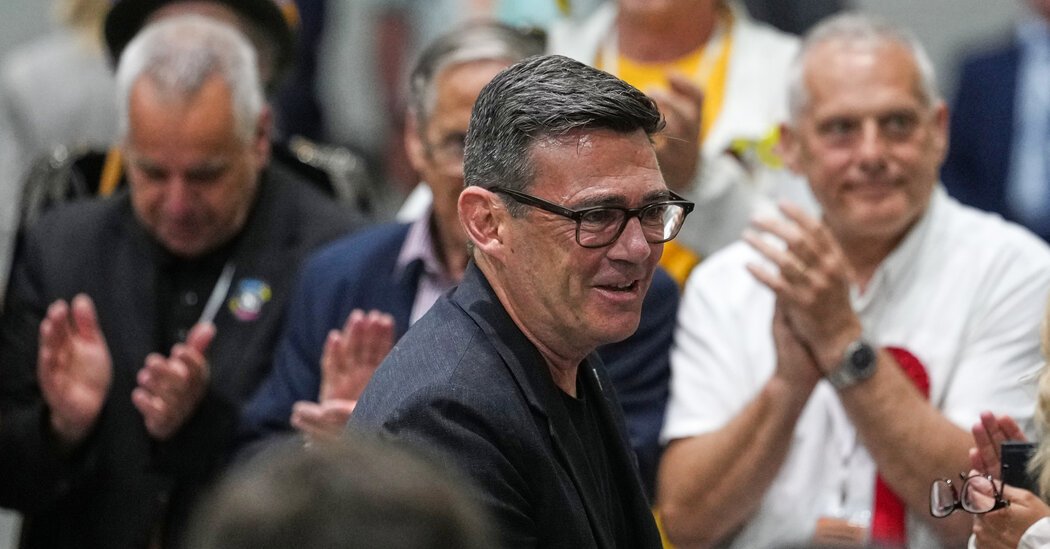
The wheels have been set in motion already and with Streeting backing out, Burnham looks to be the uncontested favourite to take over as UK prime minister next. While GBP/USD has recovered a bit today as Starmer doesn’t drag on the political uncertainty, Credit Argicole is in with a quick take that a Burnham leadership may not necessarily be a good thing for sterling.
“Labour Party’s Andrew Burnham won the Makerfield election and can now return to the House of Commons to launch his leadership bid. We have recently analysed the GBP market impact from a potential Labour Party leadership contest and concluded that a PM Burnham could be the most damaging outcome due to the economic and fiscal effects of his policy agenda.
Ahead of the by-election, market betting odds have already moved firmly in favour of a Burnham victory, suggesting that some negatives are already in the price. Furthermore, the UK CDS credit spread has recently hit a three-month low, further signaling that gilt investors expect bond vigilantes to be able to instill ‘fiscal discipline’ on any future government.
The above being said, FX investors may be complacent about the extent to which a PM Burnham would go in pursuit of his policy objectives. We worry that, at least initially, he may antagonise bond market vigilantes as he implements his fiscal policy agenda. We therefore believe that a potential victory for Burnham would force FX investors to shift their attention to the looming political risks and their negative fiscal and economic consequences.”
Building on this, one of Burnham’s key policy adviser in his inner circle is Miatta Fahnbulleh. And she is expected to return back to the scene is Westminster more prominently now that he is set to take charge.
Among some policy recommendations are a wealth tax, raising capital gains tax to income tax levels, hiking dividend tax to income tax levels, abolishing the upper earnings limit for national insurance, charges on every form of consumer credit, and pushing up stamp duty surcharge to 9% for multiple homeowners and an increase to 6% for non-residents.
As things stand, addressing the UK’s public finances will ultimately be the most critical issue for Burnham. It is something his predecessors have struggled with and as much as many would like to see him prove the doubters wrong, he will be facing an uphill task to deliver on that.
Otherwise, it is basically just falling back into the same trap of seeing households and small businesses be fed through the fiscal meat grinder while the economy continues to stutter in the meantime. The timing of it all is also rather unpleasant amid the Middle East situation of course.
So, do be reminded to consider all of this when viewing the political landscape too.