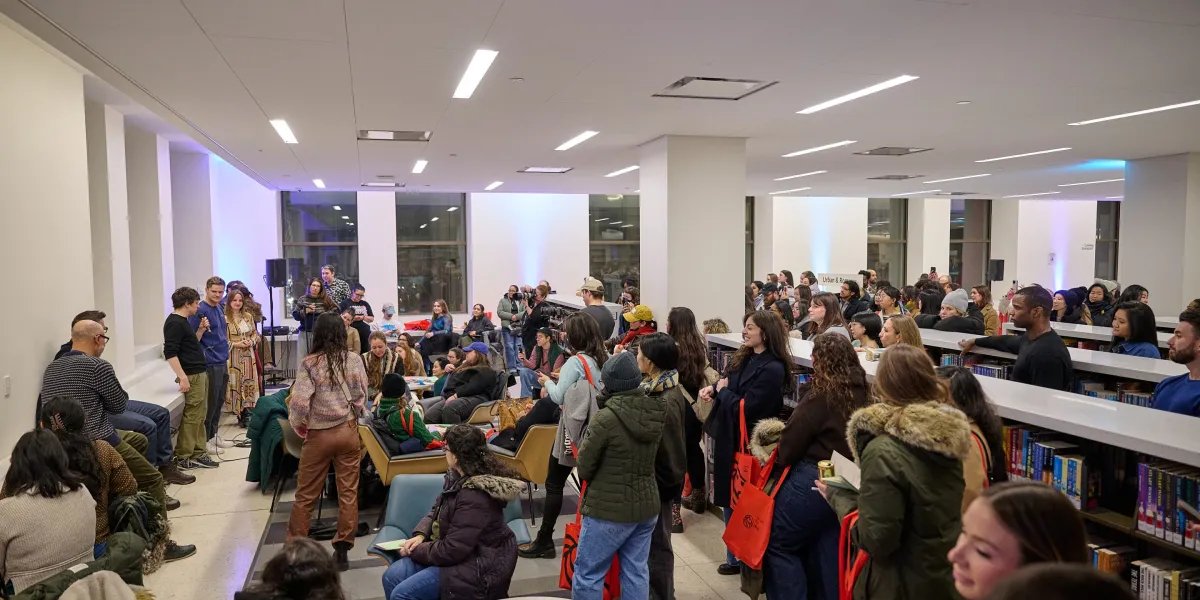
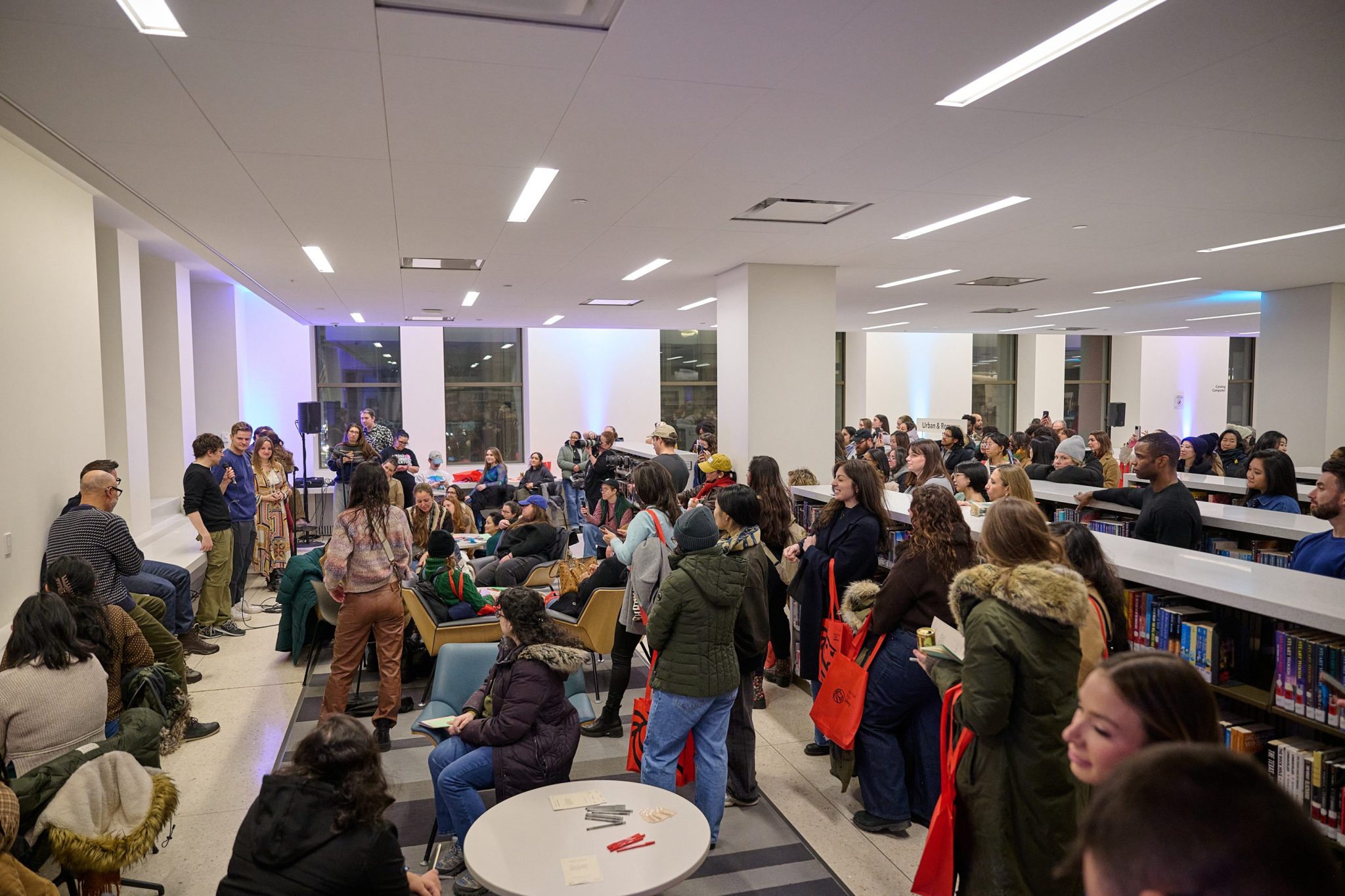
On one of the coldest nights of New York’s winter, hundreds of people lined up outside the New York Public Library. Not for a concert or the latest restaurant opening, but to simply read. The event was simple: read silently for 20 minutes, then turn to a stranger and talk about your book. With the library reaching full capacity, they had to turn people away.
“It was one of those subzero nights,” Brian Bannon, the New York Public Library’s chief librarian, told Fortune. “I thought maybe there was a sneaker sale.”
Instead, “it was a line of 20-somethings waiting to get into the library.”
Coffee shops gave young adults somewhere to work. Bars gave them somewhere to socialize. But as loneliness and digital fatigue reshape how people spend their free time, spaces built around learning are finding there’s growing demand for something many businesses haven’t traditionally sold: the opportunity to think together.
The conversation starter
At the New York Public Library, the shift isn’t just anecdotal. Branch library program attendance rose 10% in fiscal 2026 compared with the previous year, while attendance at research libraries increased 6%; overall visits climbed 2% and 4%, respectively, across all ages according to data provided by NYPL.
Teen programming, including book clubs, chess clubs, author-led writing workshops and creative technology courses using 3D printers, is growing even faster. Teen program attendance is up 27% since fiscal 2023, reaching 146,000 last year, after double-digit increases of 12% and 14% the two years before that. Total teen visits to the library, a separate measure from program attendance, reached at least 400,000 in fiscal 2025.
“As soon as you create the environment for people to come together, they choose to do it,” Bannon said.
That shift didn’t happen by accident. About 15 years ago, Bannon said, libraries nationally started rethinking how they served teenagers, a group that had historically been treated as an afterthought squeezed between children’s programming and adult services. NYPL built out dedicated teen spaces stocked with recording studios, 3D printers and graphic novels, and staffed them with teen mentors who design their own programming. At one Harlem branch, Bannon described walking in on two boys deep in a chess match, a strategy book propped open beside the board, while another group of teens ran their own photo shoot for LinkedIn headshots and a third tinkered with a robotics kit they’d been building for weeks.
It’s having a shared interest that helps drive connection. “When you go to a reading party, whatever you’re reading becomes the conversation point,” Bannon said. “It’s about what interests you.”
That small shift lowers the social stakes. Instead of trying to impress someone, strangers begin with something they’re genuinely curious about. Chess works the same way, he said: “It allows you to be social without being social.” He pointed to the cultural afterglow of Netflix’s The Queen’s Gambit as evidence the appetite was already there, libraries just had to meet it.
A new kind of third place
Pawn Chess Club arrived at a similar conclusion. Founders Simone Robert and Isabel Münter weren’t trying to revive chess. They simply wanted somewhere they could play that felt more like the bars and restaurants they already loved than the intensely competitive chess clubs they felt intimidated by. The club started in May 2023 in the borrowed private dining room of a friend’s restaurant, built for something bigger than just Robert and Münter wanting a casual game with their own friends.
In the three years that’ve passed, the club now regularly draws more than 100 people to weeknight events, and roughly half of attendees show up alone. Their goal is to provide curated events that force people to “slow down” and be intentional, whether that’s with friends or strangers. “There’s a lot of distractions and there’s a lot of speed and energy to the city, so we try to counter that,” Münter told Fortune. The club has partnered with Hinge, whose One More Hour initiative encourages people to spend more time connecting offline, after Münter said she’d read government reports describing loneliness and isolation as reaching epidemic levels among younger generations.
The founders say they have watched friendships form, first dates unfold and strangers return week after week. “We have a lot of people who come to us and they’re like, oh, I actually had a really shitty day and I was just about not to come to this,” Münter said. “And now I feel better, and it kind of ended my day on a high.”
Neither the Pawn Chess Club founders nor Bannon see this as separate from how young people are drinking. Münter and Robert said Pawn’s low-key, no-pressure format appeals in part because guests don’t feel obligated to drink or stay out late, a dynamic Bannon has noticed too, though he stopped short of calling it more than a hypothesis. “I think everyone was just craving to meet in person again and get more offline,” Münter said.
On Aug. 7, Pawn will host an evening of chess in the garden at the Noguchi Museum in Astoria, timed to an exhibition featuring sculptor Isamu Noguchi’s own chess set, part of what Münter described as a growing effort to bridge chess with the art world.
Trading screen time for shared attention
That same instinct inspired Maura Cheeks to open Liz’s Book Bar in Brooklyn. Her goal was also not to simply open another bookstore, but to create a neighborhood space where people could meet, learn and leave knowing someone they hadn’t known before. Since opening in June 2024, she’s watched customers become friends, regulars build community and even romantic relationships begin between people who first met in the space.
The crowd, Cheeks said, isn’t only young adults. “We actually have a pretty good mix” of ages, she told Fortune, something she attributes partly to the neighborhood itself.
“I think people gravitate towards these kinds of spaces because reading is so tactile,” Cheeks said. “It offers a different way to engage your mind. People still want to learn and they want to be inspired.” The appeal, she said, is that these gatherings ask very few people. “You don’t have to sign up for five (school) courses. You can just find something that you find interesting.”
Cal Newport, author of Digital Minimalism, said that instinct reflects a broader backlash against an internet increasingly designed to capture attention rather than enrich it.
“Simply asking people to use their devices less because they are bad is rarely effective,” Newport said. “You have to instead create an analog life so compelling and meaningful that the digital diversions on your phone pale in comparison.”
Newport traces the shift to a few overlapping forces: social apps chasing TikTok’s algorithmic model at the expense of actual networking, a souring public view of Silicon Valley’s leadership since Steve Jobs, and now an AI boom he described as unusually “joyless and often unnerving,” with little visible upside for most people’s daily lives. “People are done with all of this,” he said.
That may help explain why silent reading parties are drawing lines around the block, libraries are seeing attendance climb and chess clubs are filling neighborhood bars and museum gardens alike. For years, technology promised frictionless entertainment and unlimited information. Now, many young adults appear to be searching for something information alone can’t provide: a reason to leave the house, meet a stranger and think together.
“People love to hate where we are as a society,” Bannon said. “What we’re really light on is talking about the stuff that’s working.”