NEWYou can now listen to Fox News articles!
President Donald Trump on Thursday proclaimed that certain imported patented pharmaceuticals and related ingredients could face tariffs of up to 100%, framing the move as a national security measure and intensifying his push to bring drug manufacturing back to the United States.
The proclamation creates a tiered system for drugmakers: companies with Commerce Department-approved plans to onshore production could face a 20% tariff instead, while some firms that strike pricing and manufacturing agreements with the administration could receive zero-tariff treatment for a period.
A senior administration official said the policy amounts to a “100% tax” on drugs produced abroad.
Trump’s proclamation states that imported pharmaceuticals and key ingredients “are being imported into the United States in such quantities and under such circumstances as to threaten to impair the national security of the United States.”
TRUMP’S NEW TARIFF PLAN BARRELS BACK TO COURT FOLLOWING MULTISTATE LAWSUIT
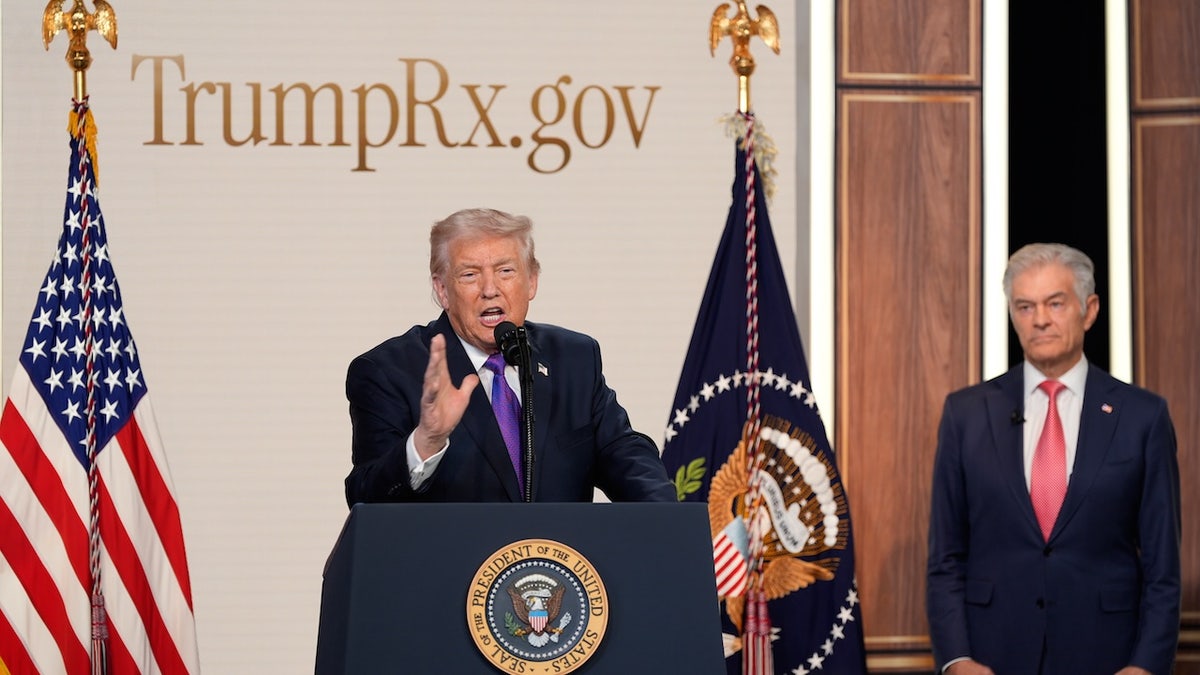
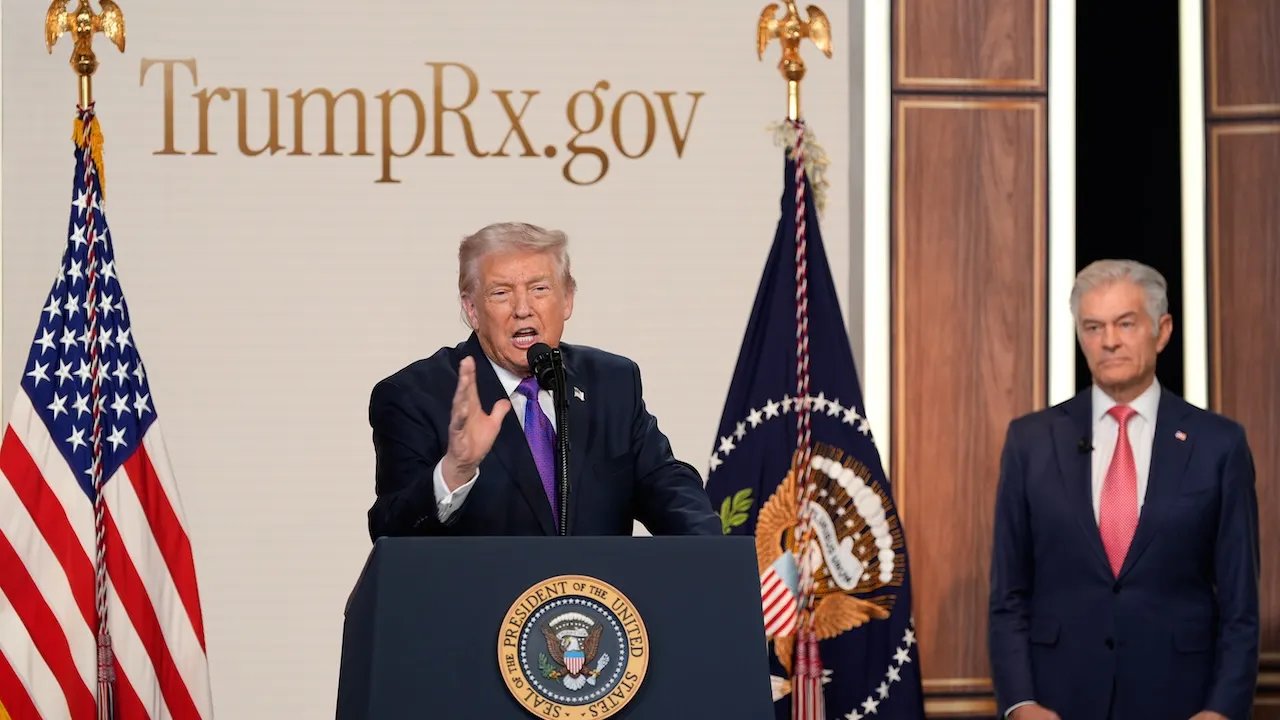
The move ties into Trump’s TrumpRx initiative, including TrumpRx.gov, which the White House says will lower prices on some costly brand-name drugs through “Most-Favored-Nation” pricing deals. (Alex Brandon/AP Images)
The move sets up a major clash over the cost and supply of brand-name medicines, as Trump argues the U.S. is overly dependent on foreign pharmaceutical manufacturing while offering lower tariffs to companies that build in America.
According to the proclamation, about 53% of patented pharmaceutical products distributed in the U.S. are produced abroad, while only 15% of patented active pharmaceutical ingredients by volume are made domestically.
VOTERS REACT AS TRUMP TOUTS SIGNATURE TARIFF PLAN AT STATE OF THE UNION
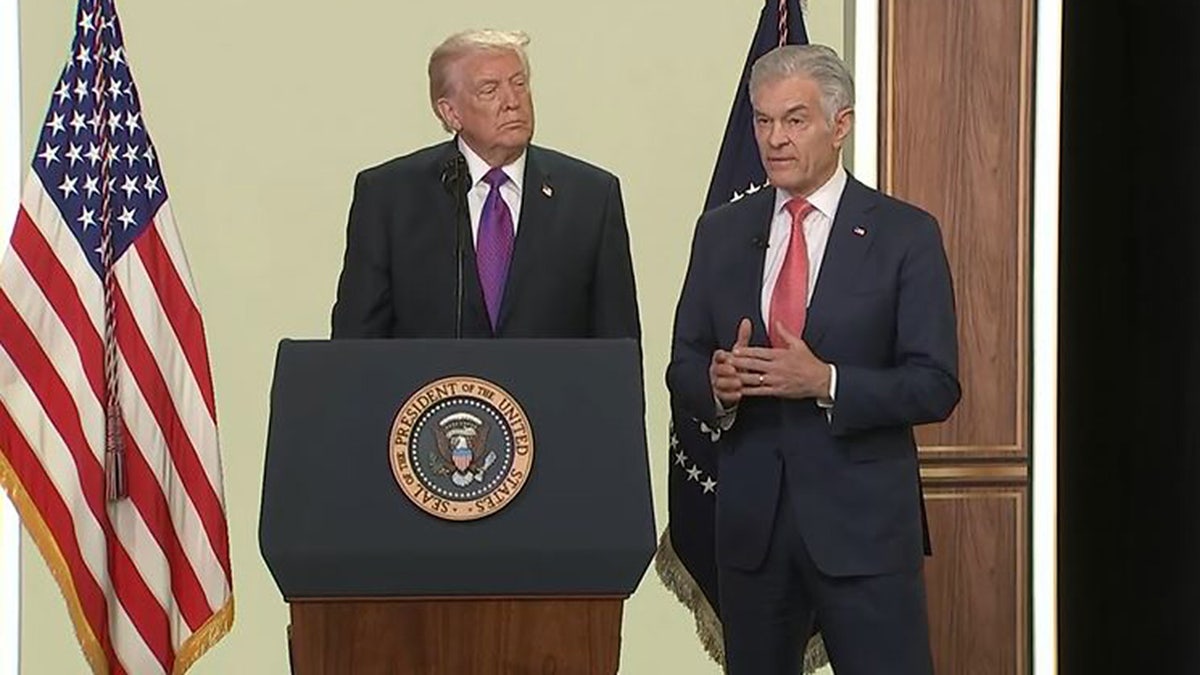
President Donald Trump with Centers for Medicare and Medicaid Services Administrator Dr. Mehmet Oz. (Pool / Fox News)
Under the framework, imports of patented pharmaceuticals listed in Annex I will face a 100% tariff, unless they qualify for lower rates.
Companies with approved onshoring plans can instead receive a 20% tariff, though that rate rises to 100% in 2030, according to the proclamation.
The administration is using that structure to push companies to shift production to the United States, officials said.
TRUMP RAISES GLOBAL TARIFF TO 15%
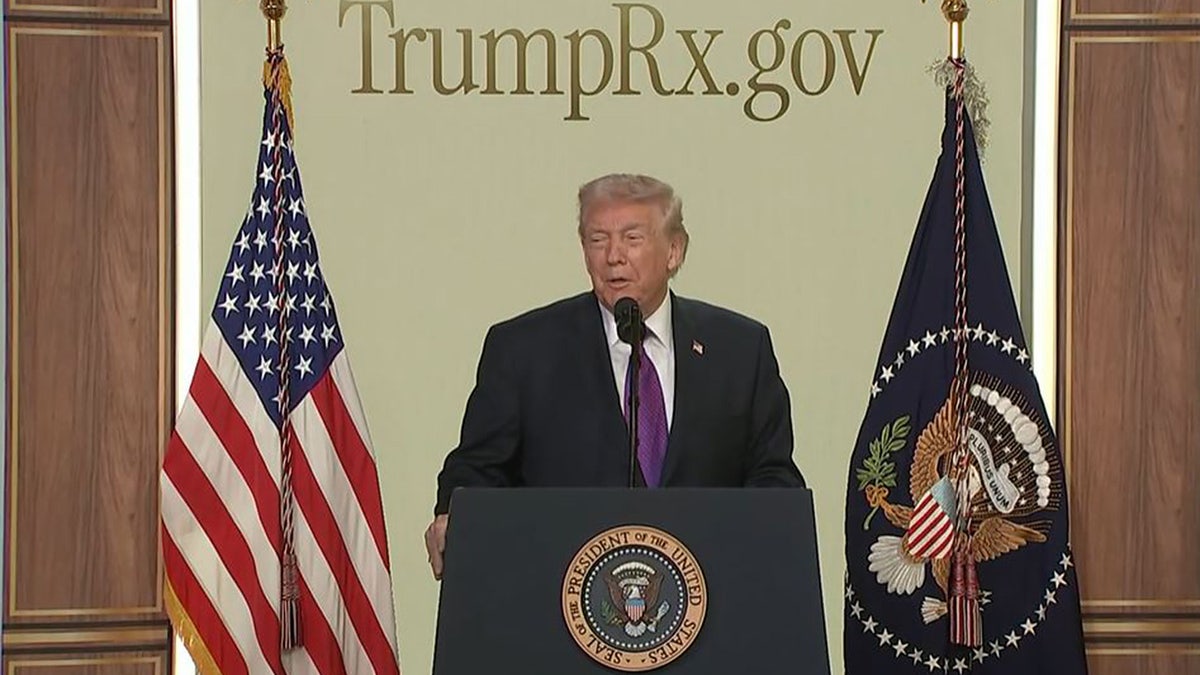
President Trump has made lowering drug prices a major priority of his administration. (Pool / Fox News)
The proclamation also sets lower tariff rates for certain allies: 15% for products from Japan, the European Union (EU), South Korea, and Switzerland, and 10% for the United Kingdom (UK), which could fall to zero under a future agreement.
It also creates a zero-tariff lane for companies that both onshore production and enter “Most-Favored-Nation” pricing agreements with the administration.
Not all drugs are affected. The proclamation says generic pharmaceuticals will not be subject to tariffs “at this time,” and U.S.-origin drugs are also excluded.
The broader push ties into the administration’s TrumpRx initiative, including the recently launched TrumpRx.gov platform, which the White House says gives Americans access to lower prices on some high-cost brand-name drugs through “Most-Favored-Nation” pricing agreements with pharmaceutical companies.
CLICK HERE TO DOWNLOAD THE FOX NEWS APP
The tariffs will take effect July 31, 2026, for some companies and Sept. 29, 2026, for others, according to the proclamation.
Trump issued the order under Section 232 of the Trade Expansion Act of 1962, which allows the president to restrict imports deemed a national security threat.