The Trump administration announced this week the U.S. government would work to build a $11.7 billion stockpile of critical minerals. That’s the headline; the subtext is more intriguing.
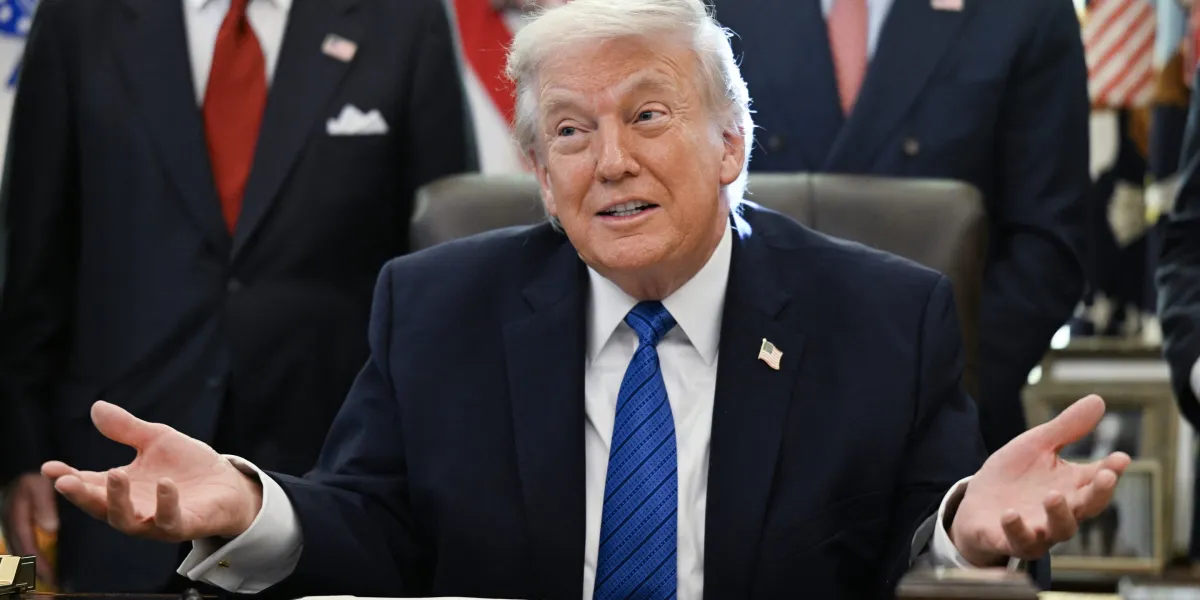
The stockpile initiative, branded as Project Vault, is the latest attempt by the administration to secure supplies of critical minerals for U.S. manufacturers and what President Donald Trump says will ensure “American businesses and workers are never harmed by any shortage.”
It follows recent investments from the administration into rare earth producers, including equity stakes in miners USA Rare Earth and MP Materials.
Individually, they can be interpreted as an administration taking steps to calm a part of the market that has been roiled by its own trade wars. Collectively, they’re an admission, however tacit or subconscious, that the future relies on electric technologies, including electric vehicles and wind turbines.
In his announcement, Trump alluded to the world’s dependence on China for a slew of critical minerals. Over the last year-plus, China has wielded its dominance to counter tariff threats from the Trump administration, restricting exports of rare earth metals and lithium battery materials to the United States. Eventually, China relented, but the episode made clear who held the trump card.
The spat also revealed just how integral critical minerals are to modern economies. Trump likened the new stockpile to the Strategic Petroleum Reserve maintained by the Department of Energy, which was set up in the wake of the oil embargo in the early 1970s.
“Just as we have long had a strategic petroleum reserve and a stockpile of critical minerals for national defense, we’re now creating this reserve for American industry, so we don’t have any problems,” Trump said.
Techcrunch event
Boston, MA
|
June 23, 2026
The oil reserve isn’t going away, but it’s not as important as it once was, diminished by productive U.S. oil wells and the increasing share of the energy market taken by solar, wind, and batteries. (Solar and wind continue to dominate new electric generating capacity, while more than 25% of new cars sold worldwide were EVs or plug-in hybrids.)
It’s not clear exactly which minerals will go into the reserve; Bloomberg reported that gallium and cobalt will be included. It’s possible that others like copper and nickel might get thrown in as well, though they weren’t mentioned.
The size of the investment is notable. The U.S. Export-Import Bank is providing a $10 billion loan, with private capital rounding out the rest. That’s about half the value of the oil currently in the Strategic Oil Reserve going toward a market that’s 1% the size of the global oil market, as Bloomberg columnist David Fickling pointed out.
The mismatch is either typical Trump bluster or an acknowledgement that the market for critical minerals is going to expand significantly in the coming years.
It is possible it’s both, with a greater chance it is the latter.
Much of the growth in critical minerals comes from clean energy technologies and EVs; without them, the market won’t be as constrained as experts have predicted. Demand for electronics, including data centers, will play a role, but more than half of global growth in rare earth element demand is expected to come from electric vehicles and wind turbines, according to the IEA. For cobalt and lithium, the figures are even more skewed, with EVs representing the vast majority of growth through 2050.
The Trump administration hasn’t been quiet about its distain for clean energy technologies, preferring to bet on the status quo with fossil fuels. But the rest of the world is continuing to move toward solar, wind, and batteries, driving up demand for critical minerals. The new stockpile shows that markets can be hard to ignore.