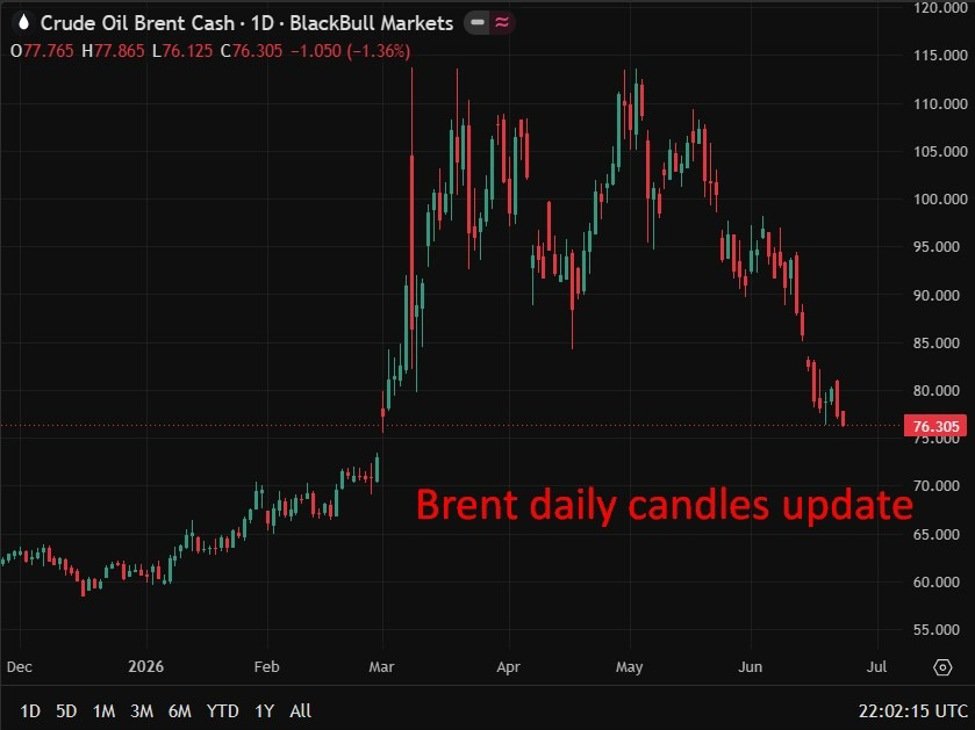
The start of the Hormuz evacuation is a concrete operational step forward and will be read by oil markets as confirmation that the ceasefire is holding well enough for multilateral maritime coordination to proceed. However, the phased and individually managed nature of the evacuation, combined with Oman’s warning that the standard Traffic Separation Scheme remains unsafe and the acknowledged presence of floating mines, signals that any return to normalised tanker flows through the strait is weeks away at minimum. Until regular commercial navigation resumes outside of coordinated convoys, supply disruption risk premium is unlikely to fully unwind. The involvement of Iran, Oman and the US as co-operating parties in the IMO plan also functions as a de facto confidence indicator for the peace process: all three being at the table operationally is a more meaningful signal than diplomatic statements alone.
—
The IMO has begun contacting ships to evacuate hundreds of vessels with 11,000 seafarers stranded in the Gulf via Hormuz after the US-Iran ceasefire, with Oman warning standard lanes remain unsafe.
Summary:
- The UN’s International Maritime Organisation (IMO) confirmed on June 23 it has begun contacting individual ships to arrange evacuation of hundreds of vessels carrying around 11,000 seafarers stranded in the Gulf, according to Reuters
- The IMO said it had secured safety guarantees and verified conditions for navigation, with the operation to be carried out in coordination with Iran, Oman, the United States and the maritime industry, per IMO secretary-general Arsenio Dominguez
- Oman’s defence ministry issued a separate advisory confirming the evacuation will be phased and controlled, citing elevated collision risk in current conditions, per Reuters
- The ministry said the standard Traffic Separation Scheme through the strait is not safe for use and that two temporary routes north and south of the scheme would be used instead
- Vessels will be contacted individually and assigned a specific transit day by parties coordinated through the IMO, per the Omani advisory
- The IMO’s Traffic Separation Scheme dates to 1968 and establishes routing lanes through Iranian and Omani waters; floating mines are among the primary hazards currently present in the area, according to Reuters
The United Nations’ shipping agency has begun the process of evacuating hundreds of vessels carrying approximately 11,000 seafarers that have been stranded in the Gulf since the outbreak of the US-Iran conflict, with the operation proceeding in a phased and tightly managed sequence through the Strait of Hormuz.
The International Maritime Organisation confirmed on June 23 that it had started contacting ships individually to arrange their passage, following months of planning and after the US and Iran reached a ceasefire agreement. The IMO said it had secured the necessary safety guarantees and verified that conditions for navigation were adequate, though it stopped short of providing a timeframe for completing the evacuation.
IMO secretary-general Arsenio Dominguez said the large-scale operation would be conducted in close cooperation with Iran, Oman, the United States and the maritime industry, a coalition that reflects both the diplomatic complexity of the strait and the multilateral framework that has underpinned the ceasefire. The simultaneous participation of Tehran and Washington in the same operational structure is notable given the conflict that closed the waterway in the first place.
Oman’s defence ministry issued a separate advisory underscoring that the operation would be gradual rather than immediate. It cited elevated collision risk in current conditions as the reason a controlled, sequenced approach was required rather than an open resumption of traffic. Critically, the ministry warned that the standard Traffic Separation Scheme, the established routing system through Iranian and Omani waters that the IMO adopted in 1968, is not safe for use at this time. Two temporary routes, one to the north and one to the south of the usual lanes, have been designated for the evacuation instead.
Ships will not be able to transit independently. Each vessel will be contacted by the coordinating parties and assigned a specific allocated transit day, a logistics framework that limits throughput and means the strait will not function as a normal commercial waterway for some time. Floating mines remain among the most significant hazards in waters around Hormuz, a fact that explains both the individual vessel coordination and the decision to bypass the established shipping lanes entirely.
The evacuation marks the first concrete movement of commercial shipping through the strait since the conflict began, and will be closely watched by tanker operators, oil traders and insurers as an indicator of when anything resembling normal transit conditions might return.
I’m not sure how relevant this diagram is now to this.