- Prior was 48.2
- Prices paid 58.5 vs 57.0 expected (58.5 prior)
- Employment 44.9 vs 44.0 prior
- New orders 47.7 vs 47.4 prior
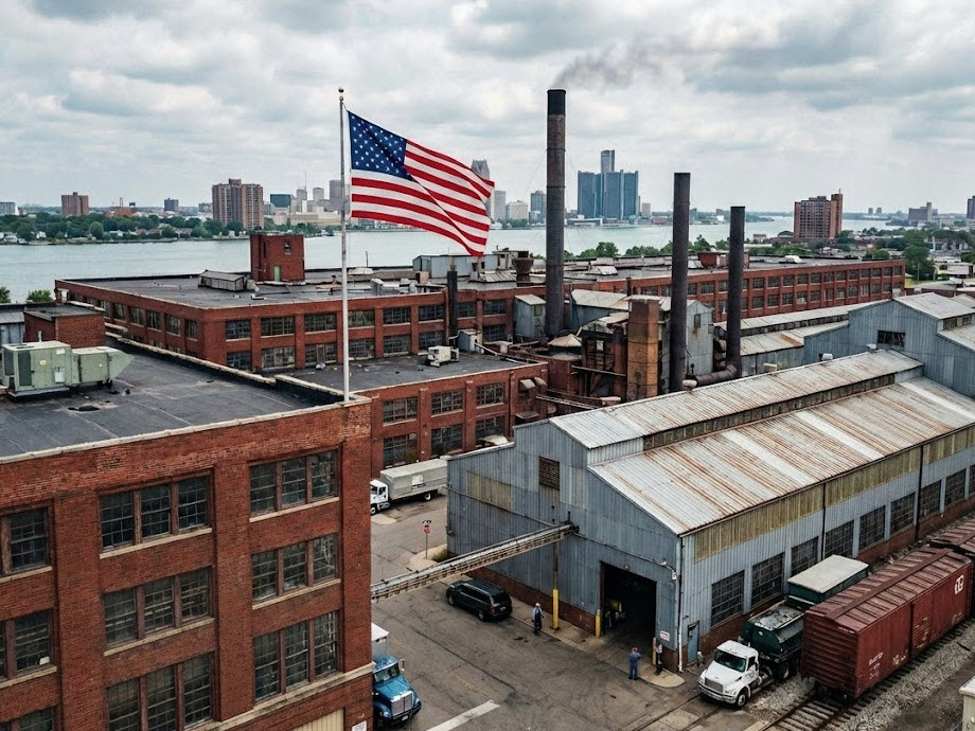
A miserable year for US manufacturing ends with some extra disappointment. This is the lowest reading since November 2024.
ISM manufacturing index
The new orders reading was a slight improvement but still deeply in contractionary territory. The promises of tariffs aren’t paying off as companies are reluctant to invest in long-term production given the uncertainty of the legality and staying power of tariffs. Moreover, consumers are unwilling to buy expensive US-built consumer products rather than foreign imports. The prices paid component rising is ominous but it’s still well-below the 69-level from the peak of mid-2025. I suspect that falling oil prices are a big part of that but that’s something that won’t last.
On the macro side, the hangover from the post-covid spending spree continues and lower US rates don’t appear to be offering a boost yet. That could change as time goes on but a lot will need to go right to make US manufacturing work again.
Comments in the report are dire:
- “Winding up the year with mixed results. It has not been a great
year. We have had some success holding the line on costs; however, real
consumer spending is down and tariffs are ultimately to blame. I hope
for some return to free trade, which is what consumers have ‘voted for’
with their spending.” [Chemical Products] - “Trough conditions continue: depressed business activity, some
seasonal but largely impacted by customer issues due to interest rates,
tariffs, low oil commodity pricing and limited housing starts.”
[Machinery] - “Things are quieter regarding tariffs, but prices for all products
remain higher. Our costs have increased, so we have increased prices for
our customers to compensate. Margins have deteriorated, as full pass
through (of cost increases) is not possible.” [Computer & Electronic
Products] - “Things are not improving in the transportation equipment market.
Many customers are ordering for 2026, but those orders are 20 percent to
30 percent below their historical buying patterns. Some large fleets
are still completely on hold for 2026, with zero capital expenditures
money available to fleet budgets. Truck rental utilization, which is a
good benchmark for the health of the economy, is still below
historically stable levels. The general mood of the industry is that the
first half of 2026 will be another bust, and we’re now hoping things
pick up in the second half, even as the North American truck fleet
continues to age.” [Transportation Equipment] - “In the current environment, our company is struggling with customer
orders and financially overall. Our senior leaders are struggling to
focus our business and get the company on track with quality products.
In November, layoffs impacted about 9 percent of our workforce,
affecting all locations in the U.S. and Europe.” [Machinery] - “Orders continue to drop for most of our businesses. Many plants are
not running near full capacity. Make to order being utilized where
possible.” [Chemical Products] - “Order levels have continued to decline: We had a bad October, an
awful November and a dismal December. January and February don’t look
too good, as bookings are down 25 percent compared to the first two
months of 2025.” [Fabricated Metal Products] - “Morale is very low across manufacturing in general. The cost of
living is very high, and component costs are increasing with folks
citing tariffs and other price increases. It’s cold in our area of the
country, absenteeism is worse around the holidays, and sales were lower
than we expected for November. So, things look a bit bleak overall.”
[Electrical Equipment, Appliances & Components] - “Global logistics remains sensitive to geopolitical shifts. Tariffs
are influencing equipment pricing and procurement strategies.
Large-scale data center programs are absorbing and reducing availability
of resources for other sectors.” [Food, Beverage & Tobacco
Products] - “2025 revenue was down 17 percent due to tariffs. The lost revenue
has inhibited our ability to offer bonuses to employees or create and
hire for new positions.” [Miscellaneous Manufacturing]