I noted a surge in de-escalation hopes despite reading this.
Summary:
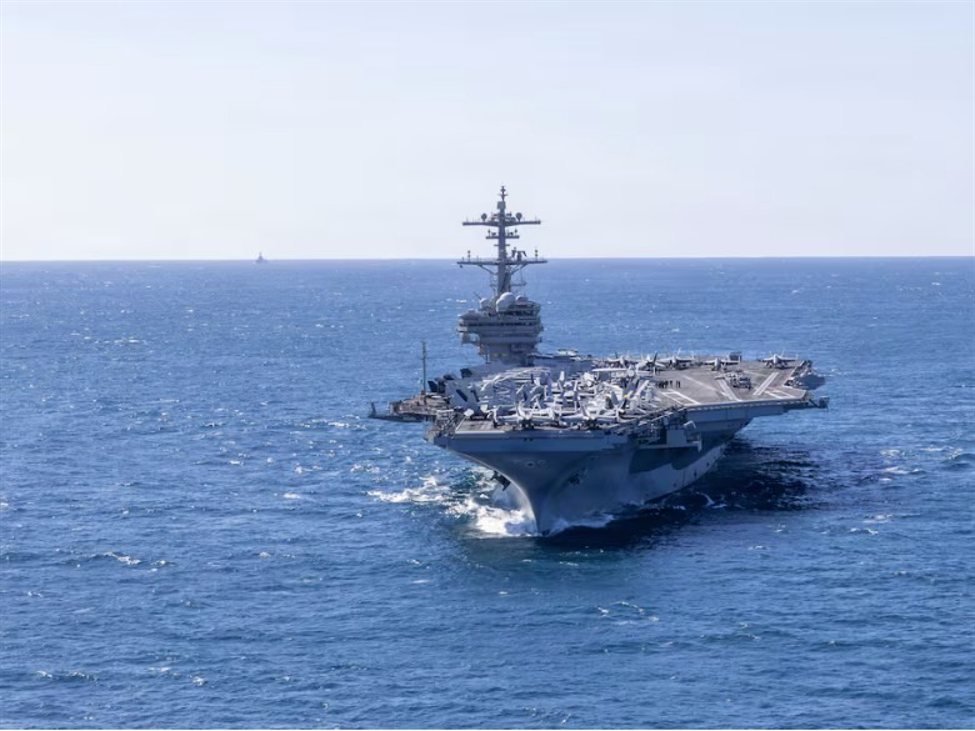
- A third US aircraft carrier, the USS George H.W. Bush, is deploying to the Middle East, potentially lifting the regional total to three carriers. Perhaps though its replacing one already there.
- The move sustains an elevated US military posture as Washington weighs further escalation against Iran
- The USS Abraham Lincoln is already active in the Arabian Sea, while USS Gerald R. Ford remains in port for repairs
- Additional forces, including Marines, amphibious ships and fighter jets, reinforce a broad and flexible strike capability
- Deployment signals sustained pressure on Tehran as Trump pushes for concessions on nuclear, missile and proxy activity
The United States is preparing to deploy a third aircraft carrier to the Middle East, reinforcing an already significant military presence as tensions with Iran remain elevated and the risk of further escalation persists.
The USS George H.W. Bush has departed Naval Station Norfolk and is expected to head toward the region, where it would join the USS Abraham Lincoln and the USS Gerald R. Ford carrier strike groups. While the Ford is currently in port undergoing repairs, US officials indicate that Washington could maintain three carriers in or near the region for an extended period, underscoring the scale and durability of the buildup.
The Lincoln has been operating in the Arabian Sea for months, playing a central role in ongoing US-Israel operations targeting Iranian-linked assets. The addition of another carrier, alongside recent deployments of amphibious assault ships, Marine expeditionary units and additional fighter aircraft, significantly expands US operational flexibility across air, sea and land domains.
The timing aligns with intensifying strategic pressure from Washington. President Donald Trump has warned that the US is prepared to escalate military action if Iran does not agree to a deal addressing nuclear enrichment, ballistic missile development and support for regional proxy groups. The carrier buildup provides both deterrence and immediate strike capacity, allowing the US to respond rapidly to developments while maintaining sustained operational tempo.
From a military standpoint, multiple carrier strike groups in proximity enable overlapping air cover, extended sortie generation and redundancy in command-and-control, particularly important in a contested environment such as the Gulf and surrounding waterways. The inclusion of amphibious forces further points to optionality beyond airstrikes, including rapid-response or limited ground operations.
The broader message is one of sustained pressure rather than imminent resolution. While diplomatic channels remain uncertain and signals from Iran have been mixed, the continued reinforcement of US forces suggests Washington is preparing for a prolonged standoff, with escalation risks still firmly on the table.