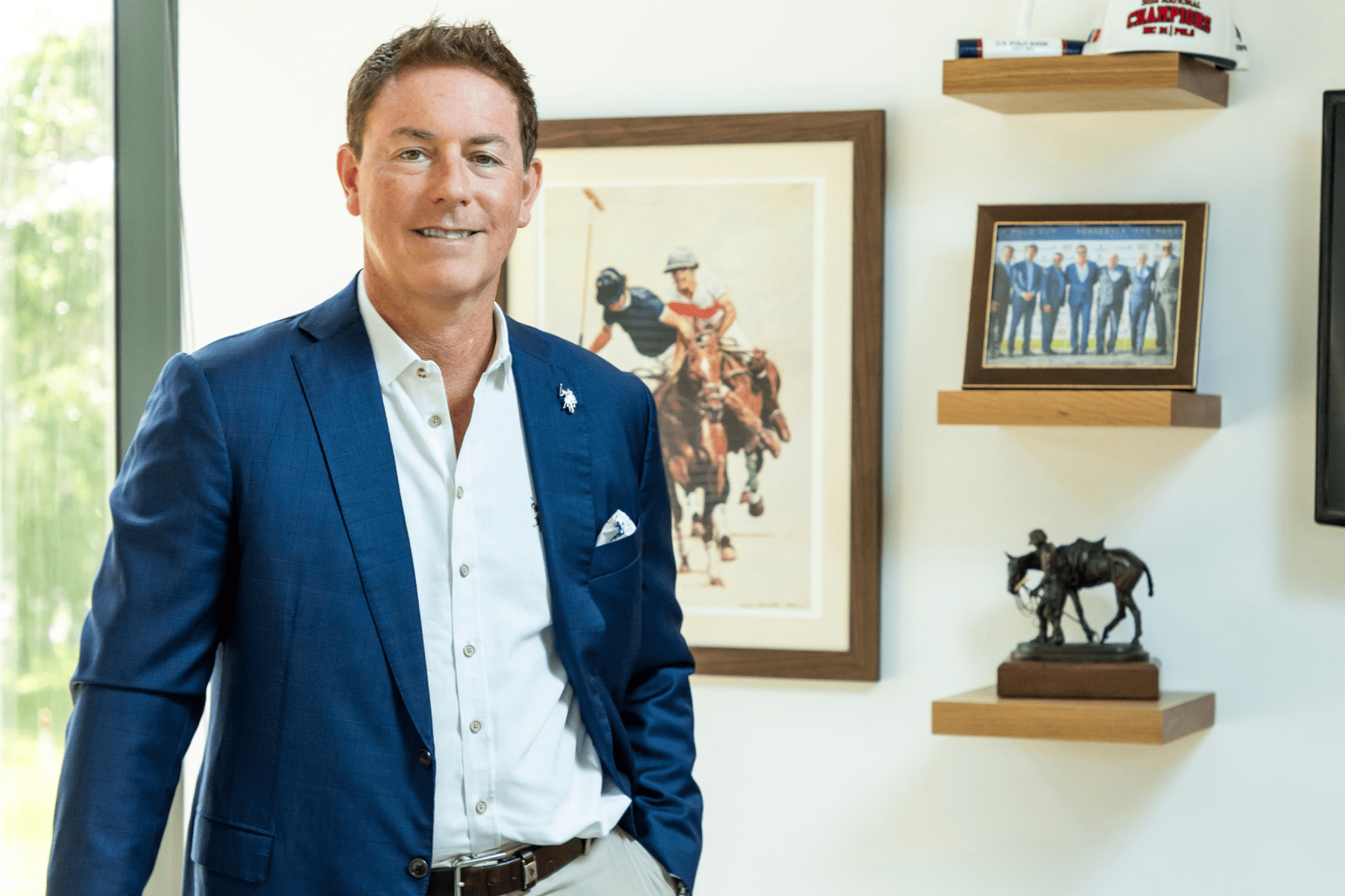
The average CEO pulls 62-hour workweeks—around 10 hours a day plus a few more on the weekend. And they’re even at it on holiday. For workers, it can mean a steady stream of out-of-hours demands, whether they’re on duty or not. But after losing “years” of his life to overworking, you won’t catch U.S. Polo’s CEO J. Michael Prince contacting his team on a Saturday morning.
“One thing I try to respect is—and this never really happened to me throughout my career—unless there’s something major going on, I try to leave people alone in the evenings, so you rarely ever get an email or text from me after the office,” Prince exclusively tells Fortune.
Despite running a $2.7 billion 24/7 global brand, complete with 1,200 stores across 190 countries and charity polo events at Windsor Castle alongside Prince William, he leaves the office at 5:30 p.m., his team won’t get a text from him after hours unless urgent, and even on long weekends he gives everyone Friday to Monday and goes dark.
“I leave the office, and I really try to respect people’s weekends, because I feel like that’s your family time, that’s your personal time, that’s your friendship time, that’s your time to reset, recharge spiritually, mentally, physically, emotionally.”
It’s a rare feat for someone who runs a business that spans retail and weekend sporting events—and even his own routine reflects the same logic. But Prince knows too well the toll being always on takes.
The CEO is working ‘smarter’ after pulling 90-hour weeks and all-nighters to get to the top
Prince is up at around 5:15 a.m. “I don’t like the fours, but I like the fives,” he jokes, adding that he works out for an hour, has a cup of coffee, checks his emails and always makes time for breakfast with the family.
Instead of rushing to his commute, the CEO likes to savor his mornings, taking turns with his wife doing the school run and opting to get into the office “a bit later” to miss the traffic. “Because I know once I get to the office, there goes my day, no matter how well it’s planned,” Prince explains.
Once through the door, it’s calls from sport partners, international licensees, and team meetings. “But I usually try to get out of the office around 5: 30 p.m. to get home and have dinner with the family,” he adds.
Unless there’s an urgent matter—in which case, Prince tells his team they can reach him at any time, day or night—he has one final check of messages, and then he switches off for the day.
But it wasn’t always that way. To get to where he is today, Prince pulled 90-hour work weeks, including all-nighters.
“I probably lost some years on the front end from some of those ‘good habits’ that could also be considered bad habits,” he recalls.
“Looking back, I could have worked a little smarter,” Prince adds. “I could have eaten differently, I could have been a little more thoughtful about my sleep, about my routine around working out, my travel…”
When you’re grinding for as many hours as he was, taking care of yourself naturally falls down the priority list. But now in his 50s, Prince has the benefit of hindsight: a career runs from your 20s until your late 60s, and skipping lunch daily, burning the midnight oil and running on four hours of sleep simply isn’t sustainable for decades on end.
“Work hard, but also take care of yourself,” he advises ambitious professionals. “It’s a marathon, not a sprint.”
Netflix cofounder stopped work at 5 p.m. every Tuesday for 30 years to stay ‘sane,’ no matter the crisis
Prince isn’t the only major CEO who’s installed some boundaries—and told their teams to do the same.
Netflix cofounder Marc Randolph said he kept a hard cutoff every Tuesday at 5 p.m. for over 30 years, even while running the $310 billion entertainment giant to keep himself “sane.”
“I’ve worked hard, for my entire career, to keep my life balanced with my job,” he wrote in a LinkedIn post that went viral. And “no meeting, no conference call, no last-minute question or request” would get in the way of that. Even if there was a “crisis,” you’d still catch him going to a movie or having dinner with his best friend every single Tuesday evening.
Whole Foods CEO Jason Buechel makes time to work out twice a day and “fully uses up” all his annual leave every year—despite being in a minimum of 10 meetings a day and near-constant business travel.
“I think it’s important for me to help set that example,” Buechel previously told Fortune, adding that he’ll even make a point to “always ask” his team members about what they’ve planned for their next vacation.
He even capped how many hours employees can sell to “make sure they are taking PTO…and ultimately having a great work-life balance.”
And although he’s the CEO of the world’s largest bank, JPMorgan’s Jamie Dimon, takes all of his annual leave and tells his work-force they need to “work smart” to prioritize their work-life balance.
The CEO told students at Georgetown: “You have to take care of your mind, your body, your spirit, your soul, your friends, your family, your health.”