Summary:
-
USD/JPY extends gains despite repeated jawboning
-
Katayama and government warnings fail to shift FX
-
Record Nikkei boosts tolerance for weak yen
-
Intervention risk tied to disorderly moves, not levels
-
Thin-liquidity periods seen as risk windows … I’m eyeing January 19 for direct intervention risk
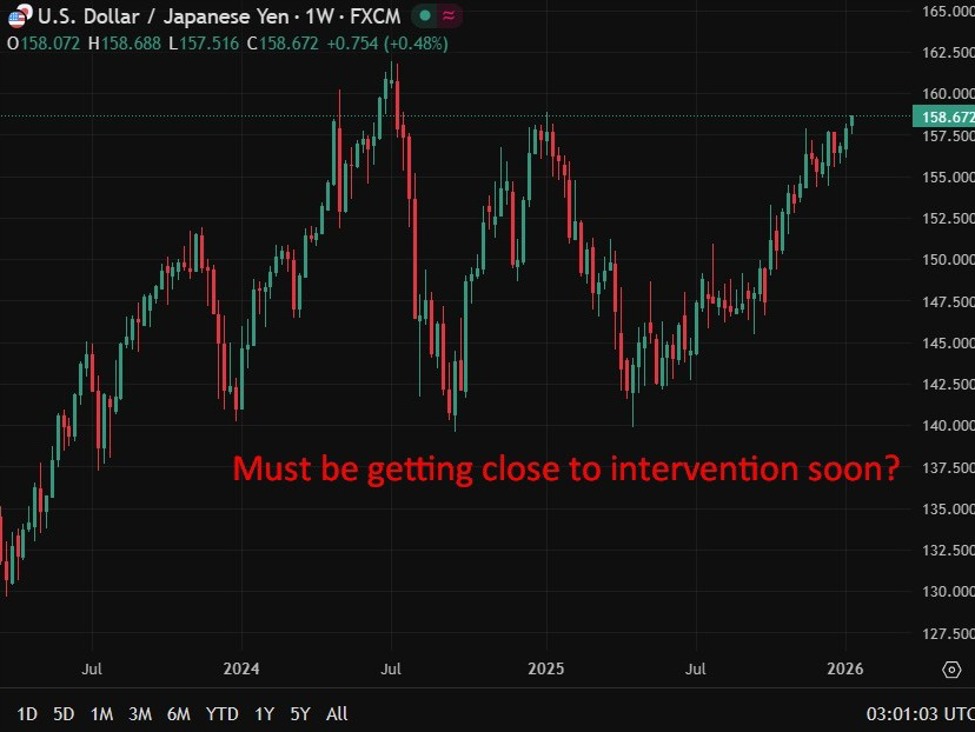
The continued surge in USD/JPY despite multiple rounds of official jawboning has refocused my attention on the risk of direct yen intervention, even as authorities show little urgency to escalate beyond rhetoric for now.
Japanese officials have already stepped up verbal warnings, with Finance Minister Satsuki Katayama flagging concerns about one-sided yen weakness during talks in Washington, followed by reinforced language from the government spokesperson warning against sharp and speculative FX moves. Yet the impact on pricing has so far been limited, with USD/JPY continuing to grind higher.
Markets appear to be interpreting the lack of follow-through as a signal that tolerance for yen weakness remains relatively high, particularly while Japanese equities benefit. The Nikkei 225 has pushed to record highs, underpinned by the weak currency’s boost to exporters’ overseas earnings, complicating the political calculus around intervention.
That said, traders are increasingly alert to the conditions under which Tokyo has historically chosen to act. Japan has tended to intervene when FX moves become disorderly rather than merely directional, often during periods of thinner liquidity when impact per dollar spent is maximised. Against that backdrop, upcoming U.S. market holidays later this month have emerged as potential risk windows rather than base-case triggers.
Specifically January 19, Martin Luther King, Jr. Day:
- Equity markets are closed
- US bond markets are closed
- FX never fully closes but liquidity and interest will be much thinner than usual
Importantly, officials have stopped short of defining explicit red lines. Rate differentials continue to favour the dollar, and without a shift in Bank of Japan policy, any intervention would still be leaning against fundamentals — a dynamic Tokyo is well aware tends to limit durability.
For now, markets are testing Japan’s tolerance rather than pricing imminent action. But as USD/JPY pushes into fresh highs and verbal intervention loses traction, sensitivity to sharp or illiquid moves is rising. The longer yen weakness persists without consolidation, the greater the risk that authorities feel compelled to act — not on a schedule, but in response to market behaviour.