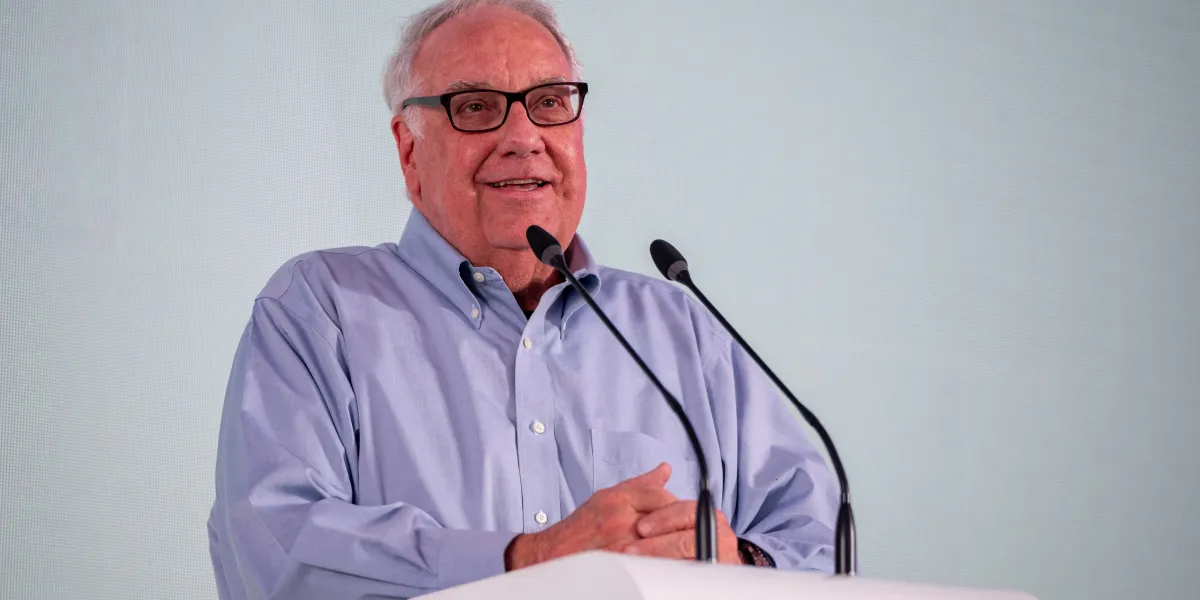
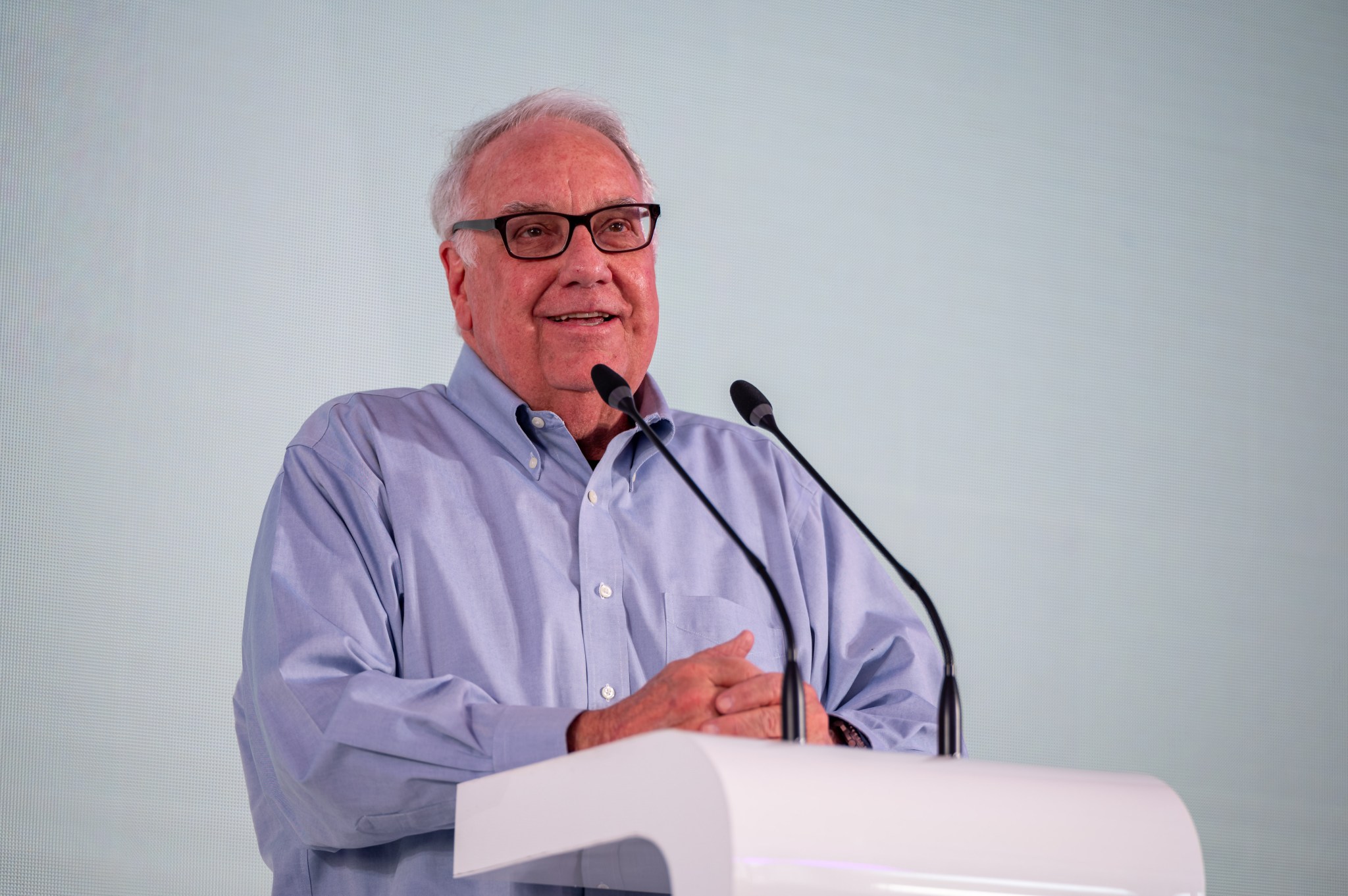
Howard Buffett, the 71-year-old son of Warren Buffett, the 95-year-old “Oracle of Omaha” himself, has a new message for philanthropists: You can’t fight poverty without proper rule of law.
In a conversation with CNBC earlier this month alongside his two siblings—Susan and Peter—Buffett spoke candidly about wisdom he had heard from Gary Haugen, CEO of International Justice Mission, an organization dedicated to protecting people in poverty from violence. Buffett highlighted the dilemma of addressing poverty in places where the rule of law is undermined by conflict, mentioning countries such as Congo or Sudan. Addressing economic opportunity is not enough to solve poverty alone, he said.
“There’s a lot of things you can fund that will go nowhere,” Buffett said. “If you’re not addressing the real issue of rule of law then you just can’t have success.”
Buffett’s comments come as he and his siblings gear up to give away their father’s wealth through philanthropy. This is not exactly part of The Giving Pledge, which their father co-founded in 2010 along with Bill and Melinda Gates, promising to give away 99% of his wealth within his lifetime and inviting other rich Americans to give at least 50% of their wealth to charity. Realizing those plans weren’t feasible, Warren announced instead that his fortune would instead be directed to each of his three children’s charitable foundations, allowing them to distribute about $500 million each year. The legendary investor’s wealth is now estimated at more than $146 billion, according to Bloomberg Billionaires Index.
Warren’s three children have each established a foundation for charitable giving dedicated to a particular cause. Howard’s philanthropic foundation—the Howard G. Buffett Foundation—is focused on food security, conflict mitigation, and combating human trafficking. His organization has shelled out over $1 billion in aid to Ukraine, as well as large sums for agricultural development in Africa, and Central and South America. Buffett has deliberated about his charitable giving in the past, saying in a 2024 interview with the Associated Press “it’s not so easy to give away money if you want to do it smart.”
In the interview with CNBC, Buffett raised skepticism about placing money in the hands of big institutions or governments. “When you start trying to write $200 and $300 million checks, only institutions can absorb those or governments, and I’m not a big fan of writing checks to institutions or governments,” he said. “I don’t trust them that much to make good judgments or where they have big overheads.”
What experts say about rule of law and poverty
Policy experts and economists have echoed Buffett’s sentiment, drawing a connection between the rule of law and income inequality. “The rule of law is extremely important to protect the poor,” Landry Signé, a senior fellow at Brookings Institution’s global economy and development program, told Fortune. “If the same law [applies] to everyone, that means that you will not have that asymmetry where the wealthiest will get their way while the poorest will be abused.”
Signé added that governments must ensure key rights for citizens that secure inclusive opportunities in order to develop a healthy economy. “You also have the critical importance in securing property rights,” Signé said. “That’s why the rule of law is key to unlock economic freedom. It is key to unlock innovation, to unlock entrepreneurship.”
Data and analytics company LexisNexis’s Rule of Law Foundation has quantified the relationship between a country’s rule of law and key factors in wellbeing in an “impact tracker.” The tracker ranks a country’s rule of law between a factor of zero and one based on 44 indicators across eight categories—including regulatory enforcement and government powers—with a score of one representing the strongest rule of law. The organization finds a strong correlation between rule of law and GDP per capita, as well as other measures of wellbeing. Countries with poor rule of law—like Venezuela and Afghanistan—consistently rank poorly among key wellbeing factors.
In the CNBC interview, Buffett made clear his intentions of giving away his father’s wealth. Though he cautioned that he and his siblings ought to put some careful thought into their donations. “We should be giving away as much as we can give away, intelligently and effectively, while we’re here doing it,” he said.