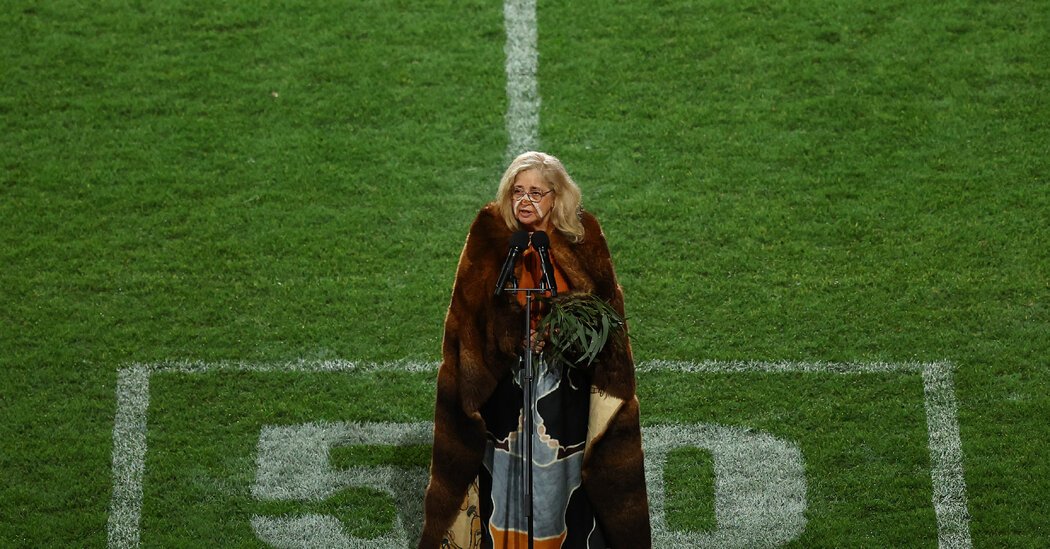
The “Welcome to Country” is a familiar ritual in Australia that is held at the opening of Parliament, festivals and graduations.
The tradition involves a recognized elder of the local Indigenous community welcoming visitors with a speech, a song, a dance, a didgeridoo performance or a smoking ceremony. The speeches can take many forms, but usually an Indigenous custodian will welcome guests to their land, for example Gadigal in Sydney, and pay tribute to elders past and present. The ceremonies are diverse and can vary across regions.
The ceremonies were largely uncontroversial until recently, when far-right hecklers started targeting them.
These ceremonies date back thousands of years. Australia is made up of hundreds of Indigenous cultures and, traditionally, anyone hailing from outside an Indigenous group’s boundary needed permission from the local community to pass through. “Welcome to Country” served as a way of greeting outsiders and offering them safe passage, both physically and spiritually.
Over time, the ceremonies have been adapted, but the sentiment remains the same. These days, they can occur at major public events, including when Parliament meets for the first time after a federal election, at award ceremonies, festivals and conferences.
They differ from an “Acknowledgment of Country,” which can be delivered by anyone, including non-Indigenous people, and recognizes the traditional owners of the land and their ongoing connection to the area.
Rhoda Roberts, an Indigenous leader in the arts community, coined the term “Welcome to Country” in the 1980s. She said the custom provided a moment to reflect on the rituals and religious beliefs that were once suppressed by the British after Australia’s colonization.
“It was a time to reactivate what we had always done as protocol,” she told SBS, a government-funded broadcaster, in 2025. “Inviting the local custodian at an event to welcome us and honor the ancestors and pay respect to the lands that we’re visiting is really important.”
Jakelin Troy, a Ngarigu woman and director for Indigenous research at the University of Sydney, said the ceremony is similar to inviting someone to your home: you open the door, welcome them inside, and offer them a drink or something to eat.
She said “Welcome to Country” ceremonies had become more common in the past 30 years, coinciding with the revival of local languages and Indigenous place names.
“The rise of the human rights movements in the late 20th century has really led to Aboriginal people being able to give voice to Aboriginality, to our identities as Aboriginal peoples and gain very wide public support,” she said.
Denise Bowden, chief executive of the Yothu Yindi Foundation that organizes the Garma Festival, Australia’s largest annual Indigenous gathering, said “Welcome to Country” ceremonies share identity, pride and belonging in the community.
“We have this unique Indigenous culture that runs through our veins here in Australia” she said.