The U.S. trade deficit in goods and services rose to $60.3 billion in March, increasing 4.4 percent from the previous month, after the Supreme Court struck down President Trump’s global tariffs, according to data from the Commerce Department released on Tuesday.
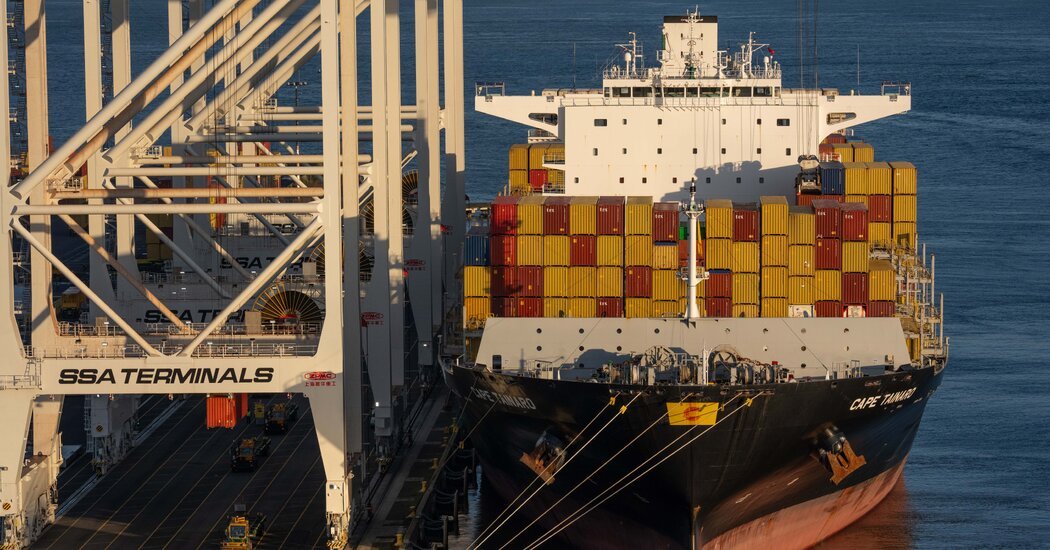
Exports grew 2 percent in the month, to a record $320.9 billion, as the United States exported more oil, soybeans and industrial supplies. The U.S. trade surplus in petroleum hit a record in March, as war with Iran pushed up the price of oil and U.S. energy exports. Imports also gained 2.3 percent in March, to $381.2 billion. The combination increased the monthly trade deficit, the gap between what the United States imports and what it exports.
Tariffs resulted in up-and-down swings in the trade deficit last year. The monthly trade deficit is now somewhat lower than it was in 2024. But overall, the figure hit a record last year, as the United States continued to import high-priced computer chips and weight-loss drugs, and importers stockpiled foreign goods before tariffs took effect.
The data provided the first snapshot of trade since the Supreme Court ruling forced major changes to the Trump administration’s tariff regime.
On Feb. 20, the Supreme Court ruled that Mr. Trump had exceeded his authority last year when he used an emergency law to impose steep tariffs on nearly every nation.
That ruling forced the administration to withdraw the double-digit tariffs it had issued under that law, which varied by country based on bilateral trade deficits. Mr. Trump immediately moved to replace those levies with a flat 10 percent tariff, issued under a legal authority known as Section 122.
The Section 122 tariff will expire in July unless Congress votes to reauthorize it. So the Trump administration has been working on tariffs to replace it. It has started two trade investigations under another legal provision known as Section 301, which allows the president to impose tariffs in response to unfair trade practices.
One of the new investigations would target countries that didn’t have laws blocking imports made with forced labor. The other centers on what the administration calls “excess capacity” among 16 of the country’s largest trading partners.
The Trump administration says overproduction in the factory sectors of some foreign countries has resulted in large and persistent U.S. trade deficits with those nations. Representatives from various industries, ranging from sugar to technology to chemicals, are set to testify about the investigation on Tuesday and Wednesday in Washington this week.
Next week, Mr. Trump is expected to visit Beijing, for a meeting with the Chinese leader that will be partly focused on trade. U.S. imports from China have shrunk significantly, as the administration has imposed high tariffs on Chinese goods, and companies have relocated supply chains out of the country.