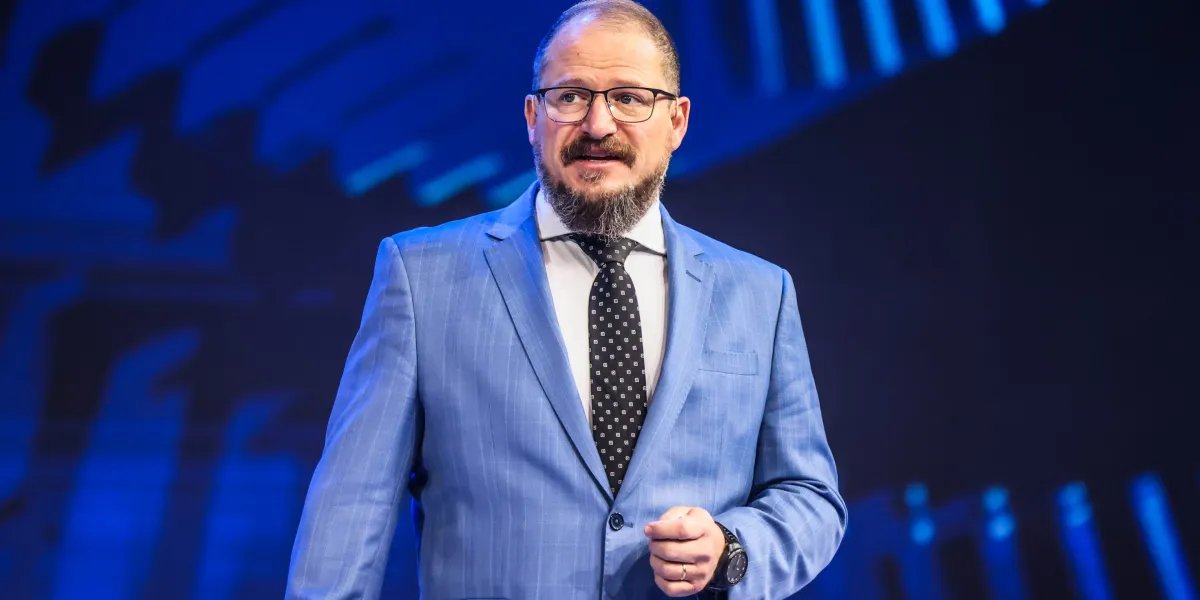
Good morning. Fortune Editor-in-Chief Alyson Shontell writing from New York. I recently interviewed Qualcomm CEO Cristiano Amon for my podcast, Fortune 500: Titans and Disruptors of Industry. One big takeaway: Your phone may not be your most important device for much longer.
This year, Amon says, will be the year of AI agents—essentially, AI that can be put to work on specific tasks. By 2028, Amon believes we will see meaningful workloads shift from our phones to new, AI-first devices. At that point, we’ll see an AI consumer device emerge as our primary device, housing our own personal assistants. Within five years, Amon predicts, those devices will be dominant, serving hundreds of millions globally.
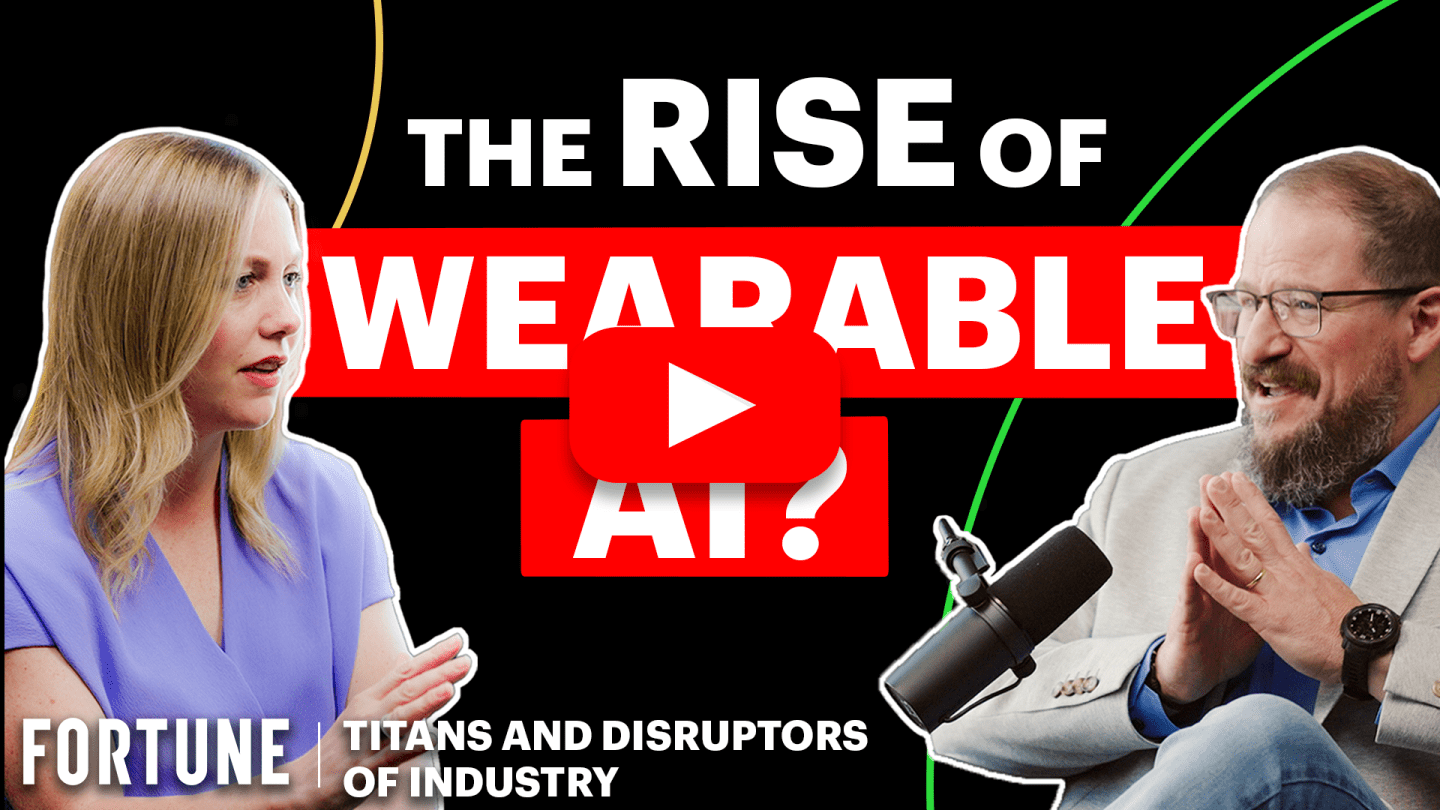
Amon’s bet? That the device of the future is smart glasses—after all, those are closest to our key senses, our eyes and ears. But he also believes pendants, pins, jewelry, and other fashionable forms of AI personal assistants will be available and worn widely in that time frame. “The center of your digital life will no longer be the phone, it’s the agent,” Amon told me.
Given that his $200 billion company already sits at the center of most of the devices you use every day, his predictions carry a significant amount of weight. Qualcomm’s Snapdragon chips power PCs, Android devices, ear buds, cars, and even data centers. Qualcomm is also partnering with most of the major tech companies on their future devices, including OpenAI and Meta.
When I hear Amon talk passionately about this always on, always data collecting future, the thing that stands out most is how drastically our relationship to our devices is about to change. But what does this mean for you, the busy, device-dependent executive?
Rather than being glued to our phones for updates, in the not-so-distant future, where personal data and context is always streamed, our devices will become anticipatory. I won’t need to tell my device what I want—it will know what to do before I ask, at a time that’s best for me. It may even prod me to do what it thinks I should do.
Leaders may come to rely on devices almost as strategic thought partners, the way they would their C-suite or chief of staff. Expect to manage future devices like employees, and to have employees manage their own AI chiefs of staff and team of agents. It also means having to constantly evaluate what AI is capable of and planning new processes and even reimagining org charts accordingly.
For more on how Qualcomm CEO Cristiano Amon sees the future and what the AI devices of the future will be like, check out our full conversation on Fortune 500: Titans and Disruptors of Industry.—Alyson Shontell
Contact CEO Daily via Diane Brady at diane.brady@fortune.com
Top leadership news
Inside Anduril
Anduril CEO Brian Schimpf, a former Palantir engineer, is quietly building a major new defense contractor that sells AI-powered drones, software, and sensing systems to the Pentagon. The company, cofounded with Palmer Luckey, is pushing fast, software‑driven battlefield systems despite political backlash over tech’s role in warfare, Allie Garfinkle reports in a new Fortune digital cover story.
Coinbase lays off 14% of staff, flattens leadership structure
Coinbase CEO Brian Armstrong announced on X that the crypto exchange is laying off 14% of its staff and flattening the company’s leadership structure so that there are no more than five layers below the CEO seat. “Layers slow things down and create coordination tax,” Armstrong wrote in the post.
ServiceNow expands Autonomous Workforce
ServiceNow unveiled an expansion of its Autonomous Workforce at the Knowledge 2026 conference this week, showcasing AI agents that resolved IT tickets faster than human agents among a range of other applications. Chief Product Officer Amit Zavery said “advisory AI has run its course” and that “enterprises need AI that senses, decides, and securely acts.”
The markets
S&P 500 futures are up 0.70% this morning. The last session closed up 0.81%. The STOXX Europe 600 was up 2.11% in early trading. The U.K.’s FTSE 100 was up 2.20% in early trading. Markets in Japan are closed today. South Korea’s KOSPI was up 6.45%. China’s CSI 300 was up 1.45%. Hong Kong’s Hang Seng was up 1.22%. India’s NIFTY 50 is up 1.21%. Bitcoin was up at $82K.
Around the watercooler
Jamie Dimon and Dario Amodei sidestep question about whether the AI cyber ‘freakout’ is warranted by Nick Lichtenberg
Tokyo is throwing out its strict office dress code and asking workers to wear shorts amid the war in Iran energy crisis by Emma Burleigh
GameStop’s billionaire CEO is an entrepreneur without a college degree who cofounded Chewy. Now he has his sights set on buying eBay for $56 billion by Marco Quiroz-Gutierrez
UK-based Google DeepMind workers vote to unionize over military AI contracts amid internal backlash over its Pentagon deal by Beatrice Nolan
Economists have found an answer to slowing cognitive decline: avoid retiring early by Sasha Rogelberg
CEO Daily is curated and edited by Joseph Abrams, Jason Ma, Claire Zillman, and Lee Clifford.