“I lived in the White House. I was first lady. That wasn’t my plan. I had no training for that…but we figured it out.”
Speaking at SXSW London, Michelle Obama offered a lesson that will resonate with global corporate leaders, many of whom will have spent their careers navigating roles or circumstances they may not feel fully prepared for.
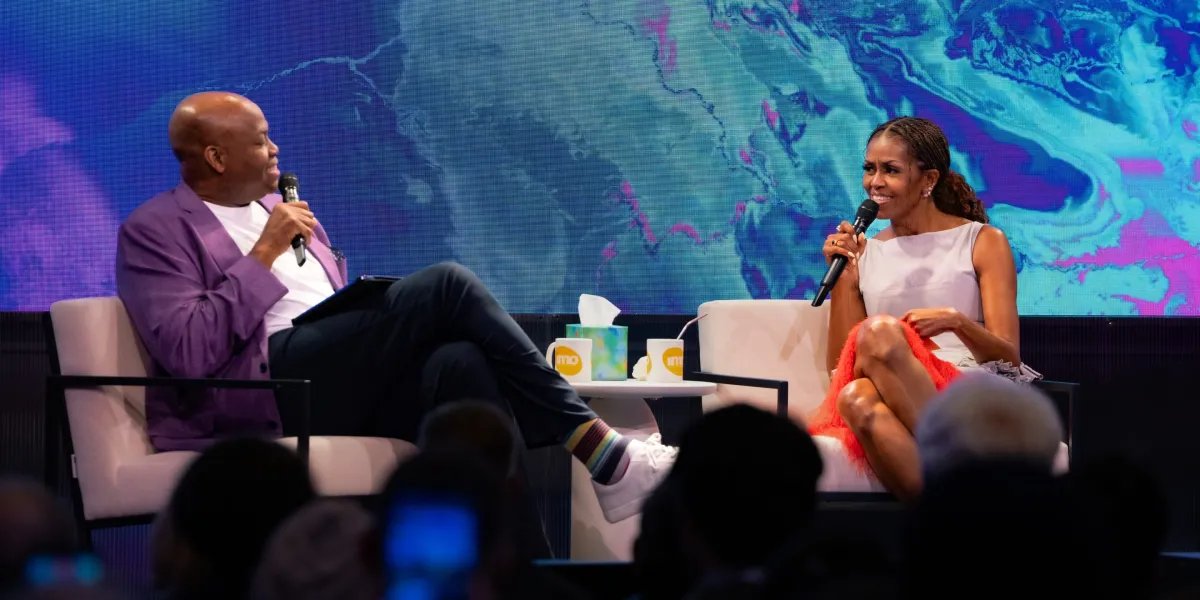
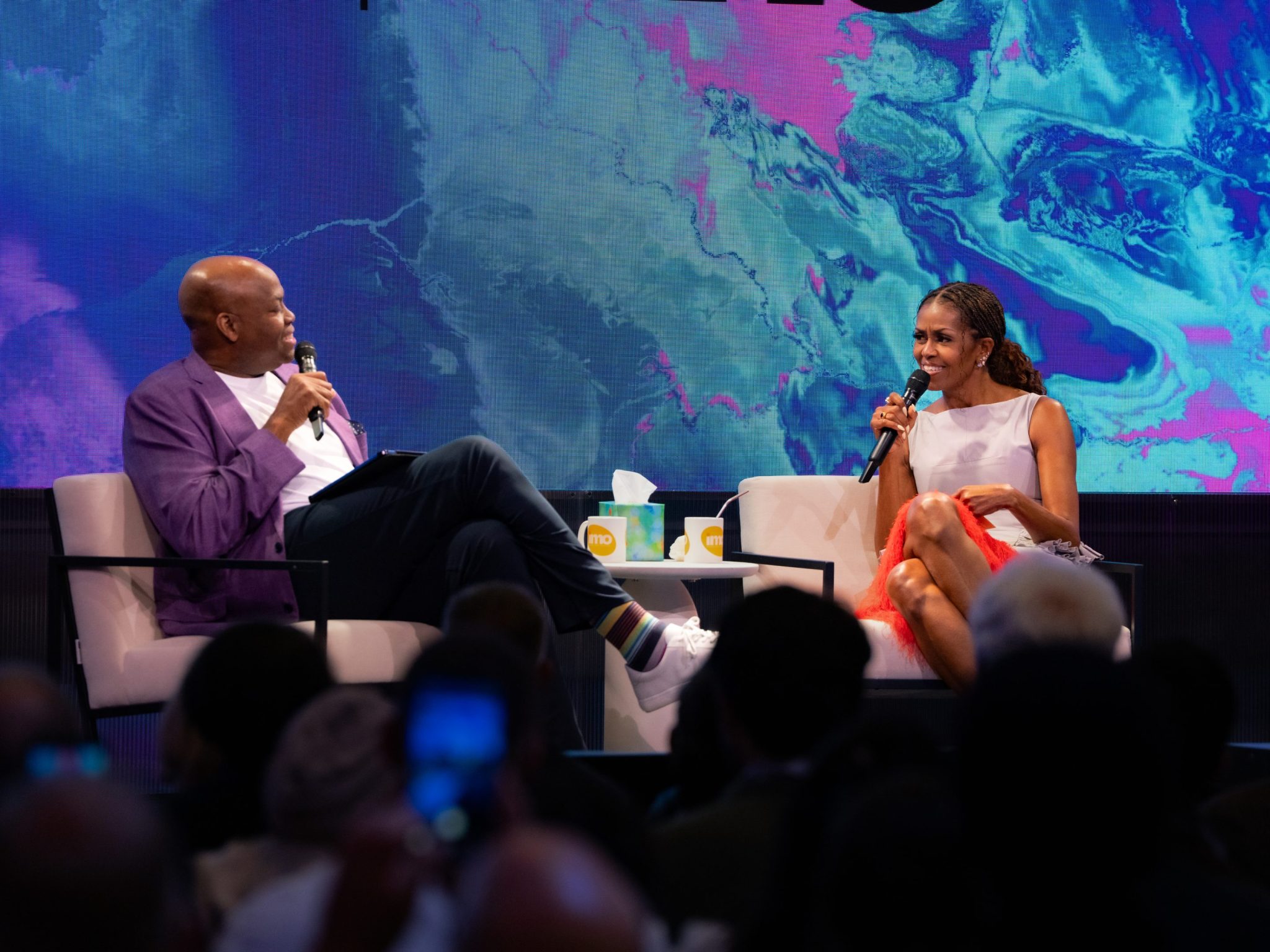
“Nobody really knows what they’re doing,” Obama says, appearing alongside her brother, Craig Robinson, during a live recording of their podcast, IMO. Such an admission from the preternaturally composed former first lady, who occupied one of the most scrutinized positions in public life, drew laughter—and perhaps a little skepticism—from the audience.
Yet her point lands at a moment when uncertainty has become a defining feature of Europe’s corporate landscape. PwC’s 2026 Global CEO Survey found that confidence among business leaders has fallen to a five-year low.
Executives are charting the crosscurrents and turbulent waters of today’s geopolitical landscape, which is marked by trade tensions, economic fragmentation, and the continuing fallout from conflicts on Europe’s borders. Long-term business planning has become increasingly difficult as companies contend with new regulations, supply-chain risks, and questions about Europe’s future competitiveness.
To be clear, Obama is not championing a lack of expertise, but the need to lead through conditions that nobody was specifically trained for. She challenges the assumption that leaders at the top possess a level of certainty unavailable to everyone else.
“I feel like it’s my job to come down from the mountain and be like, ‘Y’all, this is the molehill.’ It’s not all that…I want to demystify all of life. I’ve sat at every powerful table there is. I have seen it all and there are so many people like me…sitting around thinking that they are impostors.”
She’s right: a whopping 78% of U.K. CEOs have reported experiencing feelings of profound self-doubt, according to a survey by NerdWallet.
“I’ve sat at every powerful table there is. So many people think they are impostors”
Success, Obama continues, is often less about having all the answers than about the ability to adapt, learn, and grow in unfamiliar circumstances.
Few experiences test a person’s resilience like navigating the jagged terrain of American politics. For Obama, that pressure was compounded by the unrelenting hostility directed at her family, at least at the start of her husband’s political campaigning. It demands an uncommon resolve—a skill Obama insists she developed long before arriving at the White House.
Raised on Chicago’s South Side, Obama followed a path familiar to many ambitious professionals: excel in school, earn prestigious credentials, and secure a stable career. She attended Princeton University, graduated from Harvard Law School, and joined a leading corporate law firm.
‘I ticked all the boxes,” Obama admits. Yet following the prescribed path did not provide the clarity she so desired from life. “Life is short and it is unpredictable and nothing is really guaranteed,” she says. “And if I were to die tomorrow, is this where I want to be? On the 47th floor of a corporate firm working for corporate clients?”
She ultimately left private practice for public service. “With every move, I just realized that I was walking more into my reality, into my truth.”
That mindset is what Obama calls “the swerve”—those moments when life pulls you away from the path you thought you were supposed to follow. She credits these moments with building her resilience.
For many high achievers, the instinct is to resist such detours. Careers are built around plans, milestones, and carefully mapped goals. “Successful leaders are often more enamored with the process than the outcome,” she says. “Learn to enjoy the process. That’s where you develop the skills that lead you to things you want to do. Every experience—the bad boss, the boring job, the unexpected setback—becomes an opportunity to build resilience and character,” Obama said.
It is a concept that may resonate with today’s business executives who are confronting strategic swerves they neither anticipated nor trained for—from tariffs and supply-chain disruptions to AI-driven business transformation.
And if all that sounds a little earnest, Obama offers one final reminder that life cannot be reduced to a succession of professional milestones. “I don’t think there’s any problem with going to the pub on a Tuesday afternoon,” she jokes. Resilience is important, but so is balance.