Even as the United States and Iran have agreed to stop hostilities and reopen the Strait of Hormuz, the economic impact of the war is expected to keep rippling through the global economy. In Britain, policymakers are warning that the effect on inflation will be felt throughout this year.
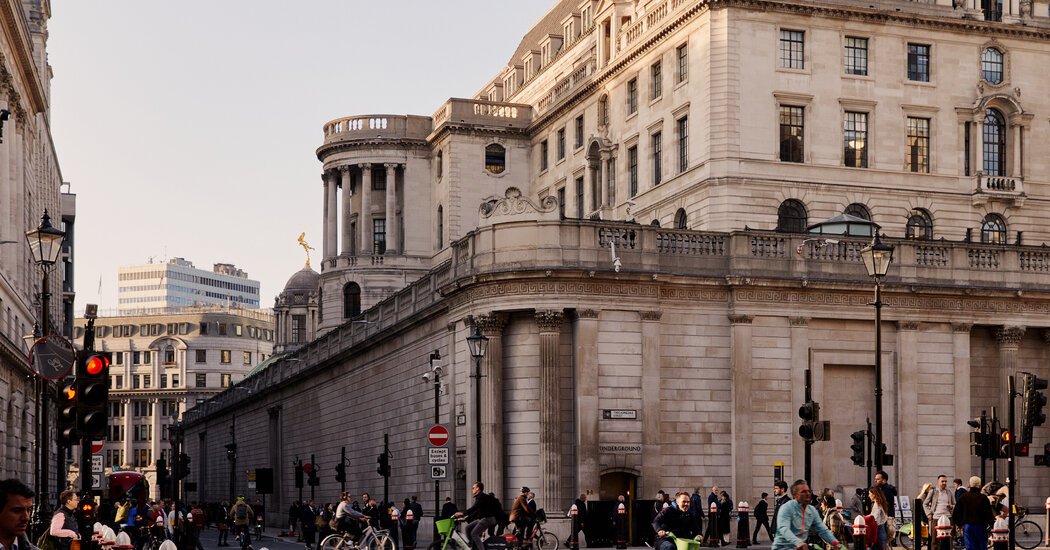
Bank of England officials kept interest rates on hold on Thursday at 3.75 percent, saying the war and its impact on energy prices was still a major source of uncertainty for the British economy. Oil and natural gas prices have dropped in response to the U.S.-Iran agreement, which says the two sides will work toward a final deal within 60 days. But energy prices are still higher than they were before the conflict began in late February.
British policymakers said logistical problems could delay the restoration of energy production and exports in the Persian Gulf. There was also “the possibility of lingering instability,” according to the minutes of their meeting this week.
“Whatever happens in the future, the higher energy prices of the past four months mean there’s already some inflationary pressure in the pipeline,” Andrew Bailey, the governor of the Bank of England, said in a statement.
The bank has held rates steady since late last year. It was expected to continue to gradually cut rates until the war in Iran pushed up the cost of energy. That raised consumer prices in Britain, which is a big user of imported energy.
Central bankers around the world are grappling with the price pressures triggered by the war. The Federal Reserve, in keeping rates on hold on Wednesday, indicated that it was split between not taking action on rates this year and making one or more quarter-point increases.
Last week, the European Central Bank raised rates for the first time since September 2023, warning that price pressures were broadening throughout the countries that use the euro. It was the first major central bank to raise rates since the war started. The Bank of Japan raised rates to 1 percent — the highest level in 31 years — on Tuesday.
The majority of the nine members of the Bank of England’s rate-setting committee voted to keep rates on hold, arguing that economic pressures pushing down inflation before the war were still evident. Inflation in the past couple of months has been tamer than many economists had expected. In May, consumer prices rose 2.8 percent compared with a year earlier, the same pace as the previous month.
Still, officials at the bank said inflation was likely to climb later in the year because higher energy prices will work their way through the economy.
Two members of committee, Megan Greene and Huw Pill, voted for an immediate quarter-point increase, concerned that inflation could become embedded more deeply in the economy.
Some policymakers at the bank have argued that higher rates charged by banks, which are already raising the cost of loans for businesses and households, would help ward off inflation risks. That could allow the central bank to keep rates on hold the rest of the year.
Still, keeping rates steady could contribute to cost of living pressures on households. That adds to the woes of the government, led by Keir Starmer, the prime minister. His premiership is under threat after dire local and regional elections last month. On Thursday, a special election is taking place in northern England that could return Andy Burnham to Parliament, who is seeking to become leader of the Labour Party and by extension the next prime minister.