The absence of two key Senate Republicans has complicated the Trump administration’s ambitions to pass budget appropriations and increase defense spending, particularly as the war in Iran escalates and key midterm elections approach.
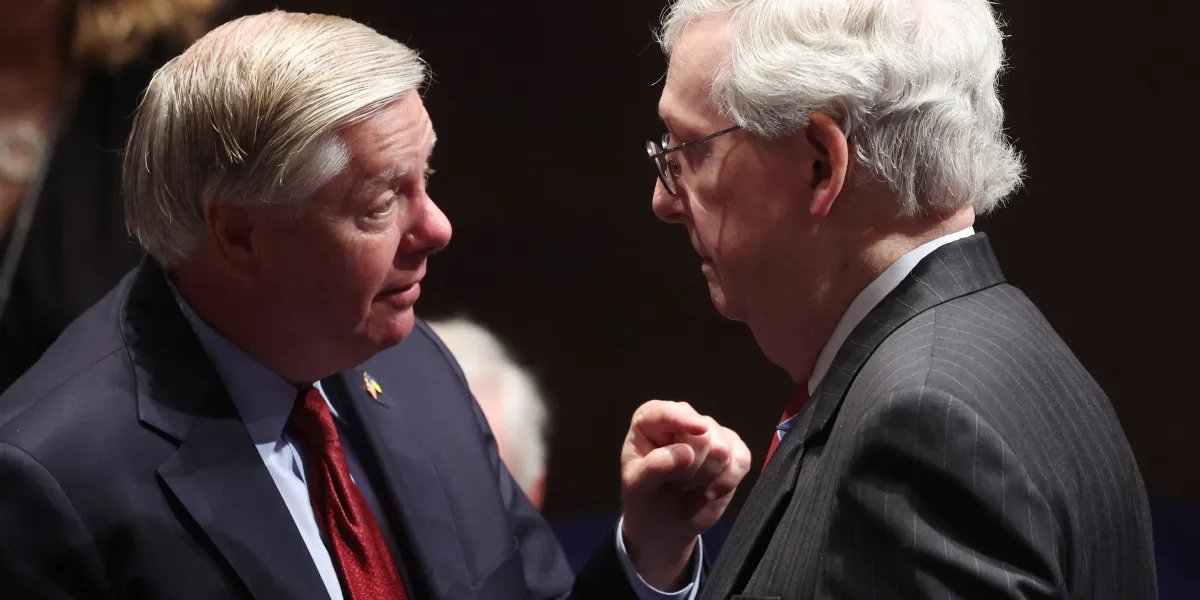
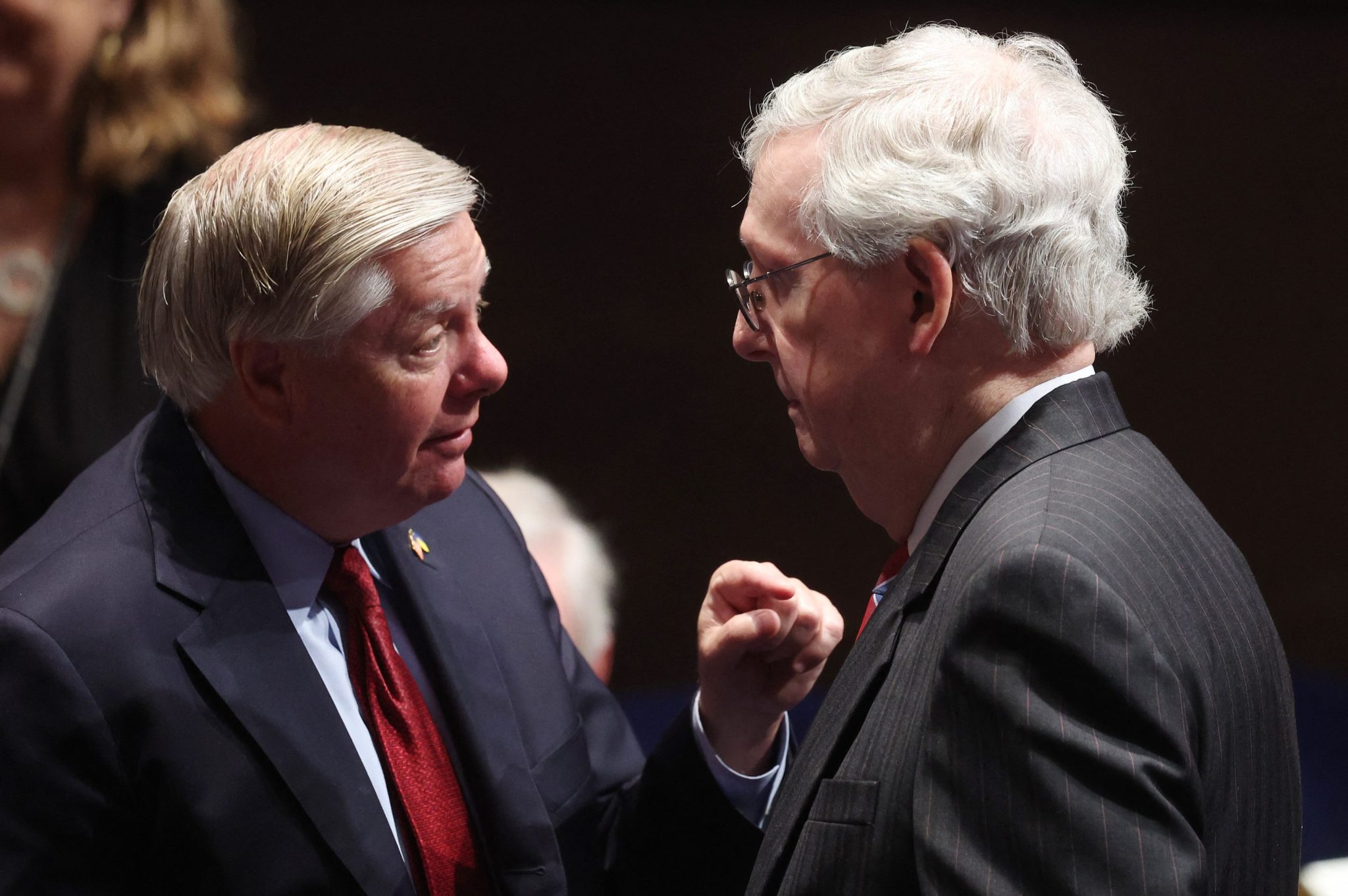
On Sunday, Sen. Mitch McConnell broke his weeks-long silence about his health, announcing he was hospitalized after a fall and was also treated for pneumonia. McConnell, who has not said when he will return to the Senate floor, is the chair of the Senate Appropriations defense subcommittee, which drafts legislation for Pentagon funding.
His announcement followed the unexpected death of Sen. Lindsey Graham, who served as a senior member of the Senate Appropriations Committee and the chair of the Budget Committee, after an aorta rupture.
To be sure, Graham’s sister Darline Graham Nordone will take the place of her brother in the Senate on Wednesday and serve the rest of his term, eliminating some uncertainty around the impact of his absence. However, McConnell’s continued absence has created ongoing doubt about Republicans’ efforts to actualize their spending goals.
The Senate Appropriations Committee has not passed a spending bill for the 2027 fiscal year, which includes a $1.15 trillion base for defense outlays. The Trump administration, with the goal of reaching a $1.5 trillion defense budget, is also pushing Congress to pass a $350 billion funding package through the reconciliation process, which can bypass a Senate filibuster, requiring just a simple majority of 51 votes to pass, instead of the traditional 60-vote supermajority.
Increasing defense spending has been a cornerstone of the Trump administration, even beyond efforts to bolster the U.S. military with the likes of a “Golden Dome” missile shield and investment in critical minerals. The Iran war has, by some estimations, already cost the U.S. $113 billion, with some public policy experts expecting the total cost north of $1 trillion. With the U.S. and Iran launching renewed strikes against each other, the Trump administration has even greater urgency to pump money into restoring munitions, which have been slashed by more than half since the beginning of the conflict.
Legislators are racing against a Sept. 30 deadline, which marks the end of the fiscal year, when funding lapses. While Congress could postpone the deadline with a continuing resolution (CR), it risks pushing back the vote until after the midterm elections, which could result in Democrats regaining control of the Senate.
“It’s a very tricky situation right now because you’re dealing with upcoming midterm elections, a war where there is disagreement within the party over it, and a big funding package that’s going to require pretty much partisan unity on the side of Republicans,” Peter McLaughlin, a political science professor at the University of Rhode Island, told Fortune.
What Senate Republicans have lost
Without McConnell present on the Senate Appropriations defense subcommittee, there is a 14-14 split between Republicans and Democrats, meaning a defense appropriations bill is unlikely to pass the panel and reach the Senate floor, according to Katherine Thompson, defense and foreign policy studies for the Cato Institute and former Pentagon official for the Trump administration.
She added that while unforeseen circumstances happen, the Trump administration’s legislative strategy of relying on reconciliation has now put Republicans at a disadvantage in pushing forward their spending agenda.
“If we’re being totally fair in blame, it’s both Congress not being able to move in an expeditious fashion given very limited working days that they had imposed upon themselves, but then also the way the administration went about its legislative strategy in terms of requesting the funding in the first place,” Thompson said.
McLaughlin also pointed out that Graham, an ally to President Donald Trump, was a key communicator between the White House and Congress, particularly with reconciliation bills.
What these losses mean for Trump’s defense spending agenda
There are steps Senate Republicans can take to buy themselves more time. There are fewer than 30 scheduled sessions between now and the midterms with an August recess eliminating an entire month of time in Washington. Senate Majority Leader John Thune could cancel the recess, a move Thompson said would reflect well upon the Republican party.
“It’s a better show of Republican leadership and commitment if they were to cancel the August recess and actually keep members here working during that time,” she said.
A self-proclaimed Senate pessimist, Thompson predicted that the Senate will not pass the defense bill prior to the summer break and that Republicans and the Trump administration will not succeed in winning the supplemental funding for the Iran war.
She said ultimately, Republicans have run out of luck with the strategy of pursuing reconciliation. While the reconciliation package signed through the One Big Beautiful Bill Act last year was a victory for the party, Trump’s subsequent immigration enforcement reconciliation package passed last month was asked to be reworked to comply with Senate rules that require it being strictly budget-centric.
“Given how much of an uphill battle it was to get reconciliation 1.0, and then you have all of the further dynamics that complicated reconciliation 2.0—you could kind of see that writing on the wall,” Thompson said.