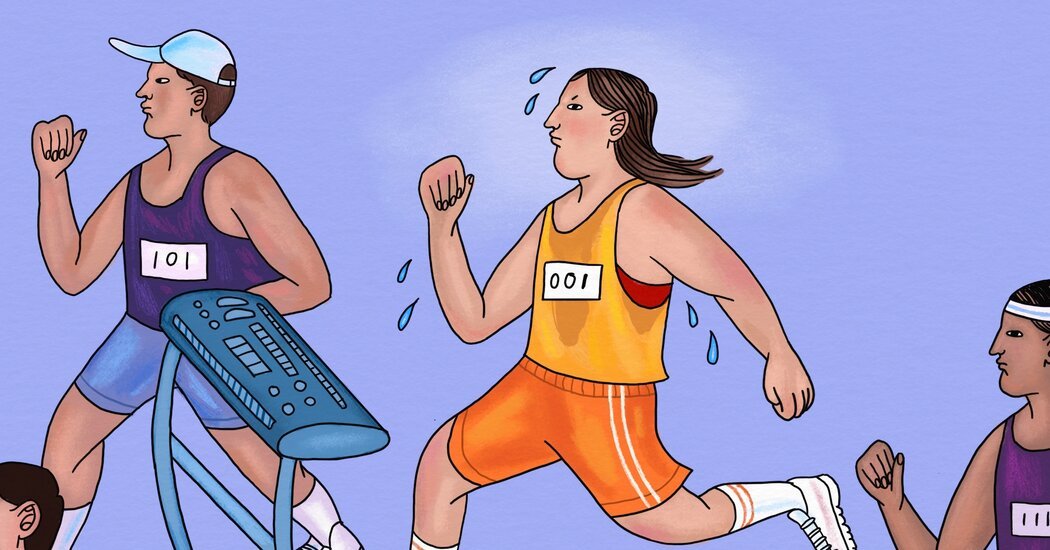
A man who chooses to rest probably doesn’t think of that choice as quitting at all. But for women, the options feel self-defeating: Take the rest and feel guilty or skip the rest and feel exhausted — and mad.
The joke is on us. Our lives won’t be measured by how late we stay up answering all our email. We forget that surviving is not the same as success.
Giving up on things that don’t work is the only way to find things that work better or to go farther than before. If we treat quitting and persevering as opposites, we lose.
Last year, I was wiping my 3-year-old’s vomit off my dress when my calendar popped up on my phone. On my schedule was an informational interview with a friend’s aunt’s neighbor’s son (or someone) and an appearance on an online panel where I was completely unnecessary. I could have asked someone else to do these things or, even better, simply declined. Instead, I did everything. (What a hero!) I didn’t do any of it well.
Looking back, I realize: Women do quit, all the time. We quit on ourselves.
I don’t pretend to have a magic solution. I can’t get men to opt out less or solve capitalism. But I can at least recognize that just as quitting is a choice, so is not quitting.
Now when I’m grinding, convinced the finish line is just one push away, I ask myself a simple question: Why am I still doing this? “Because I can” doesn’t automatically mean that I must.
Lindsay Crouse is the author of the forthcoming book “The Case for Quitting,” from which this essay is adapted. She was a senior staff editor in Opinion, where her reporting on women’s sports helped bring maternity rights to professional athletes. She commissioned The Times’s Academy Award-winning film.
The Times is committed to publishing a diversity of letters to the editor. We’d like to hear what you think about this or any of our articles. Here are some tips. And here’s our email: letters@nytimes.com.
Follow the New York Times Opinion section on Facebook, Instagram, TikTok, Bluesky, WhatsApp and Threads.