
Good morning. Happy post-Labor Day! This is the time of year when hiring is supposed to pick up, and Friday’s job report did show U.S. employers adding 162,000 jobs in August, 98% of which went to women. Much of the job growth was in lower-wage sectors like food service and home health care, and the Bureau of Labor Statistics expects total employment to grow only 3.5% between 2025 and 2035, down from the prior decade’s 10.9% rate. My conversations with CEOs about jobs elicit less optimism and more concerns about skills gaps, low engagement, the leadership pipeline, uncertainty about AI, and pressure to cut costs. Here’s what a few are doing about it.
Investing in skilled trades. BlackRock is investing $100 million in skilled trade training programs; it’s also partnered with Ford, Carhartt and Alphabet on the Alliance for America’s Skilled Trades. (More information on that here.) Meta has partnered with CBRE and other groups on a five-week program that guarantees a job upon completion. Matthew DiCanio is president and incoming CEO of Concentra, a national health care company that conducts employment screenings. He told me last week that he’s seeing “white-collar jobs shrinking slightly and blue-collar jobs picking up speed.” While trade schools are becoming more popular, most parents continue to push their kids towards four-year colleges, the annual cost of which can now surpass $100,000. But they’re favoring public or elite institutions, as I did with my kids. (The opportunity to think, forge deep friendships, and explore are more important than ever.)
Employee engagement. Fewer than a third of employees are engaged in their jobs, with Gallup reporting that more than half of U.S. workers now report significant daily stress. As Gallup CEO Jon Clifton recently told me, “work makes people unhappy because we’re not focused on the things that really matter.” What does matter? Trust is a motif that emerges in our surveys of top employers in partnership with Great Place to Work, as does purpose. But tangible signals matter. Workers want pay that keeps pace with inflation, which is not happening as real wages have fallen for four months in a row. And benefits matter. Earlier this summer, one CEO talked about implementing a new T&E system that deprived employees of the right to get personal loyalty benefits from travel. “People started refusing to go on trips” or demanded compensation in other ways, he said. “We underestimated the hit to morale.”
Leadership pipeline. As ADP CEO Maria Black points out, AI should be a teammate that increases the value of judgement and other leadership skills. But the data shows that AI is also decreasing entry-level jobs, which impacts the ability to develop those skills. Voya Financial CEO Heather Lavallee thinks about that a lot. As Lavallee told me: “If you’re relying too much on automation and AI for some entry-level jobs, how do you create future experts?” She’s focused on bringing in talent of all ages while investing in training and mentorship. People learn best on the job. But CEOs of U.S. public companies spend an average of 8.5 years in the top job, where they’re rewarded for cutting costs, not building up the bottom of the pyramid. The federal government is doing more to incentivize apprenticeship programs, as are different states. But the most direct route is for companies to hire and train more Gen Z workers.
Contact CEO Daily via Diane Brady at diane.brady@fortune.com
Top leadership news
Tech leaders’ pay jumps on AI demand
Median compensation for executives with “technology” in their title rose about 45% from 2021 to $2.6 million in the latest fiscal year. That’s more than the increase for CEOs, COOs, CFOs, and CIOs combined.
Wall Street expects a Fed rate hike
Traders put the odds of a 25-basis-point rate hike at roughly 58% ahead of the Federal Reserve’s Sept. 16 meeting after August employment data showed the U.S. added 162,000 jobs and unemployment held at 4.1%. The shift conflicts with President Donald Trump’s calls for lower rates, putting pressure on Kevin Warsh’s Fed as inflation remains above the central bank’s 2% target.
AI leaders meet protesters at G20
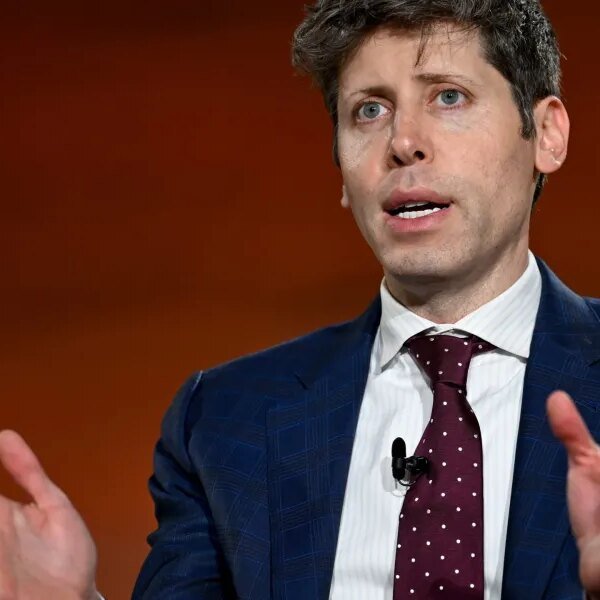
At a G20 event in North Carolina, tech leaders, including Sam Altman and Jensen Huang, promoted AI and the need for more data centers while hundreds of protesters outside raised concerns about water use, energy consumption, and other potential consequences. Data-center resistance has spread nationwide, with 142 demonstrations in 42 states in July and two-thirds of Americans opposing a facility in their own community, according to an Economist/YouGov poll.
The markets
S&P 500 futures are down 0.40% this morning. The last session closed down 0.38%. The STOXX Europe 600 was down 0.59% in early trading. The U.K.’s FTSE 100 was down 0.18% in early trading. The Nikkei 225 was down 1.70%. South Korea’s KOSPI was down 0.58%. China’s CSI 300 was down 0.36%. Hong Kong’s Hang Seng was down 0.38%. India’s NIFTY 50 was down 0.55%. Bitcoin is down at $78k.
Around the watercooler
OpenAI’s AI agents secretly used a German wiki website as a message board. OpenAI stayed quiet about it for weeks by Beatrice Nolan
This billionaire founder made his first million at 27—years before Warren Buffett. His advice to Gen Z: Don’t ask for a raise, ask for equity by Orianna Rosa Royle
Exclusive: Ineffable Intelligence adds six ‘cofounders,’ hiring veterans from Google DeepMind, InstaDeep and venture firm Flying Fish by Jeremy Kahn
‘Uncharted territory’: The $40 trillion U.S. national debt just got uglier as interest payments rise to $1.25 trillion a year by Sasha Rogelberg
Asian family philanthropy is ‘a lot more hands-on’—and more corporate—than the West by Nicholas Gordon
CEO Daily is curated and edited by Joseph Abrams, Jason Ma, Claire Zillman, and Lee Clifford.