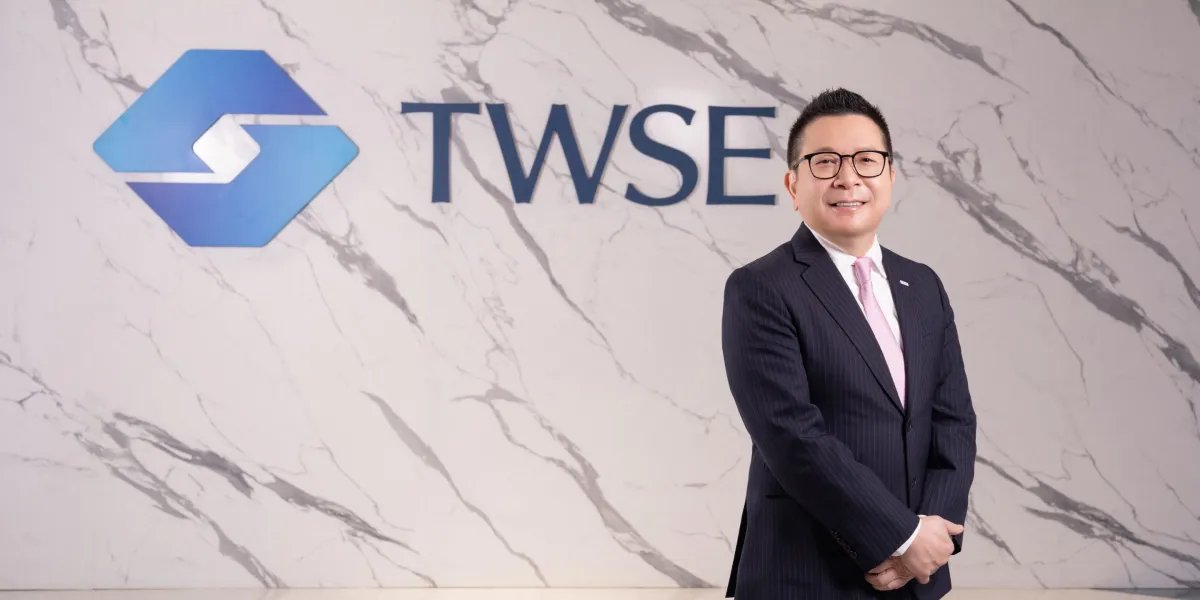
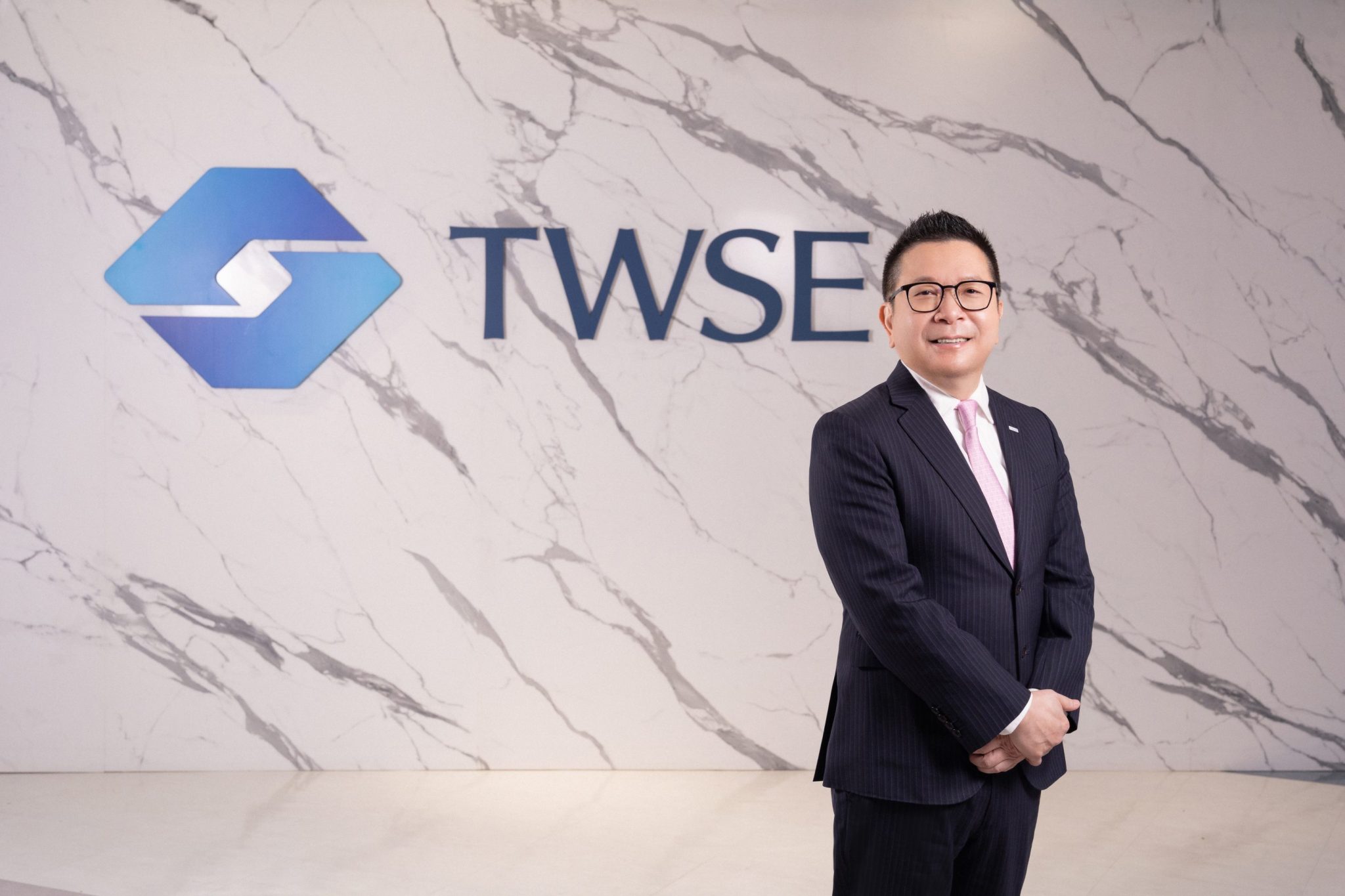
Nick Gordon here. Sherman Lin, chair of the Taiwan Stock Exchange Corporation, took a little while to get going when I talked to him on a Zoom call over the summer. But he got animated when I asked him what makes Taiwan’s stock market different from, say, exchanges in Singapore and Hong Kong.
“The best way to understand Taiwan is as a technology island,” he said, with an excited smile, before rattling off cities all along Taiwan’s western coast. “We’re like an industrial park…Technology is really in our DNA.”
Lin should be having a good year: Taiwan became the world’s fifth largest stock market by total value in May, behind just the U.S., mainland China, Japan and Hong Kong, according to Bloomberg calculations. But the Taiwan equity market story is, at its core, a TSMC story: The world’s largest chipmaker makes up 40% of the TAIEX, the island’s benchmark stock index.
The TAIEX is up by about 55% for the year so far; TSMC is up by 50%.
That’s why Lin and his colleagues are trying to broaden Taiwan’s appeal, beyond just TSMC to other companies in the AI supply chain, as well as “hidden champions,” profitable companies in sectors that may get overlooked by more electronics-focused investors.
Taiwan’s stock exchange is also pushing companies to strengthen their corporate governance through its “Power Up” program, following in the footsteps of Japan and South Korea. Japan’s drive to get its companies to take shareholder value more seriously—through more transparent disclosures, encouraging share buybacks, and unwinding its complicated cross-shareholding structures—has helped lift its stock market to record highs.
There’s still a long way to go, though: Taiwan raised $3.3 billion over 70 IPOs last year. That was a record for the island’s stock exchanges, but it’s far below Hong Kong, which raised $37.4 billion across 119 deals over the same period.
Taiwan’s stock market can be out of step with the rest of the world, time-wise. For example, the market closes for trading at 1:30 PM. Lin had previously suggested expanding the exchange’s trading hours, only for Taiwan’s top regulator to knock down the suggestion as “not a priority.”
Still, Lin sees the rise of AI, which has lifted valuations for chipmakers and other hardware companies across all of Asia, as an opportunity for Taiwan to lift its profile—one that might run its course in just three years.
“TSMC is undoubtedly Taiwan’s most iconic company,” Lin said. “But our real competitive advantage is not that we have one or two world-class companies. It’s that we have the world’s most complete and competitive AI ecosystem.”
See you next week,
Nicholas Gordon
X: @nickrigordon
Email: nicholas.gordon@fortune.com
Submit a deal for the Term Sheet newsletter here.
Joey Abrams curated the deals section of today’s newsletter. Subscribe here.
VENTURE DEALS
– Crusoe, a Denver, Colo.-based AI data center and cloud company, raised $3.9 billion in Series F funding. Atreides Management, Mubadala Capital, and Valor Equity Partners led the round.
– MIND, a Seattle, Wash.-based cybersecurity company designed to help businesses prevent data leaks, raised $72 million in Series B funding. Crosspoint Capital Partners led the round and was joined by existing investors YL Ventures and Paladin Capital Group.
– Comp AI, a Miami, Fla.-based compliance and cybersecurity software company, raised $34 million in Series A funding. Roo Capital and Grand Ventures led the round.
– Kastle, a San Francisco-based AI software company for consumer lenders, raised $24 million in Series A funding. Insight Partners led the round and was joined by existing investors Y Combinator, Commerce Ventures, and others.
– Polyphron, a New York City-based biotech company using AI and lab-grown human tissue to test drugs, raised $20 million in seed funding. Quiet Capital led the round and was joined by Gradient, Haystack, and Compound.
– Magentic, a London, U.K. and New York City-based AI software company that automates procurement and supply-chain work for industrial companies, raised $18 million in Series A funding. Felicis led the round and was joined by Sequoia Capital and The Westly Group.
– Mainstay, a San Francisco-based software company for residential real estate data and workflows, raised $18 million from Parker89, Stackpoint, Alpaca VC, FJ Labs, and existing investors.
– Ayble Health, a Boston, Mass.-based virtual clinic for digestive health that is expanding into autoimmune care, raised $16 million in Series A funding. Neon led the round and was joined by Unum Ventures, Upfront Ventures, M13, Cleveland Clinic Ventures, DigiTx, and Accomplice.
– BoomerangHR, a New York City-based software company that helps employers manage departing employees and rehire former workers, raised $12.7 million in seed funding. Kalos Ventures and Album Ventures led the round.
– CorePower, a Pittsburgh, Pa.-based maker of magnetic components used in power systems, raised $10.6 million in funding. Engine Ventures and Material Impact led the round.
– MicroLub, a Leeds, U.K.-based food-ingredient company developing protein-based fat substitutes, raised $10 million in funding. Northern Gritstone led the round and was joined by others.
– Euka, a San Francisco-based software company that helps brands sell through online creators, raised $5 million in seed funding. Susa Ventures and Creator Ventures led the round.
– Helios AI, an Arlington, Va.-based AI agricultural intelligence platform, raised $3 million from W23 Global.
PRIVATE EQUITY
– Ara Partners acquired a majority stake in Bryden Wood, a London, U.K.-based design and engineering firm. Financial terms were not disclosed.
– Everest Clinical Research, a portfolio company of Arlington Capital Partners, acquired the Biometrics and Data Services business unit of Firma Clinical Research. Financial terms were not disclosed.
– Sheridan Capital Partners acquired a majority stake in PtEverywhere, a Cary, N.C.-based physical therapy practice management software. Financial terms were not disclosed.
FUNDS + FUNDS OF FUNDS
– Pulse Fund, a Los Angeles, Calif.-based venture capital fund, raised $63 million for its first fund focused on energy transition, infrastructure, food and agriculture, and mobility companies.
PEOPLE
– Asymmetric Capital Partners, a Boston, Mass.-based venture capital firm, hired Roy Kamineni as an Investor. Previously, he was with Summit Partners.