
AI is barreling into white-collar industries, and more people than ever are trying to AI-proof their careers. Gen Z college graduates are increasingly landing in retail and food service as AI absorbs many of the entry-level roles that once served as their on-ramp.
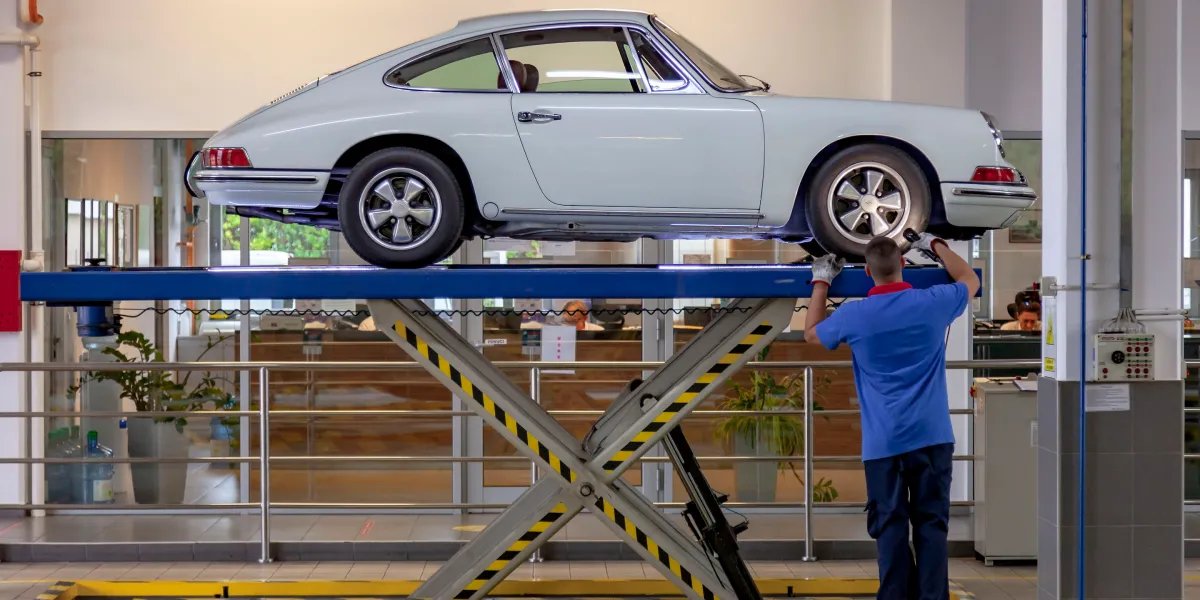
Alejandro Rodriguez, a 20-year-old certified Porsche apprentice technician, wants Gen Z to know that college isn’t the only path to a respected, fulfilling career—especially one that’s less vulnerable to AI.
Rodriguez, a recent graduate of Universal Technical Institute, told Fortune that despite excelling in school, taking college classes, and earning a 4.5 GPA in high school after a lifetime in the gifted and talented program, he decided to follow his passion for cars. That drive didn’t take him to college, but to a technical institute.
Given his academic record, school administrators weren’t thrilled when he began floating technical school as a post-graduation plan instead of a four-year college. “It [college] was expected of me because of how I did in school,” Rodriguez said.
“When I told them that’s not what I wanted to do, I wanted to go to a technical school, they really tried to get me to apply for community colleges instead.” But after he pushed them to accept that it was his path, Rodriguez said they “finally conceded.”
Looking back, he says his school offered no pathway toward blue-collar work. “There wasn’t a single day we’d have a shop class, no woodwork, nothing hands-on,” he said, adding, “It would be nice to have those options that just weren’t there.”
Rodriguez says there has finally been a gradual shift toward taking blue-collar professions more seriously—but it’s a recent development, and AI has accelerated it.
“AI definitely has a part in it,” he said. “People are starting to come out of work, and they’ve got to do something. And our jobs kind of can’t be taken.”
A secure career, with no debt
The data backs up the instinct. An April 2026 Census Bureau paper found that hiring of workers ages 22 to 24 fell sharply in the industries most exposed to AI, such as software and information technology, even as hiring held steady in less-exposed fields. A companion paper co-authored by the same economist found that graduates shut out of those roles often shift into lower-paying retail or food-service work to pay the bills.
Then there’s the debt that often comes with a degree. The average Gen Zer carries $22,948 in student loan debt, according to the Education Data Initiative.
Luckily for Rodriguez, his parents were open-minded and let him explore an alternative that led to a secure career with almost no debt.
They had “always been supportive,” he said, and let him shadow a family member who worked as a Mercedes technician, telling him, “Well, if you think you want to do this, go work with him over the weekends and see if you like it.”
As high-achieving as he was in high school, he worked just as hard in technical school. “I was very set on what I wanted to do,” Rodriguez said. “I wanted to go to Universal Technical Institute, go through the Ford FACT program, and use that to get into the Porsche PTAP program. And I hit every single one of those goals that I set for myself.”
He believes he’s on his way to a lucrative career—though, like any job, he says the paycheck comes down to skill and work ethic. “It depends on your drive, how much you want to work, how much you want to invest in yourself.”
His advice for young people weighing the same path: “Always keep investing in yourself, because these skills nobody can take from you.”