This summer, with torrential rain threatening her outdoor wedding, a bride did the one thing left on her checklist. She hired an Etsy witch to cast a spell for clear skies.
“I just didn’t know what else to do,” she told her bridesmaid, Brooke Bekoff. “I hope it works; it can’t hurt.”
A weather app had already told her it would rain, for free. Horoscopes, tarot cards, and astrology explainers are also only a scroll away. Yet consumers continue paying for what free content can’t offer—someone to interpret their fresh breakup, career decision, or fear about the future.
That desire for personalized guidance has built a big business. The U.S. psychic-services industry generated $2.3 billion in revenue in 2025, according to a July 2025 IBISWorld report. Revenue grew at an annualized rate of 5.5% over the five years through 2025, with nearly half of women ages 18 to 49 consulting astrology or a horoscope at least once a year. But IBISWorld describes the market as highly fragmented, leaving room for entrepreneurs who want to organize it.
Bekoff, 29, is one of them, and her idea started at that very wedding. The rain continued as the bride got ready. But then, in a moment Bekoff described as straight out of a movie, the clouds parted right as the bridal party headed outside. Sunlight replaced the downpour, and not a single drop fell during the ceremony until it started to pour again after it ended.
What struck Bekoff, a former growth product manager at TaskRabbit and Robinhood, wasn’t just the weather. Of roughly eight bridesmaids, she recalled five or six saying they had recently hired Etsy witches for needs of their own. They lived across the country and ranged from Gen Zers to millennials.
“I remember that being like, ‘Wait a minute, this is such an interesting opportunity,’” Bekoff said. “There’s really something here culturally.”
Paying for interpretation, not information
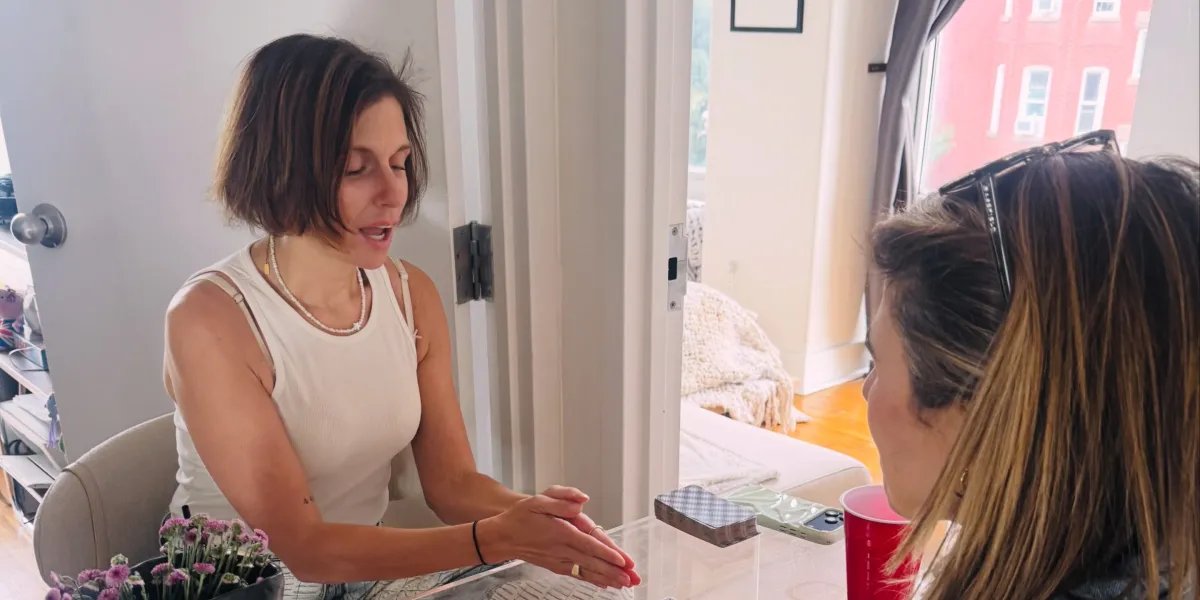
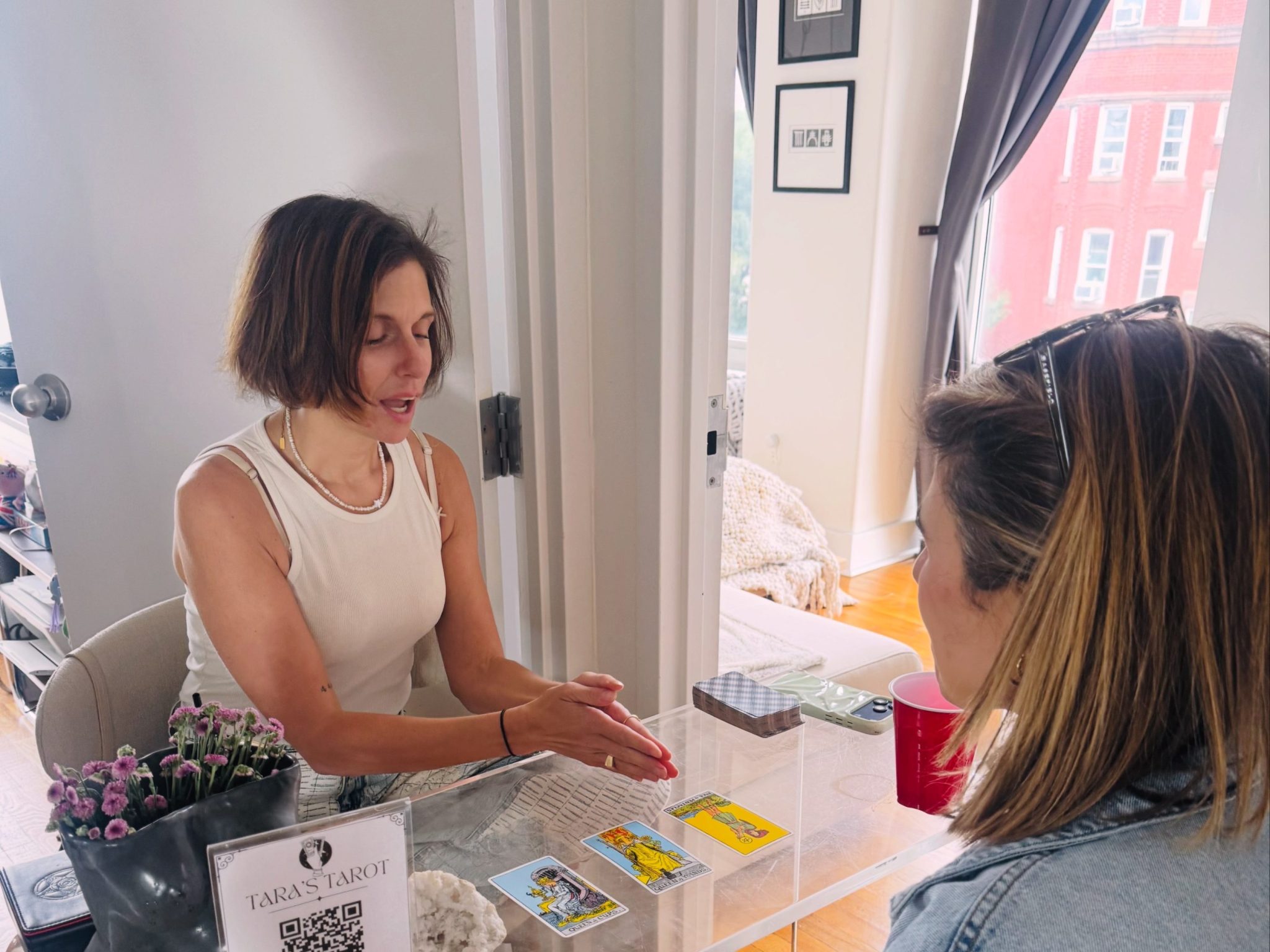
Part of that culture plays out online, where the pitch often opens with a hook: Stop scrolling. This message is for you. A tarot reader flips cards for someone who just went through a breakup. An astrologer tells Virgos that their dream job is right around the corner, so stay and watch this video.
The message can feel uncannily specific, but it didn’t necessarily appear by chance. Someone who watches, likes, or shares videos about breakups is likely to be served more of them—including spiritual guidance that speaks to the same worry.
The appeal has even become a joke across Instagram and TikTok: “Me going to a tarot reader instead of a therapist because I need hope, not a diagnosis.”
Kaidong Yu, a marketing researcher at City University of Macau, frames it as the difference between information and interpretation.
“There is already an enormous amount of free mystical content online, so scarcity of information is probably not the main source of value,” he told Fortune. What a paid practitioner offers instead is specificity: “What does this mean for me, in my situation, right now?”
That value may have little to do with getting a better prediction, Yu said. It may come from “the feeling of being heard, receiving a coherent narrative, validating an intuition or turning a confusing situation into a manageable set of possibilities.”
Buyers don’t necessarily have to believe the magic works. In Yu’s research on mystical consumption, one participant said feng shui objects made him feel more confident even if they didn’t change his luck. Another said tarot didn’t provide an answer but helped them think through their options.
“The practice does not have to eliminate uncertainty,” Yu said. “It can simply make uncertainty more psychologically manageable.”
Building a marketplace for the mystical
Bekoff set out to sell exactly that. After the wedding, she built Divina, a marketplace where practitioners offer tarot readings, spell work, Reiki, astrology, and other spiritual services. She launched the website Sept. 1.
The model borrows from TaskRabbit, where Bekoff previously worked as a growth product manager. Practitioners set their own rates, and Divina takes a 10% cut of each booking.
Bekoff expected to spend her first month recruiting practitioners. She didn’t have to. Divina grew organically from two or three practitioners to more than 100, offering over 200 listings. Many already had social-media audiences and experience selling their services online.
Demand remains much smaller but is beginning to follow. Divina has recorded more than $1,000 in bookings and receives a handful each day, according to Bekoff. Customers most often seek guidance about relationships, careers, money, and pregnancy, with offerings ranging from written tarot readings and photographed card spreads to “womb readings” for expectant parents.
Some practitioners need a new storefront because of enforcement elsewhere. Etsy’s policy prohibits spellcasting and services promising outcomes such as love, wealth, or employment. It permits tarot and psychic readings when customers receive something tangible, such as written results or a recording.
The policy is longstanding, but sellers say Etsy has recently removed shops that operated openly for years and accumulated thousands of reviews, according to Vice.
Etsy did not respond to a request for comment.
Selling hope without guaranteeing results
Running a marketplace for the mystical carries some risks. Bekoff said she reviews every practitioner application and requires identity verification. Customers then have 72 hours after receiving a service to report a problem before payment is released to the practitioner.
Customers must also acknowledge that they are not purchasing a guaranteed outcome. Someone paying for clear skies or a dream job is buying the service performed—not a promise that the wish will come true.
That distinction is central to the business. Yu describes the product as “a structured experience of hope and control.”
The same search for agency is showing up beyond tarot, and it isn’t necessarily pulling young people away from religion. Harris Poll data found 33% of Gen Z identifies as religious, compared with 18% of baby boomers, 22% of Gen X, and 19% of millennials.
But many young adults aren’t choosing one spiritual path. Libby Rodney, chief strategy officer at The Harris Poll, calls the mix “the Faith Stack.”
“Church AND manifestation AND tarot,” she wrote on LinkedIn. “Not as contradiction. As construction.”
Half of Gen Z respondents practice manifestation by focusing their thoughts and actions on a desired outcome or use vision boards—collages that visually represent their goals—while three in 10 practice astrology or tarot, according to Harris. For many customers, a paid reading is not competing with a Sunday service or even with a free horoscope. It is one more tool in a spiritual kit they are assembling themselves.
Fifty-seven percent of Gen Z respondents said they had turned to spirituality to feel greater control over their futures. “That’s the reason that they are spiritual—they’re looking for some sense of agency and control,” Rodney previously told Fortune.
Yu cautioned that reassurance can become harmful when it starts replacing, rather than supporting, someone’s ability to make decisions. But for a person who feels powerless, even a symbolic action can offer a place to begin.
And for the bride, it did. Whether the Etsy witch changed the weather, the forecast shifted, or the bridal party simply got lucky is almost beside the point.
“Who knows if it was the Etsy witch? Who knows what it was?” Bekoff said. “I guess that’s what faith is.”