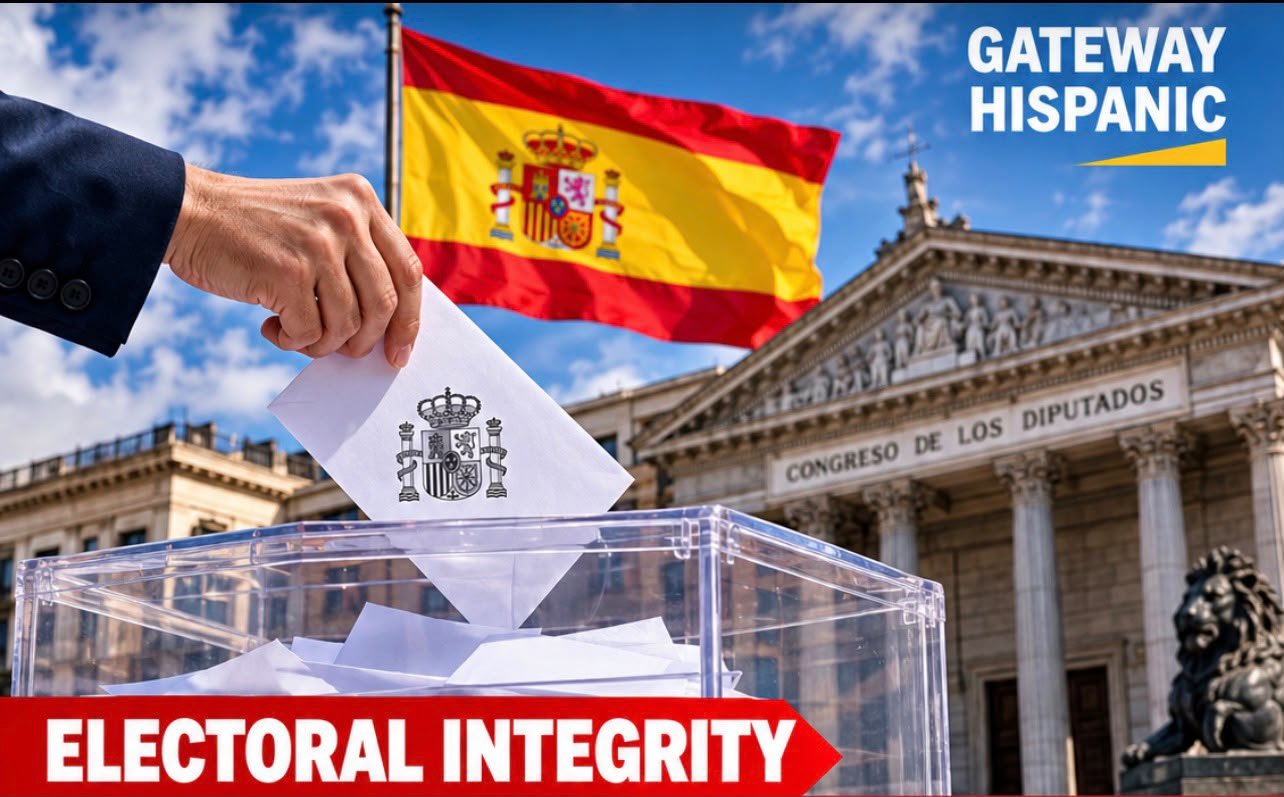
Spain’s snap election on November 29 could become the next major battleground over the country’s electoral roll, voting rights and the growing number of Spanish citizens living abroad.
Prime Minister Pedro Sánchez called an early general election Monday, bringing forward a vote that will determine whether his Socialist government can remain in power or whether Spain moves toward a different parliamentary majority. The election comes after months of political gridlock and follows the rejection of key government legislation in Parliament.
But alongside the broader political battle, a separate legal controversy could affect how thousands of overseas Spanish voters participate in the election.
At the center of that dispute is Spain’s so-called “Grandchildren Law,” formally part of the 2022 Democratic Memory Law, which created a pathway for certain descendants of Spaniards—including descendants of people who went into exile—to obtain Spanish citizenship.
The controversy is no longer simply about who can become a Spanish citizen.
It is now about who can vote, which electoral registrations are valid and how a Supreme Court order will be enforced before election day.
Another issue is the grandchildren from Spain, a provision that has been used by many socialists. They are living in countries such as Venezuela, Cuba, and Argentina, so they can increase the census and allow all those socialists to vote for socialist parties in the upcoming elections.
A Supreme Court ruling has already changed the situation
In September, Spain’s Supreme Court imposed precautionary measures concerning the electoral effects of certain registrations involving people who obtained Spanish nationality through the Grandchildren Law.
The court ordered the electoral authorities to distinguish between different categories of registrations.
Those whose connection to the legally defined cases of exile is directly established were treated differently from individuals whose eligibility was based on a broader administrative presumption. The latter group was temporarily prevented from exercising electoral rights while the underlying legal dispute continues.
Importantly, the ruling does not cancel the citizenship of those affected.
It concerns their ability to participate in elections while the court considers the underlying case.
The Supreme Court said the extraordinary growth in Spain’s overseas electoral census, known as CERA, raised concerns regarding the transparency of the electoral process and public confidence in election results.
The Central Electoral Board subsequently began implementing the Supreme Court’s instructions and requested information needed to identify the registrations affected by the ruling.
Then Sánchez called an election
The timing is now critical.
Spain will vote on November 29, and the electoral census applicable to the election is tied to an earlier cutoff date.
Iustitia Europa argues that the census being used for the election was closed on August 1, before the Supreme Court issued its September measures.
That creates a potential enforcement problem.
If people covered by the Supreme Court’s suspension were already included in the August census, authorities must determine how to prevent those registrations from producing electoral effects in November.
Iustitia Europa has therefore returned to the Supreme Court with an urgent request asking the judges to clarify exactly how their order should be implemented before election day.
Three possible scenarios
The next several weeks could therefore produce several different outcomes.
- The Supreme Court orders the electoral authorities to remove or suspend the affected votes
This would be the most direct implementation of the court’s existing precautionary measures.
The electoral authorities could be required to identify the registrations falling within the scope of the suspension and ensure that those voters cannot participate in the November election unless they fall within the exception established by the court.
This would reduce the number of eligible overseas voters compared with what the August census might otherwise indicate.
It could also generate additional legal challenges from affected citizens and political groups.
- The Supreme Court clarifies that the existing census must be modified
A second possibility is that the court establishes a specific mechanism for applying its September order to the August 1 census.
That could involve identifying affected voters without reopening the entire electoral roll.
The objective would be to enforce the court’s ruling while preserving the integrity of the broader CERA register.
This is essentially what Iustitia Europa is asking the court to address in its latest filing.
- The courts ultimately reject the underlying challenge
The Supreme Court’s current measures are precautionary, not a final ruling on the entire case.
The court could ultimately conclude that the government’s interpretation of the Grandchildren Law was legally valid.
If that happens, the current restrictions could eventually disappear.
That would mean that citizens whose nationality was obtained through the law could retain the full electoral rights associated with Spanish citizenship, subject to the ordinary requirements of the electoral system.
In other words, the November election may take place under temporary rules while the much larger legal question remains unresolved.
The biggest issue may be the overseas vote
The dispute matters because Spain’s overseas electorate has grown significantly.
The CERA census includes Spaniards who permanently reside outside Spain, making the overseas vote particularly important in countries with large Spanish-descendant populations.
The growth in registrations connected to the Grandchildren Law has therefore attracted considerable political attention.
The government’s position is that people who have legally obtained Spanish nationality should retain their fundamental electoral rights and that an increase in the CERA census is not evidence of fraudulent registrations.
Iustitia Europa and other challengers take a fundamentally different view.
They argue that the Supreme Court’s intervention demonstrates that the electoral consequences of the Grandchildren Law require additional safeguards before those registrations can affect an election.
The overseas vote could matter in individual constituencies because Spain allocates congressional seats by province and overseas voters are linked to their last place of residence in Spain.
The November election will already be fought over the economy, housing, immigration, government stability, corruption allegations, Spain’s relationship with the European Union and the future of the country’s political coalition system.
The Grandchildren Law could add another contentious issue: the integrity and administration of the electoral roll.
The political stakes are much larger than the court case
Sánchez’s decision to call the election comes at a difficult moment for his government.
Reuters reports that the Socialists have been trailing in many opinion polls, while a potential governing combination involving the conservative People’s Party and Vox has emerged as a central possibility in current political projections. But those projections do not determine the election, and Spain’s fragmented parliamentary system makes the final distribution of seats particularly difficult to predict.
The electoral calendar is already moving quickly: candidate lists are expected to be submitted between October 21 and 26, with the official campaign scheduled for November 13–27.
What happens next?
The immediate question is now before the Supreme Court.
The court could clarify how its September injunction applies to the census that will be used on November 29.
The electoral authorities will then have to implement whatever instructions the court provides.
Meanwhile, affected Spanish citizens living abroad will have to determine whether their individual registration is covered by the suspension or falls within the exception.
The November 29 election could therefore produce two parallel battles.
One will be fought at the ballot box.
The other will continue in the courts.
And depending on what the Supreme Court decides in the coming weeks, the outcome could determine not only who is permitted to vote from abroad on November 29, but also how Spain handles citizenship, electoral registration and overseas voting for years to come.
About The Author