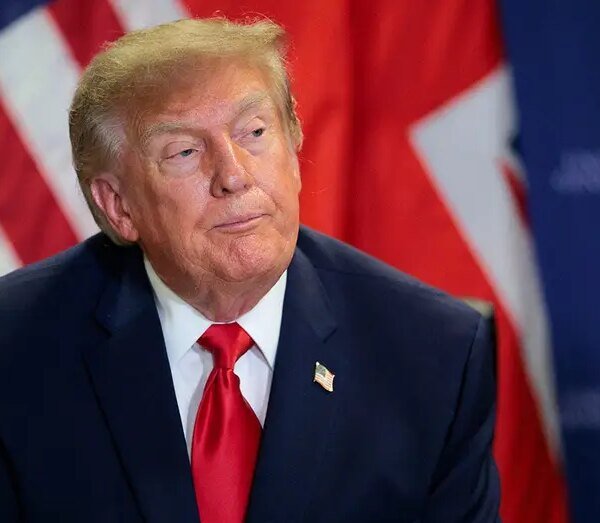
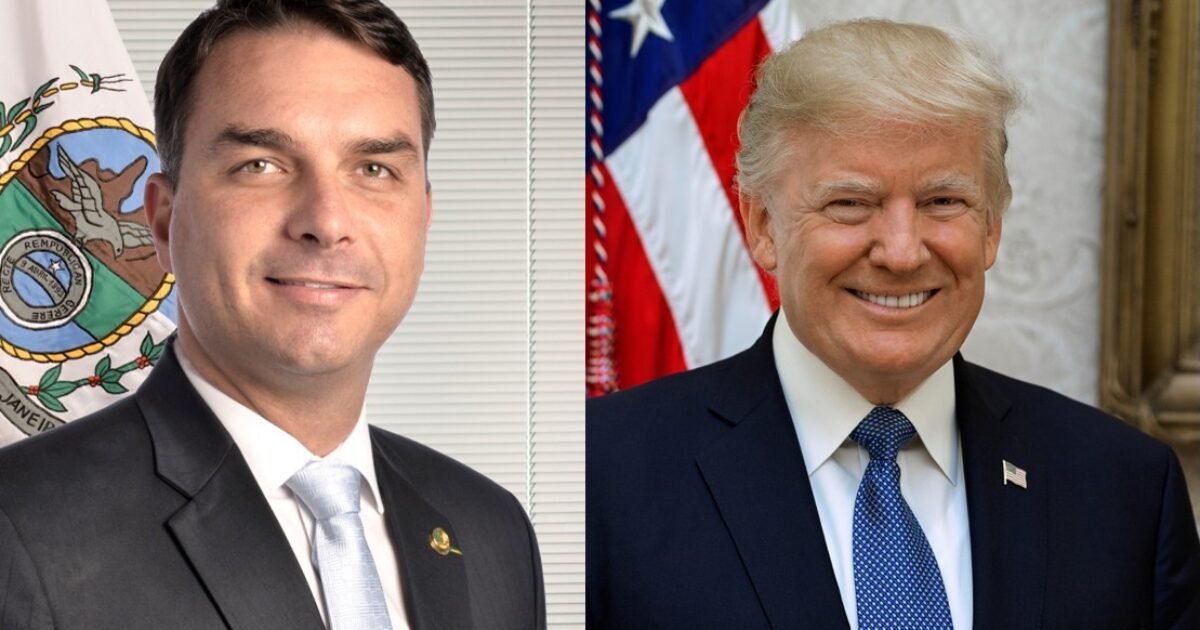

Brazilian President Luiz Inácio Lula da Silva won a fourth term in the Oct. 25 runoff, receiving 64,256,232 votes (51.79% of valid votes) against 59,826,041 (48.21%) for Sen. Flávio Bolsonaro of the Partido Liberal (Liberal Party, PL).
Lula, of the Partido dos Trabalhadores (Workers’ Party, PT), came from behind after Bolsonaro led the Oct. 4 first round with 47.03% of valid votes to Lula’s 45.16%. Abstention in that round reached a record 21.08%. It was the first time since Brazil returned to direct presidential elections in 1989 that a candidate won the runoff after losing the first round.
The result interrupted a regional shift to the right. Right or center-right parties had won the previous seven presidential elections in Latin America: Bolivia, Chile, Colombia, Costa Rica, Ecuador, Honduras and Peru. Lula’s victory leaves Brazil, Mexico, Uruguay and Guatemala as the region’s remaining countries with elected leftist governments, with Brazil and Mexico the largest. Mexican President Claudia Sheinbaum and Chilean President José Antonio Kast were among the regional leaders who congratulated Lula.
A Bolsonaro victory would have added another Trump ally to that regional lineup. Flávio had pledged to formalize the relationship by joining President Donald Trump’s “Shield of the Americas” security and political initiative.
Flávio ran in place of his father, former President Jair Bolsonaro, who was sentenced to 27 years and three months in prison for attempting a coup after losing the 2022 election. The elder Bolsonaro is serving his sentence under house arrest, granted after surgery and treatment for bacterial pneumonia.
Flávio’s team reported over 1,800 death threats during the campaign, prompting 30 investigations by the Senate Police, which handles his security. On Oct. 18, he left a debate hosted by TV Bandeirantes and Jovem Pan following a bomb threat involving a campaign car. Police found no bomb.
Transportation disruptions prompted a disputed extension of voting hours on election day. Despite a Supreme Federal Court (STF) ruling requiring free public transportation, Salvador’s municipal mobility department kept about half the city’s buses in their garages, leaving stations and stops crowded.
Acting on a Workers’ Party complaint, Bahia Regional Electoral Court (TRE-BA) president Maurício Kertzman Szporer cited Electoral Code violations, ordered the arrest of mobility secretary Pablo Souza and directed the city to restore the full fleet. Souza was in Paris at the French government’s invitation. Salvador’s mayor, Bruno Reis, belongs to the center-right União Brasil (Brazil Union). The court revoked the arrest order the following day.
The Justice Ministry identified transportation failures in seven states: Bahia, São Paulo, Piauí, Sergipe, Pará, Alagoas and Rio de Janeiro. In São Paulo, bus service fell below court-ordered levels. Heavy rain in the South caused flooding, road closures and power outages. The Federal Highway Police (PRF) recorded 27 highway closures, all attributed to weather or accidents, but reported no voters prevented from voting by those closures.
Both campaigns requested extensions beyond the scheduled 5 p.m. close. Citing weather disruptions, Flávio’s campaign asked the Superior Electoral Court (TSE) to extend voting until 7 p.m. in 17 municipalities across São Paulo, Paraná and Santa Catarina. Lula’s coalition petitioned the STF over bus shortages in Salvador, Lauro de Freitas and Feira de Santana, all in Bahia.
Justice Cristiano Zanin received Lula’s petition at 4:32 p.m. and extended voting nationwide until 7 p.m. at 5:03 p.m., after some polling stations had closed. Lula’s former personal lawyer and an appointee to the court, Zanin ruled over prosecutors’ objections. The decision overrode the TSE, the body responsible for ruling on campaign requests.
As regional electoral courts awaited instructions about closed stations, the TSE paused the tally until 7 p.m. Zanin later clarified that the extension applied only to stations still open, noting that both campaigns had reported transportation problems. At 5:49 p.m., TSE president Nunes Marques instructed regional courts to keep those stations operating until 7 p.m.
Nunes Marques, a Jair Bolsonaro appointee to the STF, said no rule authorized the extension and warned that the resulting tally report backlog could have compromised the election. Nevertheless, he said it did not alter the count. TSE data show that 34,330 voters cast ballots after 5 p.m., compared with Lula’s winning margin of about 4.43 million votes.
Flávio refused to concede, arguing that the extension created unequal voting conditions because not all stations reopened. He also alleged that PL monitors were removed from the TSE’s secure room after the order, which the court denied, and accused the government of abusing political and economic power and using state resources to favor Lula. Trump said the vote looked like “another rigged election,” adding that “elections have to be indisputable.”
On Oct. 26, PL president Valdemar Costa Neto formally recognized Lula’s victory, distancing the party from its candidate’s refusal to concede.
That day, Federal Police notified Flávio of STF Justice Alexandre de Moraes’s order to surrender his Brazilian passport and any other passports or documents relating to foreign nationality or international travel within 24 hours. The order stemmed from an inquiry into suspected money laundering and currency evasion involving Flávio and lawyer Willer Tomaz.
Although the order is confidential, Time reported that it cited Flávio’s flight risk and “significant financial resources” and barred him from contacting Tomaz. Flávio said it was based on his brother Eduardo’s Oct. 23 podcast remarks suggesting he should leave Brazil if he lost.
Investigators suspect the two held stakes in several companies, principally Alcazar Holding, where Flávio is listed as the master user on a company bank account. He also faces STF inquiries into the financing of the film “Dark Horse” and alleged calumny against Lula. His Senate term ends in February 2027, when he will lose parliamentary protections from prosecution.
Trending: Someone Bought the UTSA Student’s Domain Name After She Read a Giddy Poem Celebrating Charlie Kirk’s Murder, Now Anyone Who Googles Her Will Know Who They Are Dealing With
At an Oct. 26 meeting with senior campaign figures, Flávio said he feared arrest. After he missed the Oct. 27 deadline to surrender his passports, Federal Police cancelled the documents. That night, he crossed from Foz do Iguaçu into Puerto Iguazú, Argentina, with his wife and two daughters, using a route that requires only a national ID card under Mercosur rules.
Forty minutes later, they boarded a private jet whose flight declaration listed his nationality as Italian. After stopping in Guayaquil, Ecuador, the aircraft landed near Miami on Oct. 28.
The State Department had granted the family U.S. visas. Trump said he would approve of Flávio coming to the United States, called the election “very strange” and described the family as “fine people.” He had previously called Jair Bolsonaro a victim of judicial persecution. Rubio had also revoked the U.S. visas of Moraes, his court allies and their immediate families, calling the case against Jair Bolsonaro a “political witch hunt.”
In a letter released after his arrival, Flávio declared himself “the true president-elect of Brazil” and said he would lead the opposition from the United States. He denied fleeing, saying he had left to escape political persecution and “a regime of exception.” Lula described his departure as “a shameful act” and said he should have stayed to prove his innocence. Brazil and the United States have an extradition treaty.
The departure divided the PL, with some members unaware of Flávio’s plans. Costa Neto called an emergency party meeting to agree on its message and direction. On Oct. 27, he met Senator-elect Michelle Bolsonaro, Jair’s wife, to discuss the party’s future. He is working to establish the PL as Lula’s opposition, including by seeking to block União Brasil’s Davi Alcolumbre from re-election as Senate president.
Lula faces a hostile legislature in his fourth term. Right-wing parties will hold 303 of the Chamber of Deputies’ 513 seats, compared with 124 for the left and 86 for the center.
Ad block users: Some site features may not work correctly while an ad blocker is enabled, because they break scripts and content this website depends on. If you can’t see comments below, for example, please disable your ad blocker.