
Scott Bessent was in his early 30s, working at Soros Fund Management, when the Asian financial crisis tore through currency markets in 1997 and 1998—a crisis he said was triggered, in part, by an overly weak yen. He was in his late 20s, working under George Soros and Stanley Druckenmiller, when they shorted the British pound and “broke the Bank of England” just a few years earlier.
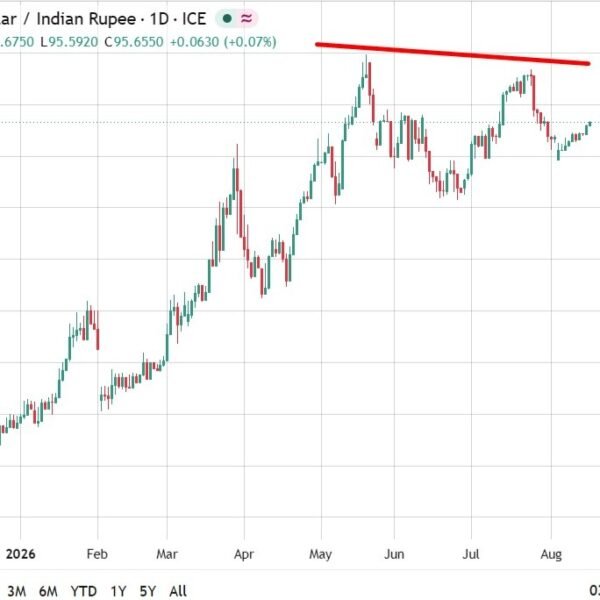
Nearly three decades later, sitting in the Treasury Secretary’s chair, the former hedge fund manager is watching the Japanese yen wobble again, and this time it’s his job to stop it rather than trade off it. It may be why he surprised the market with such a quick and bold move — the U.S. government’s first joint currency intervention with Japan since 2011 that helped the yen rise on Monday.
“The fact that he clearly understands the yen in a way most Treasury Secretaries or Fed chairmen would not definitely is part of the reason why you saw the reaction you did,” said RSM’s chief economist Joe Brusuelas, who has analyzed U.S. monetary policy and international finance for two decades. “At least for now,” Brusuelas told Fortune, “investors are willing to cut him some slack when he takes risks that other Treasury Secretaries over the past two generations wouldn’t.”
From shorting the yen to make a fortune to buying the yen to ease debt pressure
Two things seem to give Bessent credibility in deciding whether or not to intervene with the yen: He helped engineer some of the most aggressive bets against foreign currencies in Wall Street history and made over 50 or 60 visits to Japan since 1989, knowing the Bank of Japan governor for over 15 years.
“Japan has come out of deflation and they’re back, and I think here, we can give market signals,” Bessent told CNBC while explaining the Treasury’s decision to buy the yen.
Hedge fund managers operate on a simple premise when it comes to currency: governments and central banks will periodically try to hold it at a level the underlying economic conditions can’t support, and eventually the market forces a correction. Bessent helped the legendary macro traders Soros and Druckenmiller spot that gap early to short the British pound when he was 29 years old—they pocketed $1 billion and became infamous for “breaking” the Bank of England.
Bessent “could see the vulnerabilities in a way that most other people in the financial markets didn’t see,” David Smick, an adviser to Soros during the bet, told The New York Times.
While critics viewed that bet as predatory profiteering at the expense of national economics, those same instincts–-identifying the true value of a currency—are likely guiding Bessent’s decisions now, as the Treasury said the yen was undervalued last month.
This might have informed his decision to buy yen with euros instead of dollars, even though it drew backlash from economists who said the intervention didn’t make sense without fixing Japan’s underlying fiscal issues. Bessent insists that the U.S. is optimistic about Japan’s “policy and fundamentals.”
Bessent also has U.S. interests to consider aside from evaluating Japan’s economic conditions, which he did when shorting the yen as a hedge fund manager over a decade ago.
Brusuelas explained to Fortune that the timing of the intervention was harmonious to both the U.S. and Japan’s interests. The Treasury didn’t want Japan—which holds $1.1 trillion in U.S. Treasury bonds— to dump them to buy yen, since that would have pushed U.S. interest rates even higher. The 30-year Treasury bond yield hit its highest level since 2007 after the Fed left rates unchanged on July 29, arriving as national debt approaches $40 trillion, over 100% of national GDP.
How Japan’s yen is tied to the $40 trillion national debt—and the broader petro-dollar system
Foreign investors held roughly $9.5 trillion in U.S. Treasuries as of February, according to Treasury Department data—money that helps finance a debt load now barreling toward $40 trillion. But who is supplying that financing has shifted dramatically over the past decade.
China, once the largest foreign creditor to the U.S., has been steadily retreating: its holdings peaked near $1.32 trillion in November 2013 and have since been cut roughly in half, to around $693 billion, dropping Beijing to third place among foreign holders, behind Japan and the U.K.
Japan, by contrast, has stayed put as the single largest foreign holder of U.S. government debt —which is part of why Washington was so eager to keep Tokyo from being forced into a sale of its own. Unlike with China, Japan’s Treasury stockpile functions less like a geopolitical lever and more like the byproduct of a decades-old alliance and an export-driven economy that has to park its dollar earnings somewhere.
“Bessent, being the hedge fund manager that he is, saw an opportunistic moment where he could damp yields along the curve, bolster the greenback and provide support for one of the U.S. primary allies,” Brusuelas told Fortune.“Washington saw an opportunity to support Japan in such a way that resulted in yields falling and prevented the broader dumping of the dollar.”
The dollar’s role as the world’s reserve currency rests heavily on the “petrodollar” system, dating to a 1974 deal in which Saudi Arabia agreed to price its oil in dollars and recycle its surpluses into U.S. assets in exchange for an American security guarantee. That arrangement has been under strain this year with the war, with Iran testing Washington’s ability to guarantee safe passage through the Strait of Hormuz, and Deutsche Bank has warned that reports of ships securing passage through the strait in exchange for payment in yuan could mark “the beginnings of the petroyuan.”
With the situation in Iran and Hormuz still in flux — Bessent seemed to cheer markets this week with news of another cease-fire deal close in the Strait — the weakening yen represented another crack in the still-mighty status of the dollar.
But Mark Sobel, who served at the Treasury for nearly four decades, called Bessent’s yen efforts “ill-advised” even if the goal was tied to bond yields.
“The yen market is not disorderly, but instead reflects inconsistent macroeconomic policies requiring corrective Japanese actions which intervention is incapable of dealing with,” Sobel told Fortune over email. “If his concern on the yen intervention involves somehow pushing back on or limiting rising US Treasury yields, the best way to address that would be through fiscal consolidation.”
This term refers to the federal government using taxes or spending changes to reduce debt, but Brusuelas told Fortune that the reason Bessent “will be given a much wider berth when it comes to interventions in the market” is that the country is under a new economic framework.
“We now are under a populist framework,” Brusuelas said. “We are not in the free-market globalization framework that I would say existed from 1990 to 2017, and so he’s operating in a different way.”