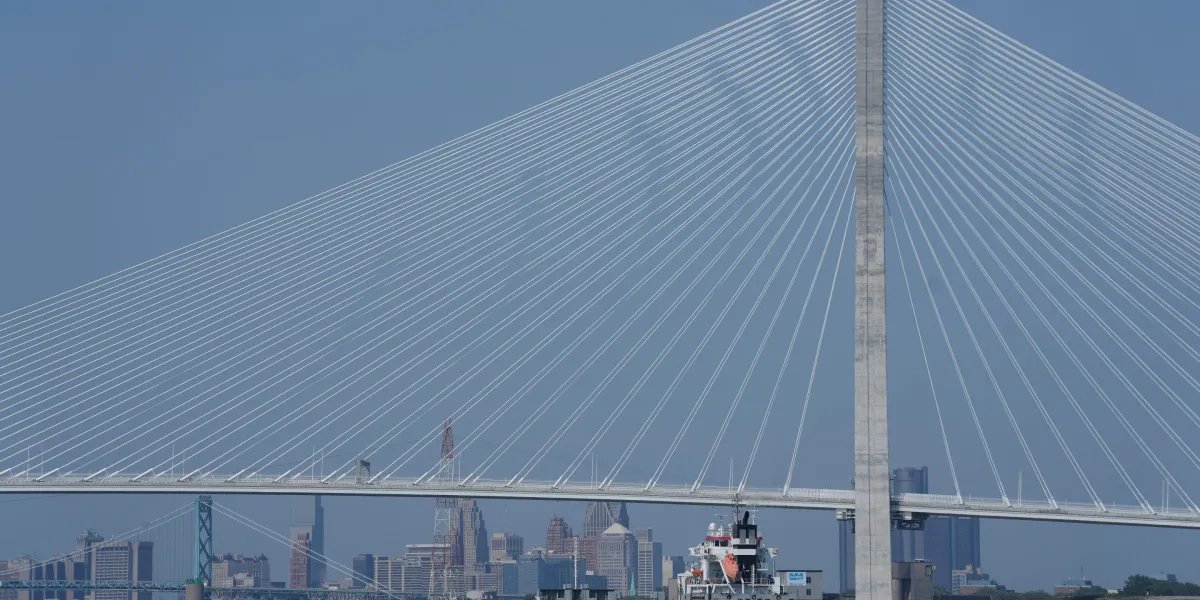
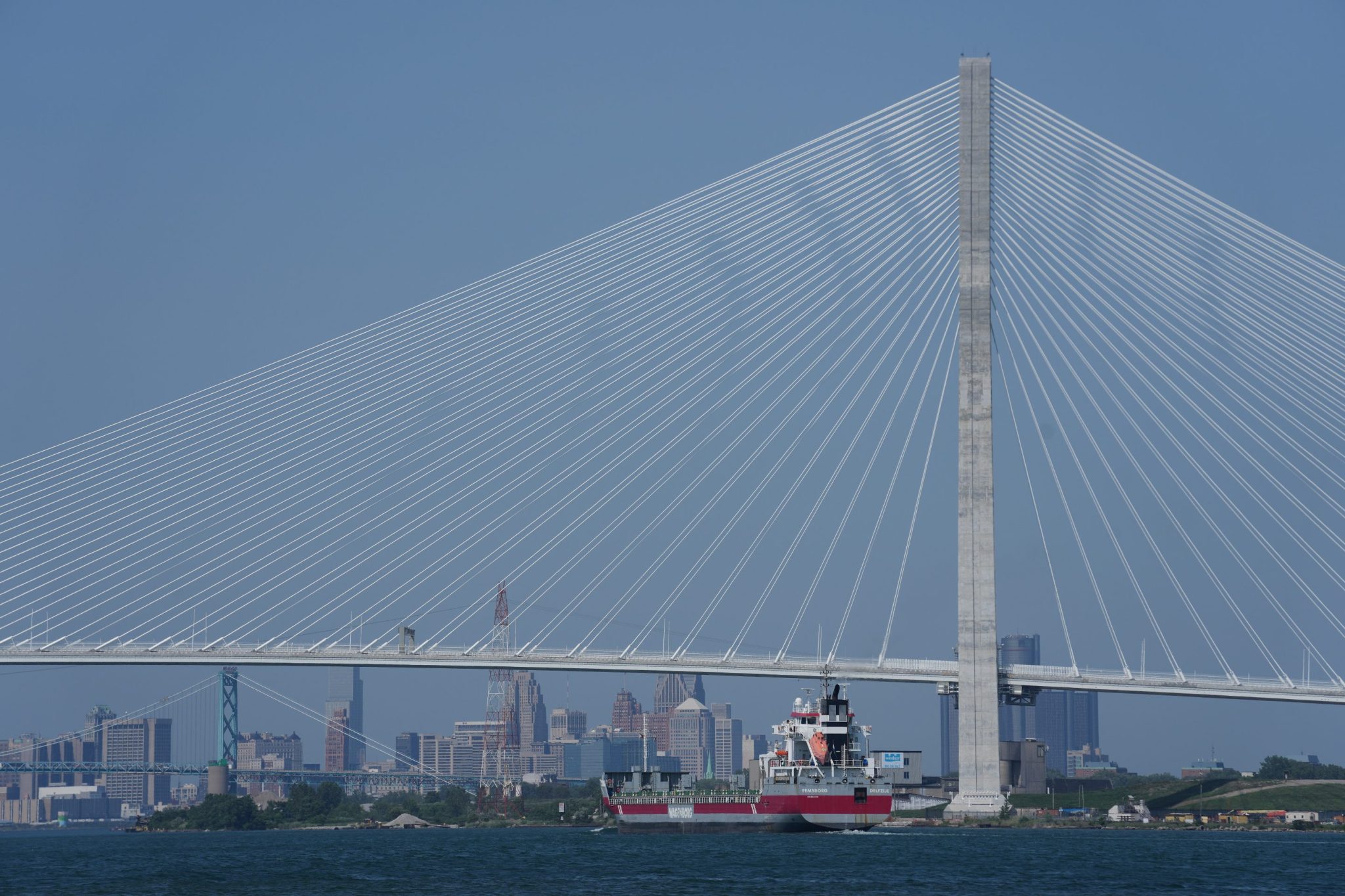
Canada on Friday celebrated the completion of a new bridge to the U.S. over the Detroit River, a multibillion-dollar, multiyear project that will serve as a critical path for trade and casual travel between the countries.
With the six-lane Gordie Howe International Bridge dominating the skyline behind them, officials lined up in Windsor, Ontario, to hail what one described as “one of the most significant infrastructure achievements in Canada’s history.” Traffic opens Monday.
“Some days are remembered because they mark the end of a journey. Others are remembered because they mark the beginning of something entirely new. Today is both,” said Chuck Andary, interim CEO of the Windsor-Detroit Bridge Authority, which will operate the bridge.
Missing from the event: U.S. and Michigan representatives. Canada scratched a joint gathering after President Donald Trump this week suddenly announced 50% tariffs on Canadian goods entering the U.S.
A soloist sang the national anthem, “O Canada,” but the U.S. anthem was not performed.
“It’s regretful that we’re at this point in time with our trade relationship. We’re hopeful for better days ahead,” Windsor Mayor Drew Dilkens told WXYZ-TV in Detroit a few days ahead of the ceremony.
More than 70% of Canada’s exports go to the U.S., making America its largest trade partner, and Detroit is the No. 1 port for truck traffic on the U.S.-Canada border, according to the U.S. Department of Transportation.
The Howe bridge will instantly create competition. For nearly a century, the privately owned Ambassador Bridge has been the only route for large commercial trucks moving between the U.S. and Canada at Detroit.
“It will be vital for our economy,” Detroit Mayor Mary Sheffield said of the bridge, sidestepping a question earlier this week about whether it had become a “political football” in the rocky relationship between the countries.
The bridge is named for Howe, a famous Canadian who played hockey for the NHL’s Detroit Red Wings. He died in 2016. Construction, which began in 2018, took years, partly because of a global slowdown caused by the COVID-19 pandemic.
The bridge is 1.5 miles (2.4 kilometers) long and rises 151 feet (46 meters) above the Detroit River at its highest point. Pedestrians and bicyclists carrying proper identification will be able to cross it for free in a few weeks.
Canada paid to build the bridge at an estimated cost of $6.4 billion. A recent agreement says Canada will share some toll revenue with the U.S. government for 15 years. Michigan will also get a share, but not until Canada’s costs are recovered, likely decades in the future.
___
White reported from Detroit.