ONE BIG THING
Gates Foundation investigates its ties to Epstein—weeks before Bill Gates faces Congress
The Gates Foundation has commissioned an external investigation of its past engagement with Jeffrey Epstein, CEO Mark Suzman told staff in a memo this week. At the same time, billionaire co-founder Bill Gates prepares to testify before Congress in June about his relationship with the late sex offender. The probe follows Fortune’s March investigation into how Epstein embedded himself in Gates’ inner circle. Epstein spent a decade building a network of intermediaries to get closer to Gates. The network included Gates’ “right hand” and chief science advisor Boris Nikolic; a former Gates Foundation senior adviser named Melanie Walker; and Mila Antonova, who was reportedly Gates’ former mistress. Epstein went so far as to help Antonova, a Russian citizen, secure a visa, put her up in his New York apartments, fund her coding classes, and send her wire transfers. Epstein then used these favors to try to pressure Gates, Fortune found—writing to Gates’ deputy Larry Cohen in April 2018 that he had put Antonova up in his New York apartment and that Gates was “playing with fire.”
IRAN
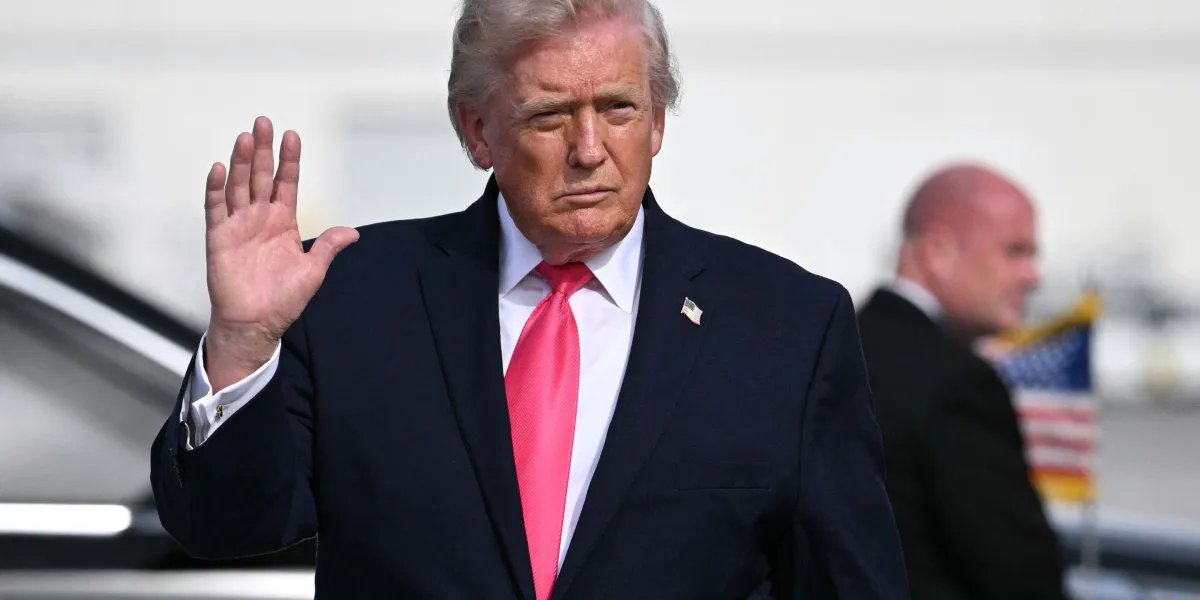
Ceasefire will be indefinite, Trump says, but experts say it could be months before Hormuz reopens
President Trump confirmed there was no deadline for ending the current ceasefire with Iran. The White House is waiting for a response from Iran before the next round of peace talks can start, Bloomberg says.
- The Strait of Hormuz remains closed: Iran struck three ships yesterday and seized two of them, according to the BBC. The U.S. said it had forced 31 ships back into the Gulf since its blockade began.
- Normalcy will not return soon. It will take six months to clear the strait of Iranian mines, the Washington Post says, and that operation can only start after the end of the conflict.
- Defense Secretary Pete Hegseth fired Navy Secretary John Phelan yesterday, the latest in a series of exits by high-ranking Pentagon officials. Here is the key sentence from Axios’s report: “Hegseth felt Phelan had bypassed the chain of command too much with a direct line to Trump, whose Mar-a-Lago Club in Palm Beach is near Phelan’s mansion, [a] source familiar with the situation said.”
There’s a 40% chance of recession in the U.S., Daco says
In a pessimistic email this morning, EY-Parthenon chief economist Gregory Daco put the odds of recession in the U.S. over the next 12 months at 40%. His logic: “The Middle East conflict is proving longer lasting and more destructive to energy production capacity,” he said in the note. “Concerns center on a slowing labor market, rising stress in private credit, and uncertainty around the pace and scale of AI-driven labor displacement. Taken together, we continue to assess U.S. recession odds over the next 12 months at around 40%.” Assuming that doesn’t happen, Daco estimates 1.8% growth in U.S. GDP for the year.
THE SPORTS PAGE
How Iran could face the USA in the World Cup
White House special envoy Paolo Zampolli caused global headlines after he confirmed that he asked Fifa to replace Iran with Italy in the upcoming World Cup, a move that is surely against the rules of the tournament and will likely never happen.
However, a greater potential drama awaits the U.S. men’s national team on July 3, the eve of Independence Day. That is when the second-place team from Group D plays the second-place team from Group G in the knockout stage of the cup.
You guessed it, USA is in Group D and Iran is in Group G. It is possible that both teams could survive the group stage and thus be drawn against each other for Match 95 of the contest. In Iran’s group, they face New Zealand, Belgium, and Egypt. The latter two would be expected to graduate first and second place, into the knockout stage. But all Iran (seeded 21st) needs to do is beat New Zealand (seeded 85th) and maybe hold the other two to a draw and it could find itself in that July 3 face-off. The USA is seeded 16th and playing on home turf. It faces Paraguay (40th), Australia (27th), and Turkey (22nd), and thus ought to emerge top of the group. But the USA has a patchy record at the World Cup, and it’s plausible that it will drop points in the group stage and thus find itself in that July 3 playoff. If the USA v. Iran match occurs, the Americans will be the natural favorites. No pressure, guys!
MORE FROM FORTUNE
How Spirit Airlines’ business model collapsed—and why a Trump bailout could make things worse – Shawn Tully
Best Buy CEO Corie Barry is stepping down: How she went from architect of a comeback to cautionary tale – Phil Wahba
The starter home is dying. Better.com’s CEO says AI is the only thing that can save it – Jake Angelo
‘I think it’s a mistake’: Delta CEO Ed Bastian refuses to call it ‘artificial intelligence’ because it scares people – Nick Lichtenberg
The Strait of Hormuz chaos is just a ‘dry run’ for if war breaks out between the U.S. and China, Singapore foreign minister says – Sasha Rogelberg
Cursor’s 25-year-old CEO is a former Google intern who just inked a $60 billion deal with SpaceX – Marco Quiroz-Gutierrez
CHART OF THE DAY
The more people use AI, the more they trust it
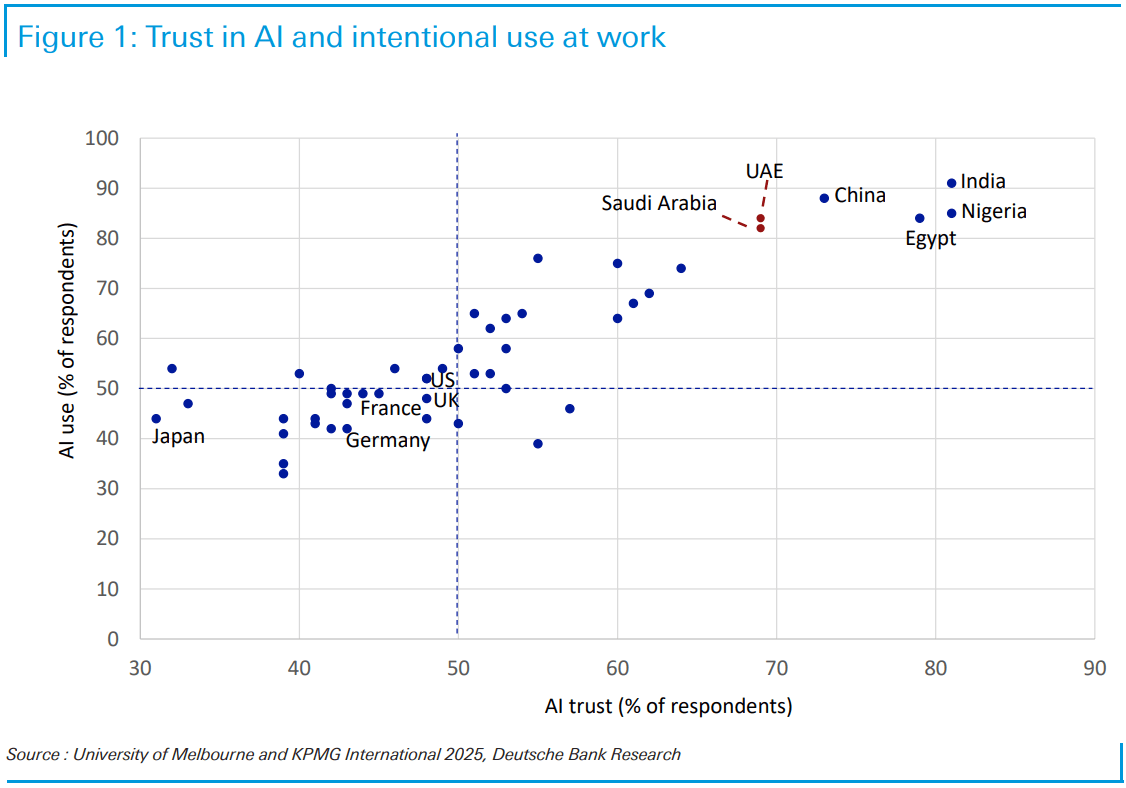
U.S. consumers “are increasingly suspicious of AI and lag way behind their Indian, UAE, Chinese and Saudi counterparts in adoption,” according to this chart from Deutsche Bank, which pits AI adoption vs. AI trust. Only 52% of Americans say they use AI on a regular basis at work, whereas 90% use it regularly in some Asian markets. If AI is “an existential race for dominance,” as some tech leaders and politicians insist, then the U.S. is already lagging, Deutsche argues. “Mass adoption is where the battle will be won and lost.”
NUMBER OF THE DAY
22%
The year-on-year growth in second-hand fashion transactions in March, according to Bank of America. Buying and selling used clothes peaked during the COVID pandemic, when sales and transactions grew at over 80% annual growth. After going through a trough, the resale apparel sector is coming back, especially for luxury goods. “Consumers are turning to resale more often to stretch their budgets,” analysts Liz Everett Krisberg and David Michael Tinsley said in a recent research note.
THE FRONT PAGES TODAY
‘We are facing the biggest energy security threat in history,’ IEA chief says – CNBC
Anthropic: No “kill switch” for AI in classified settings – Axios
Republicans Are Worried the Redistricting Fight Is Backfiring – WSJ
Alex Cooper, Husband Skip Team Meeting After Behavior Complaints – Bloomberg
A 60-Day Deadline Could Pressure Trump on Ending the Iran War – NYT
Lufthansa slashes 20K flights to save jet fuel as Iran war drives up oil prices – NY Post
ONE MORE THING
For Warsh, the war may already be over
The problem for Kevin Warsh—Trump’s nominee to replace Jerome Powell as Fed chair—is that Trump wants Warsh to lower interest rates even though Trump’s tariffs and the Iran war are boosting inflation. Basic economics suggests that during times of inflation, you want to increase interest rates—reducing the money supply—so as not to make inflation worse.
But the Senate may be about to hand Warsh a hall pass. Republican Sen. Thom Tillis has reiterated that he will decline to approve Warsh’s nomination until the Justice Department drops its criminal probe of Powell. Republicans only have a 13-11 majority on the relevant committee, so Tillis only needs one colleague to join him and Warsh’s nomination is on hold. Possibly for the duration of the war.
Warsh might like that, Deutsche Bank’s Jim Reid noted on Wednesday: “It might actually suit both the Administration and Warsh for his term to start after the Iran war is over so he can begin with a fresh slate rather than make the difficult decisions while uncertainty prevails.”