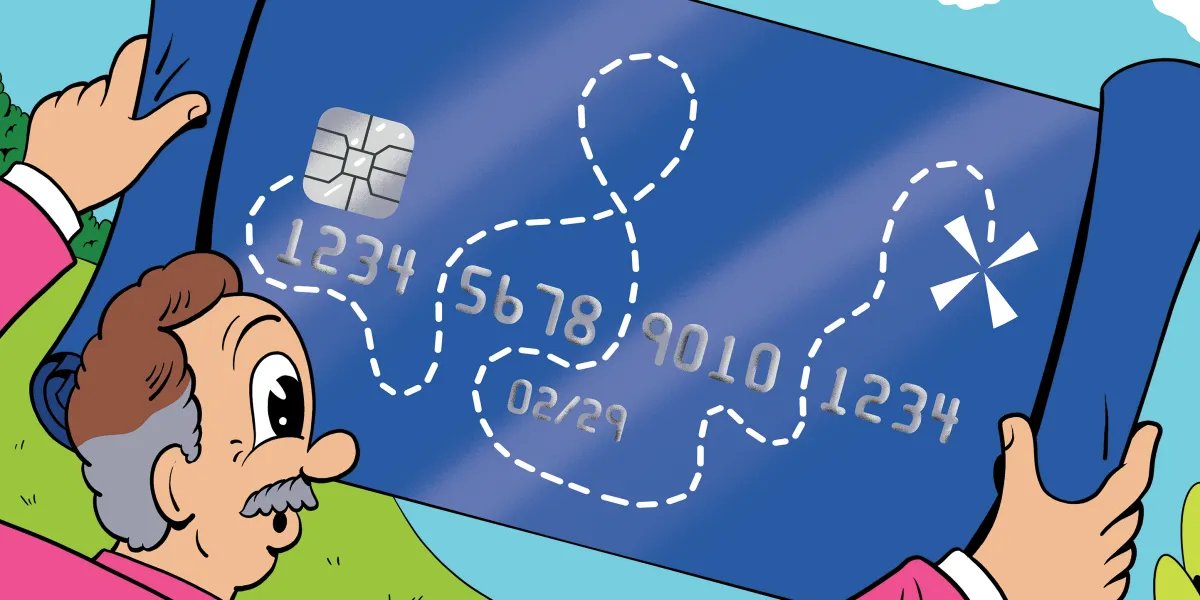

In March, Robinhood announced its Platinum credit card, whose perks include generous travel rewards, $250 in annual DoorDash credits, and a free membership to Amazon One Medical. The name of the new card, which has a not-so-low annual fee of $695, is both an homage and a flex: It echoes the card brand made famous by American Express, though Robinhood points out its version is the only one to be “plated in 99.9% pure platinum.”
The offering is the latest splashy option in the fast-expanding world of premium credit cards that are branded not as simple payment tools, but as lifestyles. In this world, “members” enjoy access to concerts and upscale gym memberships, and the opportunity to load up on free goodies from retailers like Lululemon and Apple.
For the well-disciplined, the high-fee cards are a good value thanks to a combination of perks plus rewards for spending that can be cashed in for a host of travel offerings. Even better, all of this comes tax-free, thanks to a legal quirk that treats credit card swag as “redemptions” rather than income.
But not everyone is pleased. In recent months Congress and the White House, mindful of rising credit card debt and growing merchant fees, have renewed a push to pass the Credit Card Competition Act (CCCA), which could make it much harder for card issuers to offer all those perks. That raises a problem for points hunters: Is the go-go era of rewards nearing its end?
Jamie Dimon’s bet pays off
“I wish it was a $400 million loss,” JPMorgan Chase CEO Jamie Dimon famously declared in 2017. He was responding to investor complaints over a $200 million earnings charge the bank had incurred from huge sign-up bonuses tied to its Chase Sapphire Reserve card. Dimon’s comments reflected a bet that the new premium card would, over time, become a big moneymaker.
The calculation proved correct: Today the card is incredibly popular and has helped the bank attract a generation of premium customers to its other services. Indeed, that’s one of the main rationales for banks issuing these lifestyle cards. At the same time, however, JPMorgan has gradually raised its annual fee from $450 to $795, while reducing the redemption value of certain rewards points. American Express, meanwhile, has raised the annual fee for its flagship Platinum card to $895. Changes like these have led some consumers to question whether the potential to capture loot is worth the upfront cost.
Moshe Orenbuch, a managing director at TD Securities, says that JPMorgan Chase and others would argue the card offerings are more generous than ever—they’re just distributed differently. Many top cards, in addition to offering rewards for spending, now provide credits—usually of $5 to $20 a month—for services like Lyft, DoorDash, and Disney+ that can stack up to thousands of dollars a year in value.
“They are trying to create an ecosystem,” notes Sanjay Sakhrani, a card industry expert at KBW. “Ultimately they want to make this not having a card but having an experience.” And for some members of the card issuers’ web of merchant partners, tie-ups with credit issuers translate into big money. Orenbuch notes that Delta Air Lines alone has collected as much as $10 billion from Amex in recent years for supplying seats on its planes to rewards customers.
23.66%
Average annual interest rate on a travel rewards credit card, 3/16/26
617 million
Credit card accounts in the U.S. in 2024 (latest data available)
Sources: Lendingtree, Wallethub
Chase’s and Amex’s premium cards have been doing such brisk business that new challengers are leaping into the category. In addition to Robinhood’s Platinum card, there is Citi’s $695-per-year Strata Elite, whose debut last year was marred by an application-process bungle that saw the bank freeze thousands of accounts—but which has proved popular nonetheless.
The surge in usage, however, has come with growing pains—most notably at airport lounges. At venues like Amex’s Centurion Lounge and Chase’s Sapphire Lounge, cardholders can enjoy plush seats, chef-made nibbles, and free Chardonnay. But as the cards get more popular, road warriors are increasingly encountering crowds, long queues, and wait times.
The downsides of fat rewards
The glamorous branding of premium cards can also lead some consumers to make foolish mistakes by running up high-interest credit card debt. Sakhrani notes that some premium card customers quickly find themselves carrying monthly balances with interest rates of over 20%—an obligation that can quickly dwarf the value of any rewards they earn.
“Consumer credit is not intuitive. Plenty of people who are otherwise smart can overestimate their own ability to manage credit cards,” says Beverly Harzog, a former CPA and personal finance author who has written about her own experience with card debt. She notes that while some are assiduous about amassing a given card’s full rewards value, many will come to the very reasonable conclusion they can’t risk the costs. In these cases, she suggests people choose a slightly less premium card like the Capital One Venture Rewards card, which can still offer valuable perks but for an annual fee closer to $100. The frugal-minded, meanwhile, may prefer a no-fee, cash-back card like the Citi Double Cash card or the Apple Card.
Merchants, meanwhile, are frustrated by one feature of premium cards: They force businesses to pay higher swipe fees compared with plain-vanilla ones. The CCCA, backed by many of these businesses, would lower the cost of these transactions. President Trump expressed support for the bill early this year, calling for an end to the “out of control Swipe Fee ripoff” and a temporary cap of 10% on monthly interest.
If any of these proposals come to pass, analysts say, banks would be forced to dramatically scale back rewards and turn their “lifestyle” offerings back into ho-hum instruments of credit. For now, though, that appears unlikely. The powerful bank lobby has a growing list of allies—including airlines and hotel chains—that will likely push to preserve the status quo. The good times should continue to roll, letting disciplined consumers pad their incomes with free stuff for the foreseeable future.
This article appears in the April/May 2026 issue of Fortune with the headline “Credit card rewards are more lavish than ever—but you have to work harder to cash in.”